Punta Cana Real Estate Guide 2026: Prices, ROI, Airbnb Income & Best Areas to Invest
Last updated:
Punta Cana is the fastest-growing real estate market in the Caribbean. Real 2026 prices, honest ROI numbers, Airbnb income by zone, pre-construction vs resale, taxes, the costs nobody mentions, and the mistakes foreign buyers keep making — written by people who live and operate here.
Table of contents
1. Why invest in Punta Cana in 2026
2. Market overview and recent trends
3. Property price ranges by zone (2026)
4. The best areas to invest
5. Cap Cana — the gated luxury enclave
6. Bávaro — the high-volume Airbnb engine
7. Downtown Punta Cana — emerging urban core
8. Punta Cana Village — the original gated community
9. Uvero Alto — the new luxury frontier
10. Pre-construction vs resale
11. Airbnb potential and realistic ROI
12. Long-term rental opportunities
13. Costs beyond the purchase price
14. Property taxes (IPI) and Confotur exemption
15. Buying process for foreigners
16. Financing options
17. Residency through investment
18. Retirement in Punta Cana
19. Digital nomad insights
20. Long-term appreciation outlook
21. Common mistakes foreign buyers make
22. Punta Cana vs Cancun, Tulum & the Caribbean
23. The VIP Punta Cana Property Tour
24. Frequently asked questions
Last updated: 17 June 2026 · Author: Cana Tours Editorial Team — local operators on the ground in Punta Cana since 2016. This guide is informational and does not constitute legal, tax or investment advice. Always work with a licensed Dominican attorney and a Confotur-registered developer before signing.
1. Why invest in Punta Cana in 2026
Punta Cana has moved from "emerging Caribbean market" to one of the most active beachfront real-estate markets in the Western hemisphere. The region passed 8 million annual airport arrivals at PUJ, the Dominican Republic posted Caribbean-leading GDP growth four years in a row, and inventory in the most desirable communities — Cap Cana, Punta Cana Village, prime Bávaro — is selling faster than developers can deliver it.
The reasons foreign capital keeps choosing Punta Cana over Cancun, Tulum, Bahamas or Turks & Caicos are concrete: USD-priced contracts, freehold ownership for foreigners with no restrictions, a Confotur tax-exemption regime that legally wipes out property tax and transfer tax for up to 15 years on qualifying projects, year-round 27 °C climate, direct flights from 30+ countries, modern infrastructure, and a tourism industry that produces real, bookable Airbnb demand 11–12 months per year.
If you are reading this guide, you are likely considering Punta Cana for one of four reasons: a second home you'll use 2–8 weeks per year and rent the rest of the time, a pure cash-flow Airbnb investment, a relocation or retirement base, or a long-term appreciation play. This guide answers each angle with current 2026 numbers — not sales-deck fiction.
Three structural forces are reshaping the Punta Cana market in 2026. First, Confotur — the Dominican tourism investment law — was extended and modernised, locking in property-tax (IPI) and transfer-tax exemptions for up to 15 years on registered projects. This is the single biggest reason a Punta Cana condo can outperform a Miami or Cancun equivalent on net yield.
Second, the Boulevard Turístico del Este (the four-lane corridor from PUJ to Miches) and the new Macao–Uvero Alto interchange opened up zones that were previously 90 minutes from the airport. A Uvero Alto beachfront condo that was a hard sell in 2019 is now a 50-minute, all-paved transfer from PUJ — and Excellence, Margaritaville, Zoëtry and Dreams Macao have all expanded there.
Third, Airbnb's audited data shows Punta Cana ADRs (average daily rates) rose 18% between 2023 and 2026, while occupancy held above 70% year-round in Bávaro and Cap Cana. Inventory growth has not caught up with demand, especially in the 1- and 2-bedroom segment that suits short-stay couples and small families.
Net effect: 2026 is not a "top of the cycle" market. It's a market where supply remains constrained in the desirable zones, the legal regime favours foreign buyers, and tourism demand is structurally rising. The risk is no longer overpaying — it is buying the wrong unit in the right zone, which is exactly what this guide is built to prevent.
3. Property price ranges by zone (2026)
All prices below are real 2026 USD asking prices observed across multiple developments, normalised to per-square-meter and per-bedroom equivalents. Final negotiated price is typically 3–8% below ask for resale and 0–5% below ask for pre-construction with full-cash payment.
Studio / 1BR condo, Bávaro / Cortecito (200–400m from beach): $95,000 – $165,000. Per m²: $1,400 – $2,200.
2BR condo, Bávaro pre-construction, walkable to beach: $175,000 – $260,000. Delivery typically 18–30 months.
1BR condo, Downtown Punta Cana / Vista Cana / White Sands: $115,000 – $190,000. Per m²: $1,600 – $2,400.
Ultra-luxury Cap Cana / Punta Espada beachfront: $5M – $25M+.
Price-per-square-meter at a glance
Bávaro (off-beach): $1,400–$2,000/m². Bávaro (walkable to beach): $2,000–$2,800/m². Downtown Punta Cana: $1,600–$2,400/m². Punta Cana Village: $2,200–$3,200/m². Cap Cana (non-beachfront): $2,500–$4,000/m². Cap Cana (beachfront): $4,500–$8,500/m². Uvero Alto beachfront: $3,500–$6,000/m². Compare to Miami Brickell ($7,000–$12,000/m²), Tulum prime ($3,800–$6,500/m²) and Cabo San Lucas beachfront ($6,500–$11,000/m²) and you can see why USD investors keep landing in PUJ with a Confotur condo on the shortlist.
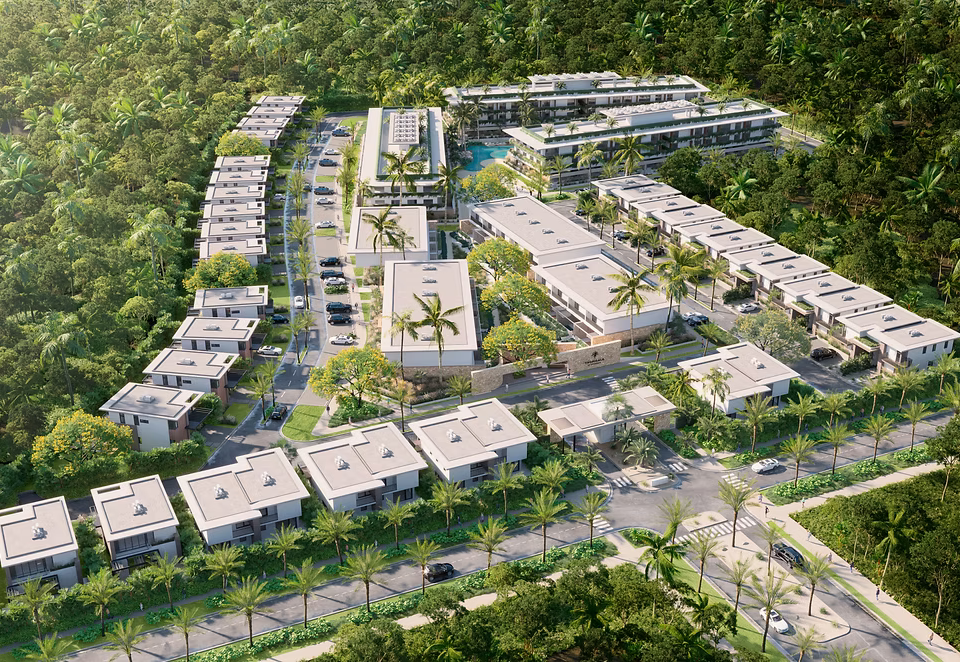
Punta Cana is not one market — it's five sub-markets with very different buyer profiles, ADRs, occupancy patterns and 5-year appreciation outlooks. Picking the right zone matters more than picking the right unit. The rest of this section breaks down the five zones that matter, with an honest take on who each one suits.
5. Cap Cana — the gated luxury enclave
Cap Cana is the prestige address. Master-planned, fully gated, anchored by the Punta Espada Jack Nicklaus signature golf course, the Heritage School, Eden Roc (Relais & Châteaux), St. Regis, Hyatt Zilara, Secrets and Sanctuary, plus a deep-water marina that hosts the Cap Cana Billfish Classic.
Buyer profile: high-net-worth second-home owners, USA / Canada / Europe / LATAM, $500K–$10M budget, looking for the strongest brand-value story in the country. ADR for a 2BR Fishing Lodge unit on Airbnb runs $280–$450/night in high season, $180–$280 in shoulder. Net yield typically 4–6% on cash purchase after fees — lower than Bávaro on paper, but compensated by 8–12% historical appreciation and Confotur tax exemption.
What to avoid: any "Cap Cana" project located outside the actual Cap Cana gates. The brand is regulated but the address "Cap Cana area" is not. Verify the project is inside the master plan and pays HOA to Fundación Cap Cana before signing.
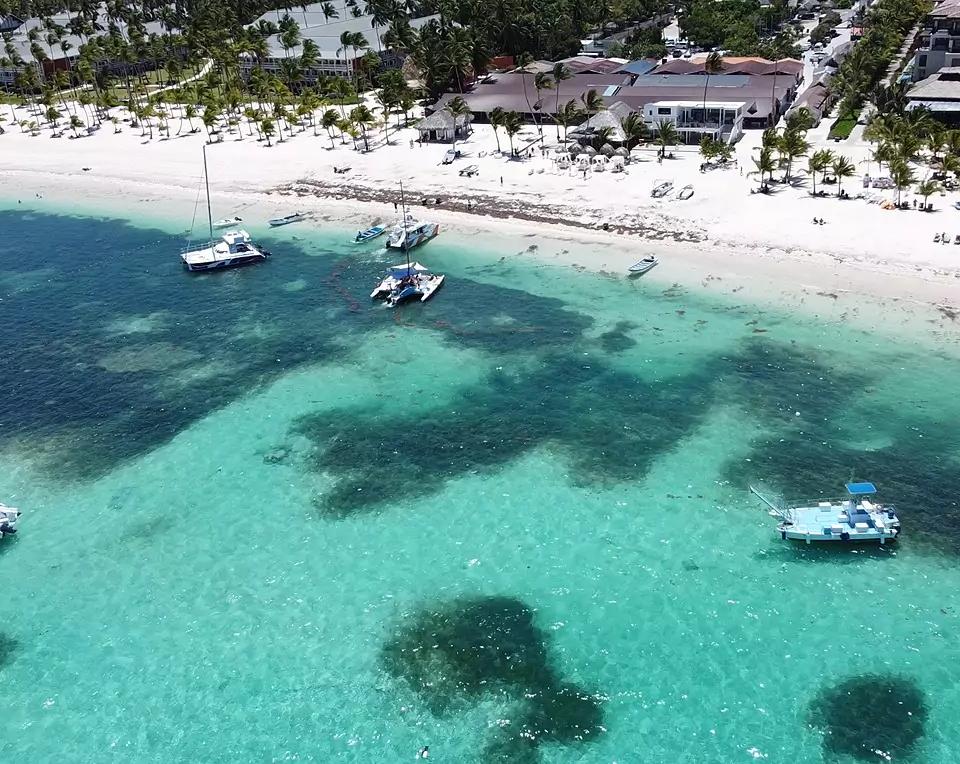
Bávaro is the workhorse of Punta Cana real estate. Cortecito, Los Corales, El Dorado, Cocotal and the Bávaro Beach strip contain the highest concentration of mid-market condos, the highest Airbnb booking volume, and the lowest entry price per beachfront-adjacent square meter. If your strategy is cash-flow Airbnb on a $150K–$300K budget, Bávaro is statistically the highest-probability winning bet in the entire Dominican Republic.
ADR for a well-furnished 2BR condo 200m from the beach: $140–$220/night high season, $90–$140 shoulder. Occupancy 72–85% across the year with professional management. Gross yield 8–12%, net yield 5.5–8% after HOA, management (typically 20–25%), utilities, insurance and Airbnb fees.
What to avoid: anything more than a 12-minute walk from the beach (occupancy drops sharply), and any building without an active HOA — Dominican condos with a weak HOA decay visibly within 5 years and resale values reflect it.
"Downtown Punta Cana" — Vista Cana, White Sands, Ciudad Las Canas — is the residential city the region was missing. Supermarkets, schools, hospitals (Hospiten, IMG), business parks and a growing café/coworking scene. This is the zone where digital nomads, remote-working young families and Dominican professionals actually live.
Buyer profile: lifestyle and long-term-rental investors, $115K–$350K budget, looking at 1–3BR condos in mid-rise buildings with pools, gyms and 24/7 security. Long-term rental yields 6–8% net with very low vacancy because the tenant pool (resort staff, airline crew, remote workers, expat retirees) is structural, not seasonal.
Airbnb in Downtown is weaker than beachfront zones — ADR around $70–$110/night — but vacancy is lower and management is dramatically simpler. A solid choice if you want a more passive, lower-volatility investment.
8. Punta Cana Village — the original gated community
Punta Cana Village is the original Punta Cana residential project, 8 km from PUJ, walkable to the airport, Tortuga Bay, Punta Cana Resort & Club golf, the Westin and a small commercial centre with restaurants, banks and a supermarket. Buyer profile: established second-home owners, retirees, families with children at PUNTACANA International School. Lower turnover, very mature HOAs, low crime, high resale liquidity.
Prices: 2BR condos $250K–$420K, villas $550K–$2.2M. Airbnb performance is modest because rentals are restricted in many subsections — this is a long-hold lifestyle community, not an Airbnb arbitrage zone. Choose it for capital preservation, not yield.
9. Uvero Alto — the new luxury frontier
Uvero Alto and the Macao corridor are where the smart 2026–2030 money is going. The Boulevard extension cut transfer times to 50 minutes, the Excellence, Dreams Macao, Margaritaville Island Reserve and Zoëtry Agua expansions confirmed institutional confidence, and beachfront land is still 30–45% cheaper per m² than Cap Cana.
Buyer profile: investors with a 5–7 year horizon willing to accept slightly lower occupancy today for double-digit appreciation tomorrow. ADR for a beachfront 2BR is $200–$320/night; occupancy is currently 60–72% but tracking up with each new resort opening. Net yield 4–6% today, projected 6–8% by 2028.
What to verify: paved access to the unit (some sub-projects still rely on dirt roads), reliable water and three-phase power supply, and Confotur registration of the specific tower — not just the master plan.
The single most asked question from foreign buyers: should I buy pre-construction or resale? Both work; they suit different investors.
Pre-construction advantages: 15–25% lower entry price vs equivalent finished units, payment plans (typically 30% deposit + monthly during construction + 50% at delivery), brand-new finishes and warranty, often the only way into Cap Cana or Punta Cana Village at the entry tier. Disadvantages: delivery risk (delays of 6–18 months are common), no Airbnb income during construction, USD-DOP currency mismatch on the monthly installments, and you are betting on the developer's solvency.
Resale advantages: walk the actual unit, verify the actual view, see the actual building's condition, start renting immediately, avoid construction risk, and you can negotiate based on real comps. Disadvantages: full price upfront, older finishes, you inherit whatever the previous owner left behind (HOA arrears, lawsuits, deferred maintenance).
Our rule of thumb: pre-construction only with developers that have delivered at least three prior projects on time in Punta Cana, with a trust/escrow account holding the buyer payments, and Confotur registration confirmed in writing. Anything else is venture capital, not real estate.
11. Airbnb potential and realistic ROI
Honest Airbnb numbers for Punta Cana in 2026 — not the developer brochure numbers. We manage and audit dozens of units across all five zones, and the spread between the marketing pitch and the actual P&L is consistently 30–40% in the buyer's disfavour.
Bávaro 2BR walkable to beach, well furnished: gross annual revenue $26,000–$38,000 on a $220K purchase = 12–17% gross yield. After 22% management, 10% HOA + utilities + insurance, 3% maintenance reserve, 5% vacancy buffer and Airbnb's 3% host fee, net yield lands at 6.5–8.5%.
Cap Cana 2BR Fishing Lodge: gross $36,000–$52,000 on a $450K purchase = 8–11% gross, net 4.5–6% after all costs. Lower yield, higher appreciation.
Downtown Punta Cana 2BR long-term rental: $1,100–$1,500/month = $13,200–$18,000 gross on a $190K purchase = 7–9% gross, net 5.5–7% after costs. Lowest hassle of the three.
Uvero Alto beachfront 2BR: gross $28,000–$42,000 on a $360K purchase = 8–11% gross, net 4.5–6.5%. Occupancy is the swing factor.
Headline rule: any pitch that promises you a guaranteed 10%+ net yield in Punta Cana is either (a) including unrealistic occupancy and ADR assumptions, (b) hiding HOA, FF&E refresh or vacancy costs, or (c) a developer guarantee that ends the day construction is delivered. Run the math yourself, use the numbers above as your sanity check.
Outside the touristic corridors, Punta Cana has a real long-term rental market that almost no foreign buyer pays attention to — and which produces some of the most stable returns in the country. The tenant pool is concentrated in three groups: resort and airline staff (15,000+ households earning $800–$2,200/month and renting in Friusa, Veron, Cruce de Verón, Downtown), expat retirees and digital nomads ($1,200–$3,500/month in Downtown and Punta Cana Village), and Dominican professionals ($1,500–$4,000/month in Cap Cana entrances and Vista Cana).
Yields are modest in headline terms (5.5–8% net) but the volatility is dramatically lower than Airbnb. A long-term tenant pays utilities, signs a 12-month contract, and your management cost drops from 22% to 6–8%. For passive investors and retirees who don't want guest-turnover headaches, this is often the right path.
13. Costs beyond the purchase price
Foreign buyers consistently underestimate transaction and holding costs. Plan for the following on every Punta Cana purchase:
Closing costs (one-time): 4.5–5.5% of purchase price. Includes 3% transfer tax (waived under Confotur), notary fees (~1%), legal fees (~1.0–1.5%), title insurance (optional, ~0.5%), and registration fees.
Annual property tax (IPI): 1% per year on the assessed value above the exempt threshold (~RD$10M in 2026). Confotur-registered projects pay 0% for up to 15 years.
HOA: $1.50–$4.50/m²/month depending on amenities. Cap Cana premium developments run higher.
Furnishing (Airbnb-ready): $18,000–$45,000 for a 2BR depending on finish level. Do not skimp — furnishing quality directly determines ADR.
Utilities (vacant): $80–$180/month base. With Airbnb occupancy, $250–$550/month.
Property management: 18–25% of gross revenue for Airbnb, 6–8% for long-term.
Insurance: $400–$1,200/year for a condo, $1,500–$4,500 for a villa. Hurricane-zone rated.
Income tax: 27% corporate or 15–25% personal on net rental income, with most operating costs deductible. Many investors structure ownership through a Dominican SRL or an EB-trust for liability and tax optimisation — discuss with a licensed attorney.
14. Property taxes (IPI) and the Confotur exemption
IPI (Impuesto al Patrimonio Inmobiliario) is the annual Dominican property tax: 1% per year on the cadastral value above RD$10,190,833 (2026 threshold, indexed annually). For a $300K condo with a $260K assessed value, the calculation looks like: assessed value minus exempt threshold (~$165K USD equivalent), times 1%, gives roughly $950/year. Compare that to Florida property taxes on a $300K condo ($3,500–$6,000/year) and the difference is structural.
Confotur (Law 158-01) goes further. Tourism-registered projects receive a 15-year exemption from IPI, transfer tax, and capital-gains tax on resale within the exemption window — provided the project maintains its tourism registration and the unit's use is consistent with the registration. This is the single biggest financial reason Punta Cana new-construction outperforms US Caribbean alternatives. Always verify in writing that the specific unit (not just the development) is covered.
15. Buying process for foreigners
Foreigners can own freehold property in the Dominican Republic with the same rights as Dominican citizens — no restrictions, no requirement to set up a local company, no minimum investment. The standard process takes 45–75 days from offer to title transfer:
Step 1 — Make a written offer with a refundable good-faith deposit (typically $5,000–$15,000 held in escrow).
Step 2 — Engage an independent Dominican attorney (NOT the developer's attorney). Budget $2,500–$6,000 in fees.
Step 3 — Due diligence (15–30 days). Title search at the Registry of Title, IPI clearance, HOA clearance, sucesión/inheritance checks, planning/zoning verification, Confotur certificate.
Step 4 — Sign the Promise of Sale (Promesa de Venta) and pay 10–30% deposit.
Step 5 — Final payment, signature of the Acto de Venta in front of a Dominican notary, and title transfer at the Registry. Pay closing costs.
Step 6 — Receive your new Certificado de Título in your name (or in your SRL's name). Register with DGII for tax purposes.
Most foreign buyers pay cash. Dominican bank mortgages exist for foreigners (Scotiabank, Popular, BHD) at 7.5–9.5% USD or 11–14% DOP, 50–60% LTV, 15–20 year terms, with 30–60 days of paperwork. Pre-construction developer financing is common: 30% deposit + monthly installments during construction + 40–50% balloon at delivery, typically at 0% interest. Some buyers use a US home-equity line of credit against their primary residence at 6–8% — almost always cheaper than Dominican bank financing.
17. Residency through investment
The Dominican Republic offers a fast investor-residency pathway. A real-estate investment of US$200,000+ qualifies under the rentista/inversionista category for an accelerated residency (12–18 months to permanent residency, then 2 more years to naturalization eligibility). Benefits: visa-free travel under the Dominican passport to 70+ countries, tax residency optimisation, the right to work and start a business locally, and the ability to add immediate family. The fast-track is one of the more aggressive in the Americas — only Panama and a handful of Caribbean CBI programs match it.
18. Retirement in Punta Cana
Punta Cana has become one of the top three Caribbean retirement destinations alongside Roatan and the Cayman Islands. The pensionado residency program waives the $200K investment threshold for retirees with $1,500+ /month verifiable foreign pension (plus $250/month per dependent), grants tax exemptions on the first $20,000 of pension income, and the cost of living for a comfortable retired couple lands at $2,800–$4,500/month including a 2BR rental, healthcare, transport and a comfortable lifestyle. Healthcare quality is excellent in Bávaro and Downtown (Hospiten, IMG, Centro Médico Punta Cana) — many US and Canadian retirees pay cash for procedures at a fraction of home-country prices.
The DR launched a formal digital nomad visa in 2024 (12-month renewable, $2,500/month income threshold). Punta Cana now hosts a real coworking ecosystem — Selina (Cap Cana and Downtown), The Office Lab, and three smaller community spaces. Fiber internet is reliable in Downtown, Punta Cana Village, Cap Cana and most of Bávaro (200–500 Mbps for $50–$80/month). Time zone alignment with the US East Coast (UTC-4 with no DST) makes Punta Cana arguably the best time-zone-matched remote-work base in the Caribbean for North American teams.
20. Long-term appreciation outlook
Caribbean real estate is a long game. Punta Cana property prices appreciated at an average of 7–9% per year in USD over the 2018–2025 period (Dominican Central Bank + private brokerage data, weighted average across all five zones). Cap Cana and Uvero Alto outperformed at 9–12% during the same period. Bávaro condos appreciated more modestly at 5–7% but produced the strongest cash flow.
Looking forward, the structural drivers — Confotur, infrastructure expansion, airport capacity, tourism demand, DR macroeconomic stability — all point to continued mid-to-high single-digit USD appreciation through 2030. The main risks: a global tourism shock, a US-LATAM political event that disrupts air capacity, or a localised oversupply of small-format condos in middle-tier Bávaro. None of these are screaming today.
21. Common mistakes foreign buyers make
After eight years on the ground we see the same mistakes repeat. Read these twice.
Mistake 1 — Using the developer's lawyer. The developer's lawyer represents the developer. Hire your own.
Mistake 2 — Skipping the title search. Some Punta Cana parcels still carry inheritance, lien or boundary disputes. A proper title search costs $400–$900 and saves multi-year nightmares.
Mistake 3 — Believing Airbnb yield projections from the sales desk. They are almost always 25–40% overstated. Demand independent comps.
Mistake 4 — Buying in a tower without an active HOA or with massive HOA arrears across the building.
Mistake 5 — Buying pre-construction from a first-time developer. Wait for their second or third delivery.
Mistake 6 — Underestimating furnishing and FF&E refresh cost — and the impact of poor furnishing on ADR and reviews.
Mistake 7 — Skipping Confotur verification. Without Confotur, your 15-year tax holiday does not exist.
Mistake 8 — Not visiting the unit in person. Photos lie. Drone shots especially lie. Walk the floor, drive the road, swim the beach.
Mistake 9 — Buying in cash with no asset-protection structure. A Dominican SRL costs $1,500 and isolates the asset from personal liability.
Mistake 10 — Treating Punta Cana like Florida. The infrastructure is excellent in the right zones and unreliable in the wrong ones. Zone selection determines tenant pool, ADR, occupancy and resale liquidity.
22. Punta Cana vs Cancun, Tulum and the broader Caribbean
Punta Cana vs Cancun: Cancun has older inventory, higher property taxes (no Confotur equivalent), Mexican peso volatility on USD-denominated assets, and a saturated short-rental market that has triggered local rental restrictions. Punta Cana has a younger inventory, USD pricing, Confotur, no rental restrictions, and growing demand. Cancun still wins on direct flight count from the US but the gap is closing fast.
Punta Cana vs Tulum: Tulum had the explosive appreciation cycle of 2018–2023, but 2024–2026 saw a notable correction as oversupply, water/electricity infrastructure issues, security concerns and Airbnb cap rules hit yields. Punta Cana never had Tulum's mania and didn't have Tulum's correction.
Punta Cana vs Turks & Caicos / Bahamas: Both are stunning, both are 2–3× the entry price for equivalent product, both have weaker rental yields, and both have far more restrictive foreign-ownership regimes. Punta Cana is the value play.
23. The VIP Punta Cana Property Tour
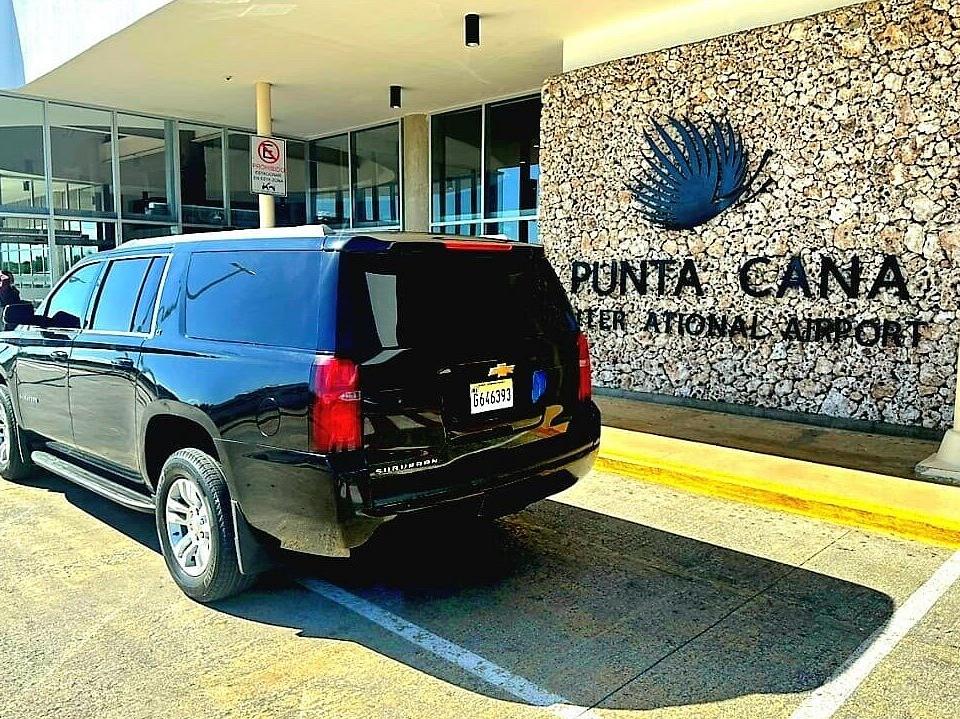
Visiting Punta Cana and considering an investment? Our VIP Punta Cana Property Tour is built for serious buyers, not casual browsers. The tour includes private SUV transportation across all five investment zones in a single day (or split across two days for deeper inspection), curated visits to 4–8 hand-selected developments matching your budget and strategy, an honest market briefing from operators who manage Airbnb units on the ground, introductions to two independent Dominican attorneys, and a structured pros/cons review of every property you see.
We are not a brokerage. We do not represent any single developer. The tour is paid as a flat-fee service, and the value we add is honest filtering — we walk you past projects we'd warn our own family away from, and we focus your time on the units that actually match your numbers. The most common feedback from past tour clients: they leave with a clear yes/no decision and weeks of saved due-diligence time.
Punta Cana real estate in 2026 is one of the strongest risk-adjusted opportunities in the Caribbean, but only if you (a) pick the right zone for your strategy, (b) use an independent attorney, (c) verify Confotur, (d) stress-test the Airbnb numbers, and (e) avoid first-time developers in pre-construction. Do those five things and you have a very high probability of a 5–8% net yield plus mid-to-high single-digit USD appreciation.
Yes — Punta Cana offers some of the strongest risk-adjusted Caribbean real-estate returns in 2026 thanks to Confotur tax exemption (up to 15 years), USD-denominated pricing, freehold foreign ownership, sustained tourism growth and constrained inventory in the best zones. Realistic net yields run 4.5–8% depending on zone, plus 7–10% historical USD appreciation.
Thinking about investing in Punta Cana or Cap Cana? Explore luxury villas, beachfront apartments, golf residences, investment opportunities, and exclusive developments with our local real estate experts. Schedule a private property tour and discover the best properties available today.