Weed in the Dominican Republic (2026 Guide): Laws, Penalties & What Tourists Should Know
Last updated:
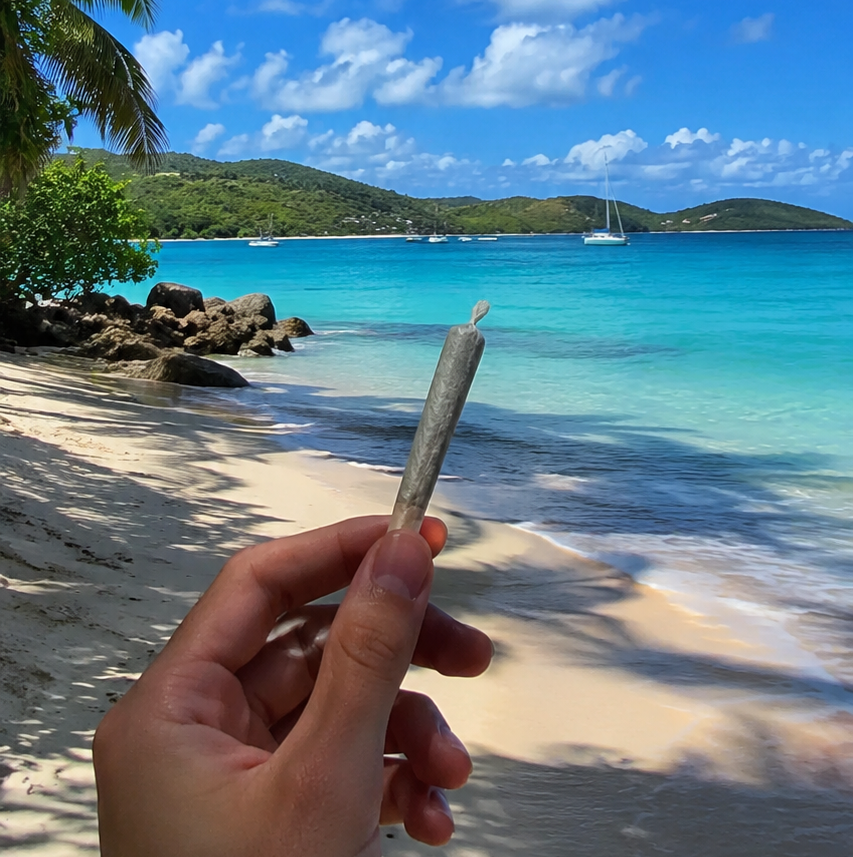
Cannabis is illegal across the Dominican Republic — flower, THC vapes and edibles included. The full 2026 travelers' guide to the laws, the real risks at Punta Cana airport and the legal alternatives that make a Caribbean holiday memorable.
Table of contents
1. Quick answer — is weed legal in the Dominican Republic?
2. The legal framework: Law 50-88 explained
3. Can you bring weed to Punta Cana?
4. What happens if you are caught with weed at PUJ airport?
5. Penalties: fines, detention and prison
6. THC vapes, edibles, gummies and oils
7. CBD and hemp products
8. Medical marijuana cards from abroad
9. Is weed common in Punta Cana?
10. Resorts, beaches and smoking rules
11. The hidden risks of buying locally
12. Dominican Republic vs Jamaica, Cancun and the Caribbean
13. What tourists should do instead: legal experiences
14. Embassy and consular guidance
15. Final thoughts — responsible travel
16. Frequently asked questions
Last updated: 16 June 2026 · Author: Cana Tours Editorial Team · Category: Travel Tips · This article is informational only and does not constitute legal advice.
1. Quick answer — is weed legal in the Dominican Republic?
No. Cannabis is illegal in the Dominican Republic in all of its forms — dried flower, hashish, THC vape cartridges, edibles, gummies, infused chocolates, tinctures and oils. There is no decriminalised personal-use threshold, no recreational dispensary system, and no tourist exemption. Whether you arrive at Punta Cana, Santo Domingo, Puerto Plata or La Romana, the same federal narcotics law applies.
Many visitors assume that because recreational cannabis has been legalised across most of Canada, parts of the United States, Malta, Germany, Luxembourg and Thailand, the same trend reaches the Caribbean. It does not. The Dominican Republic remains, in 2026, one of the strictest jurisdictions in the region. Reading this article in full before you board your flight is the safest thing you can do — see also our deeper page on /en/is-marijuana-legal-in-dominican-republic and the airport-specific /en/punta-cana-airport-weed-rules.
2. The legal framework: Law 50-88 explained
The country's narcotics law is Ley 50-88 sobre Drogas y Sustancias Controladas — the Drugs and Controlled Substances Act, first enacted in 1988 and amended several times since. Cannabis (sativa, indica and any THC-bearing derivative) is listed in the schedule of controlled substances alongside cocaine, heroin and methamphetamine.
Law 50-88 classifies offences by quantity. The headline thresholds tourists should know:
Simple possession — under 20 grams
Treated as the lowest tier of cannabis offence. The traveler is detained, charged, processed through the prosecutor's office and may face fines and a criminal record. It is not a parking ticket. Foreign nationals are routinely required to appear before a judge.
Possession with intent to distribute — 20 grams to 1 kilogram
Treated as a much more serious offence. Penalties can range from years of imprisonment plus substantial fines. The line between 'personal use' and 'intent to distribute' is determined by prosecutors, not the traveler.
Trafficking — over 1 kilogram, or any cross-border movement
Treated as the most serious tier and carries the heaviest prison sentences. Critically, bringing any quantity of cannabis across the border at PUJ or Las Américas can be charged as international trafficking regardless of weight, because the act itself — importation of a controlled substance — is the offence.
Who enforces the law
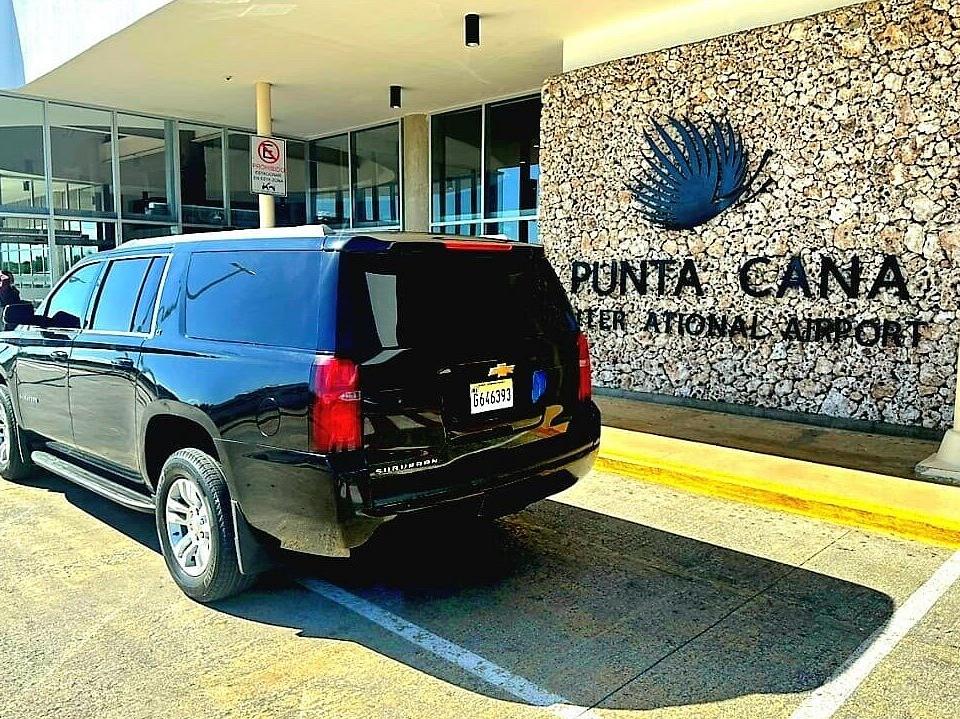
The Dirección Nacional de Control de Drogas (DNCD) is the primary anti-narcotics agency, working alongside customs (Dirección General de Aduanas) at every international airport and seaport. Both agencies operate 24/7 at Punta Cana International Airport (PUJ) with K9 units, baggage X-ray and random secondary screening.
No. Bringing marijuana, hashish or any THC product into the Dominican Republic is especially risky because it is not treated as simple possession — it is treated as importation of a controlled substance. That distinction is what turns a misdemeanour-style charge in your home country into a potential trafficking case here.
It does not matter whether the cannabis was legally purchased in Colorado, Toronto, Berlin or Bangkok. It does not matter whether you have a medical card. It does not matter whether the product is sealed in original dispensary packaging. The moment it crosses the Dominican border in your luggage, on your person or in a checked bag, it is contraband under Dominican law.
4. What happens if you are caught with weed at Punta Cana airport?
Anecdotally, some travelers have reported being stopped at PUJ with small amounts of cannabis, having the product confiscated and being issued a fine before being allowed to continue to their resort. These stories circulate widely on Reddit, TikTok and travel forums and create the false impression that PUJ is lenient.
It is not. The traveler's experience depends entirely on which officer is on shift, the quantity involved, how the product is packaged, whether it was declared, whether the traveler cooperates, and the discretion of the prosecutor on call. The same product, on the same flight, can lead to very different outcomes depending on these factors.
Documented outcomes range from confiscation and warning, through monetary fines and deportation, to multi-day detention, criminal charges and pre-trial imprisonment while a case proceeds through the Dominican courts. There is no published 'tourist amnesty' — every favourable story you read online is a personal anecdote, not a legal precedent.
Penalties under Law 50-88 vary by quantity, prior record, intent, and the prosecutor's reading of the case. Fines are denominated in Dominican minimum-wage multiples, which means the dollar amount changes each year as the minimum wage rises. Pre-trial detention can last weeks or months while the case is investigated, and bail is not guaranteed for foreign nationals because of flight risk.
Beyond the criminal exposure, a drug arrest in the Dominican Republic typically triggers a chain of secondary consequences: cancellation of return flights, loss of accommodation deposits, attorney fees that quickly exceed several thousand US dollars, mandatory court appearances that may require the traveler to remain in country, potential entry bans to the United States and Schengen Area once the conviction appears on background checks, and reputational damage if the case is reported in local media.
Our full explainer on penalties lives at /en/what-happens-if-you-get-caught-with-weed-in-punta-cana — it includes notes on the role of the public defender, the timeline of a typical case, and what consular assistance can and cannot do.
6. THC vapes, edibles, gummies and oils
The single most common mistake made by travelers from legal-cannabis markets is focusing only on flower and forgetting about derivative products. From an enforcement perspective at PUJ, a 1-gram disposable THC vape, a 100mg gummy pack or a tin of infused mints can create exactly the same legal problem as a sealed eighth of flower — and in some respects more, because concentrated products are weight-multiplied for charging purposes under Law 50-88.
Detection has also improved. PUJ runs modern dual-view X-ray on checked luggage, and K9 units are trained on a wide range of organic compounds including some terpenes. The 'it's just a vape, they won't notice' assumption was unreliable a decade ago and is fully obsolete now. See /en/can-you-take-a-thc-vape-to-punta-cana and /en/can-you-bring-edibles-to-punta-cana for the specifics.
7. CBD and hemp products
CBD occupies a grey zone. Hemp-derived CBD products with no THC are tolerated in some pharmacies and wellness shops in Santo Domingo and Punta Cana, but customs officers at PUJ have broad discretion to seize any product they cannot verify as THC-free on the spot — and they typically default to seizure when in doubt.
If you rely on CBD for sleep, anxiety or recovery, the practical advice is: leave it at home, bring the certificate of analysis if you cannot, and never combine CBD products with anything containing detectable THC. Travelers report fewer issues with isolate-only products in original sealed packaging with a clear COA, but there is no guarantee. The full breakdown is at /en/cbd-in-punta-cana.
8. Medical marijuana cards from abroad
A US, Canadian, Australian, German or UK medical-cannabis recommendation has no legal force in the Dominican Republic. There is no reciprocity agreement, and Dominican authorities do not recognise foreign medical-cannabis programmes. Presenting a medical card at customs does not exempt the traveler from Law 50-88 and, in some reported cases, has actually drawn additional scrutiny.
Patients who rely on cannabis-based medication should consult their treating physician well before travel about non-THC alternatives, and contact the Dominican Ministry of Public Health (Ministerio de Salud Pública) about formal exemption procedures — which are exceedingly rare and typically only available for compassionate-use cases under medical supervision.
9. Is weed common in Punta Cana?
Yes — and that is the most dangerous half-truth circulating about cannabis in the Dominican Republic. Visitors will encounter informal offers in Cortecito, Los Corales, parts of the Bávaro beach strip, and around some nightlife venues. The availability of an illegal product does not change its legality. Many of those offers are also linked to street-level scams, theft and entrapment.
Our supporting reads at /en/weed-punta-cana and /en/is-weed-legal-in-punta-cana cover the on-the-ground reality without explaining how to buy. The honest takeaway: visibility ≠ permission, and tourists are vastly easier targets for both criminals and law enforcement than locals are.
10. Resorts, beaches and smoking rules
Most all-inclusive resorts in Bávaro, Cap Cana, Cabeza de Toro, Uvero Alto and Macao have explicit no-illegal-substance clauses in their guest contracts. Hotel security is empowered to involve the DNCD when cannabis is found in a room, and many resorts will eject the guest with no refund and report the incident.
Even setting aside the criminal exposure, the practical risks of buying cannabis from a stranger in a tourist area are substantial. Product quality is unverifiable. Synthetic cannabinoid contamination has been reported across the Caribbean. Sellers sometimes work with corrupt acquaintances who tip off police in exchange for a share of the bribe. Tourists have been robbed mid-transaction. Tourists have been arrested moments after the handover.
We will not link to or recommend any source. This article exists to inform travelers of the law and the risks, not to facilitate them.
12. Dominican Republic vs Jamaica, Cancun and the Caribbean
Caribbean cannabis law is a patchwork. Jamaica decriminalised possession of up to two ounces in 2015 and licenses adult Rastafarian sacramental use, but tourist purchase remains technically grey. Mexico's Supreme Court declared recreational prohibition unconstitutional, though dispensary infrastructure remains limited in Quintana Roo. Antigua, Barbados, Saint Vincent and the Grenadines have moved toward decriminalisation. The Cayman Islands, Bahamas, Turks and Caicos, Cuba and the Dominican Republic remain firmly prohibitionist for tourists.
13. What tourists should do instead: legal experiences
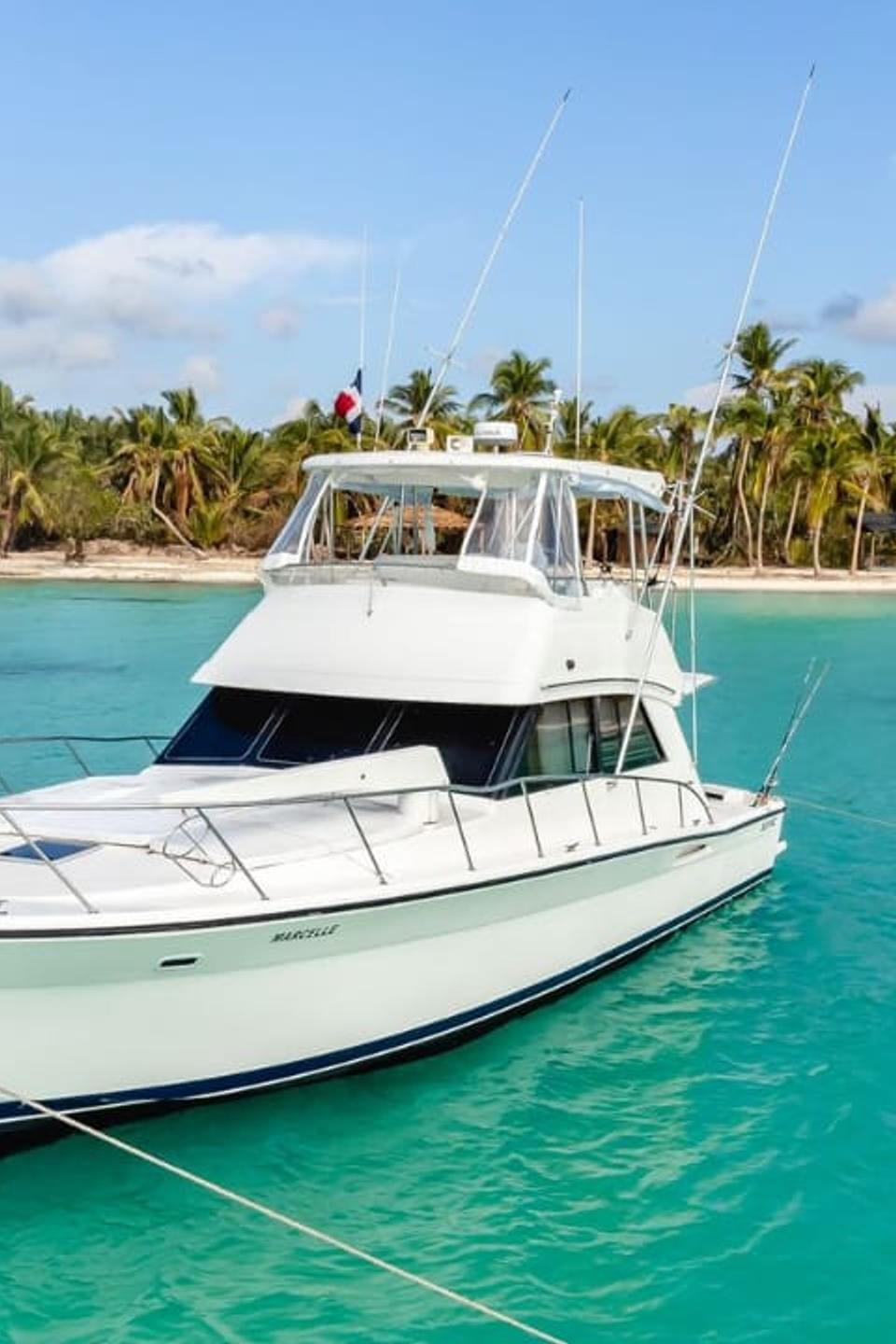
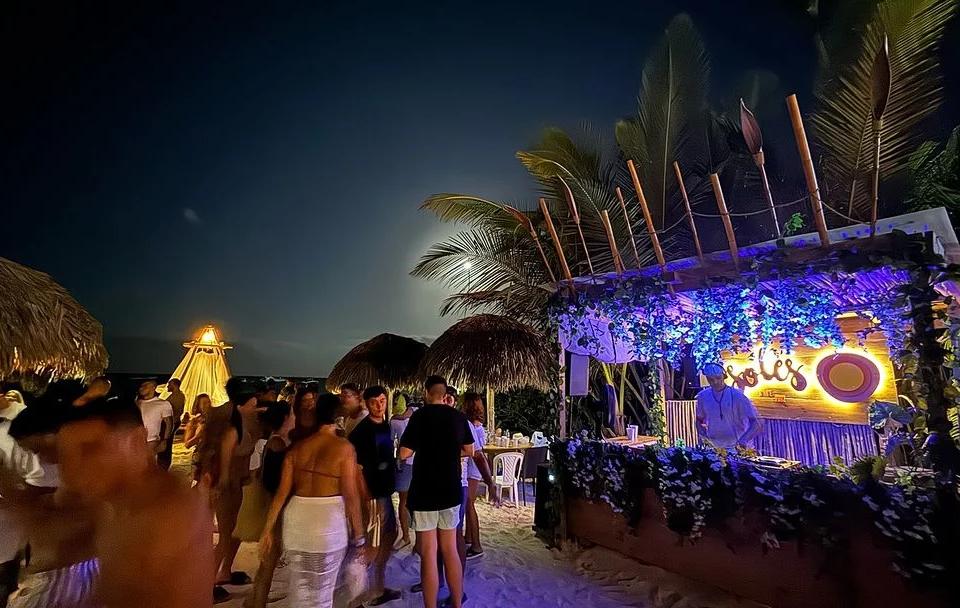
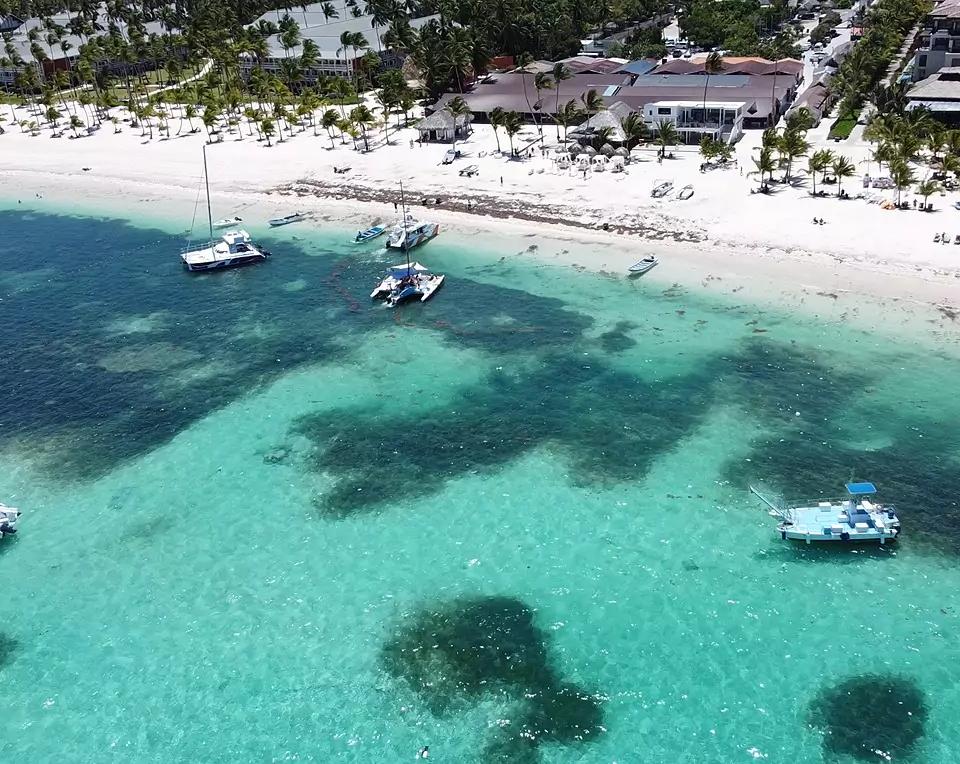
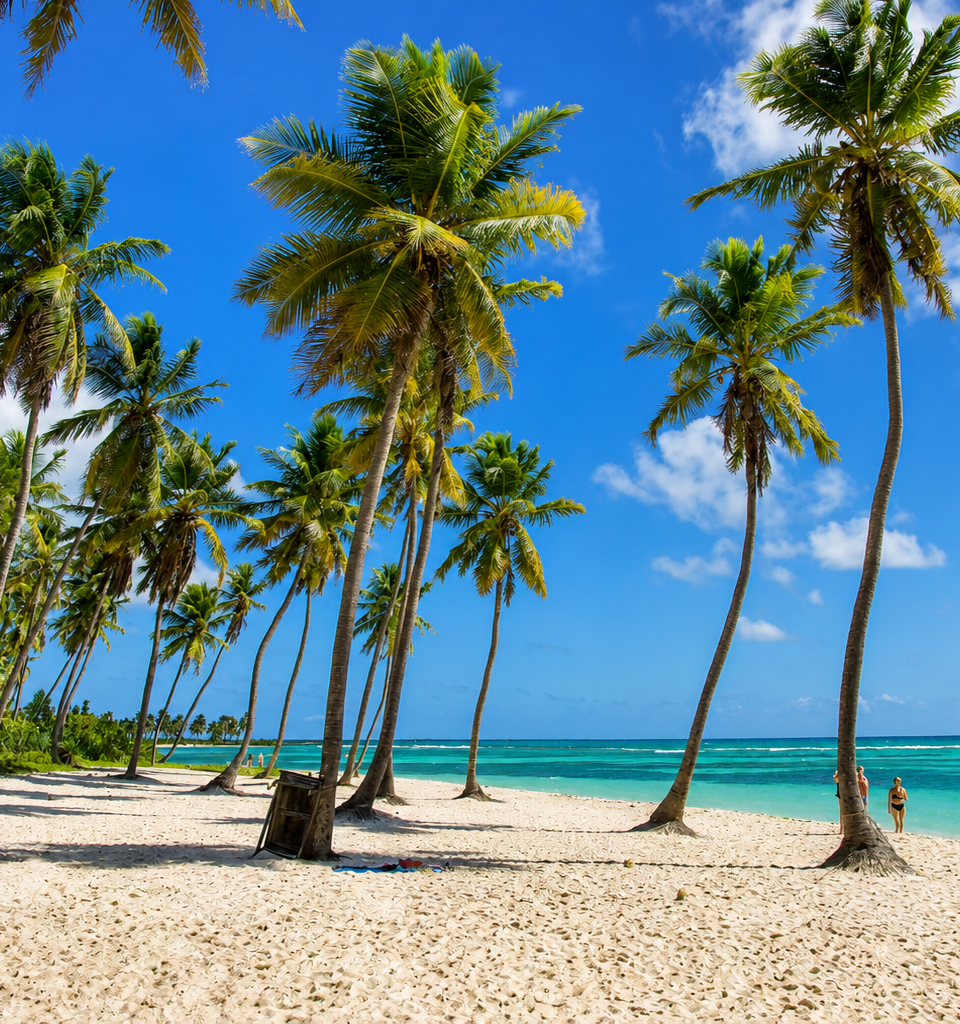
The Dominican Republic is not a destination you visit for cannabis. It is a destination you visit for water that looks photoshopped, beaches that stretch for forty kilometers, world-class private boats, Caribbean nightlife with the strongest rum on earth, and excursion days you will talk about for years.
Replace the activity, not the holiday. If you came for relaxation, the /en/punta-cana-nightlife scene, beach clubs and resort spas deliver exactly that. If you came for connection and a social vibe, a /en/tours/party-boat-punta-cana day on a catamaran with open bar and a DJ is the legal version of everything visitors hope a cannabis-friendly trip would feel like. If you came to be off-grid in nature, the /en/tours/saona-island-tour and /en/tours/catalina-island-tour days deliver postcard Caribbean.
Every major embassy in Santo Domingo — the United States, Canada, the United Kingdom, France, Germany, Italy, Spain, the Netherlands, Russia and Brazil — publishes travel advisories explicitly warning citizens about Dominican drug laws. Consular officers can visit detained nationals, provide a list of local attorneys and notify family members. They cannot get a citizen out of jail, cannot intervene in the criminal process and cannot pay fines or bail.
If a friend or family member is detained, the first call is to the relevant embassy's 24-hour consular line, then to a local criminal attorney. We have a separate overview of safety, scams and embassy contacts at /en/tourist-scams-punta-cana.
15. Final thoughts — responsible travel
The fairest summary we can give travelers: cannabis remains illegal across the Dominican Republic in 2026, enforcement at PUJ is real, penalties are serious, and the small number of online stories ending in a confiscation and a fine are the lucky outliers, not the rule.
Leave cannabis products at home. Bring sunscreen, a swimsuit, an open mind and a willingness to spend a few days on the water. The Dominican Republic rewards travelers who choose legal experiences with one of the best Caribbean holidays money can buy — see the full /en/punta-cana-travel-guide-comprehensive and the /en/punta-cana-airport-transfers primer to plan the rest of your trip.
No. Cannabis is illegal under Law 50-88 in all forms — flower, hashish, THC vapes, edibles, tinctures and oils. There is no decriminalisation threshold and no tourist exemption. See /en/is-marijuana-legal-in-dominican-republic for the full legal framework.