Swimming in Punta Cana: Beach Flags & Currents (2026)
Last updated:
A beautiful beach is not a promise about today's sea. Understand the flags, ask the right questions and choose a beach day that works even without swimming.
Can you swim in the sea in Punta Cana?
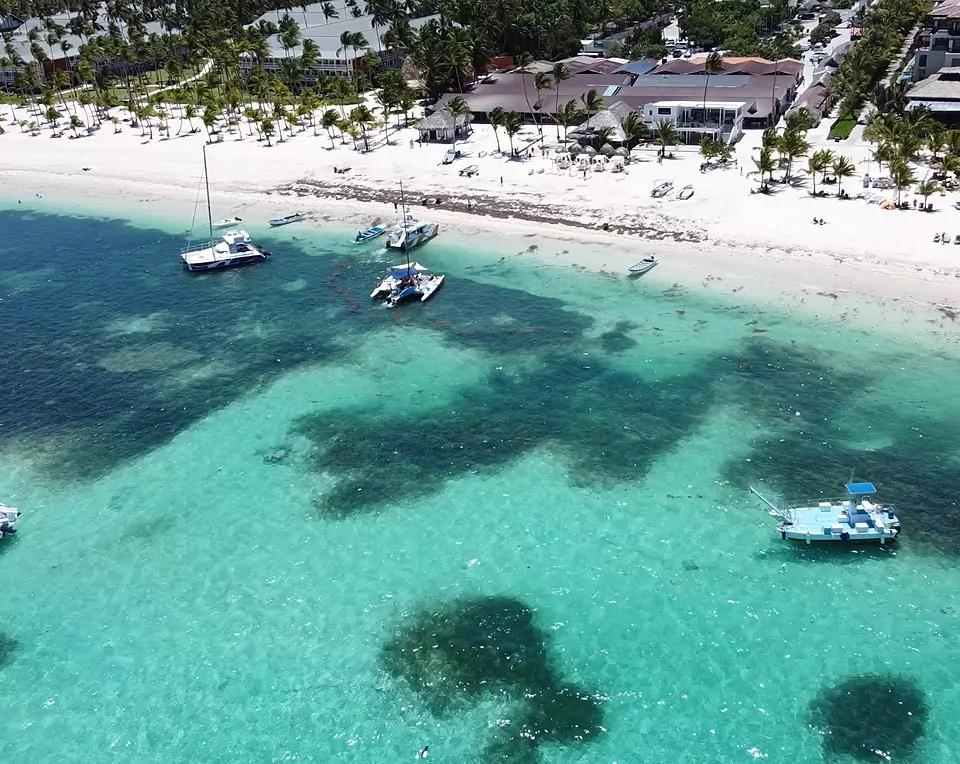
Swimming can be part of a Punta Cana holiday, but the useful answer is about a particular stretch of water at a particular time. A beach name, clear turquoise colour or yesterday's photograph cannot tell you whether entering is appropriate now. Wind, swell, shorebreak, currents, boat traffic and your swimming ability all matter. Our advice is to choose a supervised bathing area, ask the on-duty lifeguard and accept that some days are beach days without a swim.
Use our comparison of the area's beaches for scenery, atmosphere and the kind of outing you want. This guide addresses the next decision: what to check when you arrive. A hotel wristband, a reef offshore or a destination described as family-friendly does not remove the need for that check. Nobody should feel obliged to enter because the trip was expensive or everyone else is already swimming.
Beach flags: read the local sign, then ask
A common warning system uses green for lower hazard, yellow for increased caution and red for dangerous conditions. Treat a red flag as a reason to stay out, and obey any no-swimming instruction or closure. Green is not an all-clear for every person or activity. Flag arrangements are not identical everywhere: read the posted explanation and ask which area and hours the warning covers. Never import a flag code from another country without checking.
No flag, no sign or an unoccupied tower is not evidence of safe water. If you cannot confirm a supervised area and its conditions, choose time on land. A Blue Flag environmental award is different from a current swimming warning; it is not a guarantee that the sea is suitable this afternoon. A vendor offering an activity is also not a substitute for the person responsible for bathing safety.
Bávaro, Juanillo, Macao and Uvero Alto: avoid permanent rankings
Bávaro is a long coastline with different resort frontages, boat access points and bathing areas. Juanillo's beach setting can look sheltered, but neither the name nor a shallow-looking photograph confirms the day's depth and current. At Macao, a surf lesson and a casual swim are different activities. The first-lesson guide for Macao explains instruction and swimming requirements; watching surfers is not evidence that a nearby patch suits a child.
In Uvero Alto, too, judge the actual frontage rather than the resort's star rating. Check where waves break and where swimmers are directed, without trying to diagnose currents yourself. For an independent visit, our beach entrance and facilities guide helps with the land arrangements. An attractive remote entrance may lack active rescue cover. Do not drive to another beach on the assumption that it must be safer; check again on arrival.
Waves and rip currents: appearances can mislead
A rip current carries water away from the beach. It is not the same as a wave breaking onto the sand, and strong swimmers can also get into difficulty. A gap between breaking waves can look inviting while carrying water outward. Do not choose an entry point by looking for the apparently smoothest gap or by following strangers. Ask the lifeguard where the designated swimming area is and whether it suits your group.
Shorebreak can knock a person down close to land; being able to stand does not remove the risk. Keep away from piers, jetties, rocks and boat lanes, and follow the marked boundaries. Do not dive head-first into surf or unfamiliar shallow water. The aim is not to learn a few visual clues and declare a beach safe yourself. Local professional advice and the option not to enter remain the practical choices.
If you are caught in a current, or see someone in trouble
Do not exhaust yourself fighting directly against a rip toward the beach. Try to stay calm, float or tread water and signal or call for help. If you can swim out of the current, move parallel to the shoreline until free of its pull, then return toward land at an angle away from it. If you cannot make progress, conserve energy and keep signalling. These are general emergency principles, not a reason to enter doubtful water.
If another person is struggling, alert the lifeguard immediately and have someone call 911. Give the beach name, hotel or entrance and precise location. Offer a flotation aid from a safe position if available; do not become a second casualty by attempting an untrained swimming rescue. Follow the emergency operator's instructions. Learn water-rescue and first-aid skills before travel rather than relying on an article during an incident.
Children, less confident swimmers and flotation aids
Agree which sober adult is actively watching each child, without a phone, book or competing task. Hand over that responsibility explicitly when taking turns. Young children and weak swimmers need close supervision within arm's reach near water; the presence of a lifeguard does not replace it. Pool confidence is not the same as coping with waves, changing depth and moving water. A child who is tired, frightened or unwilling should stay out.
Use properly fitted life jackets appropriate to the activity and the wearer's size when required or advised. Armbands, inflatable rings and beach toys are not substitutes for a life jacket, swimming ability or supervision. Equipment does not override a closure. Adults should also swim with a companion, stay within their ability and avoid alcohol before or during swimming. Set a simple family rule: nobody enters first and asks permission afterwards.
Check again when the weather or the beach changes
Ask about today's wind, swell and restrictions, rather than assuming a particular month or an early hour guarantees calm water. Conditions can change during a beach visit, so follow new flags and instructions. Leave the water and exposed beach for suitable shelter when thunder is heard. Do not wait for rain to reach your towel. Cloudy weather is not a reason to forget shade, drinking water and sun protection either.
Ask these questions in plain terms: Is a lifeguard on duty now? Where exactly may we swim? Is this suitable for our children's ages and abilities? What would make you advise us to stay out? A boat departure may be cancelled or modified for different operational reasons from a resort's swimming restriction. Neither decision is a shortcut for assessing the other. A free afternoon is worth more than forcing a water activity into it.
Beach swims, snorkeling and natural-pool stops are different
On our four-beach island excursion, ask about the actual boarding, landings, equipment and water stops for your date. Offshore depth is not fixed at an adult's waist, and children of different heights experience the same place differently. A natural pool or sandbar is still part of the sea, with moving water and boats. The captain and crew decide whether a stop can proceed; they cannot promise identical conditions on every departure.
Snorkeling requires comfort in open water as well as suitable equipment and supervision. Tell the operator if someone cannot swim, wants to stay dry or needs help with ladders, and confirm whether sitting out is possible at each stop. Our guide to outings without swimming covers those arrangements. A life jacket does not make every itinerary suitable for every guest. Nor should an offshore trip be sold as a way around a swimming closure at your hotel.
When swimming is unsuitable, keep the day worthwhile
A beach lunch, reading in the shade or a walk well back from breaking waves can still be a good plan, provided local restrictions allow the visit. A pool is a separate environment with its own rules and supervision. Do not treat walking into the shallows as a compromise when the instruction is to stay out. If beach access is closed, respect the closure rather than searching for an unattended entrance.
For a different holiday day, the cultural excursion to Santo Domingo is built around sightseeing rather than a sea swim. Consider the drive, walking and heat before booking. There is no need to buy another excursion merely because today's water is unsuitable. Rearranging the week or enjoying the facilities already available may be the best choice. Discuss a realistic alternative with your group before paying for a last-minute replacement.
Your checklist before entering the water
Know the exact bathing area, current warning, on-duty supervision and exit point. Check your own energy and swimming ability, assign child supervision and leave alcohol until water activities are over. Keep the beach or hotel name and an emergency contact available ashore. Recheck after a break or change in weather. If any of the essentials remains unclear, keep swimming off the plan.
For an excursion enquiry, send your accommodation, date, group size, children's ages and swimming confidence. Ask about boarding, optional water stops and equipment before choosing. Our local recommendation is to plan for an enjoyable day with a swim as a possibility, not a promise. This guide was reviewed on 22 October 2026; it does not report live conditions at any beach or replace an on-site safety decision.