Coffee & Cacao Tours from Punta Cana: What to Expect (2026)
Last updated:
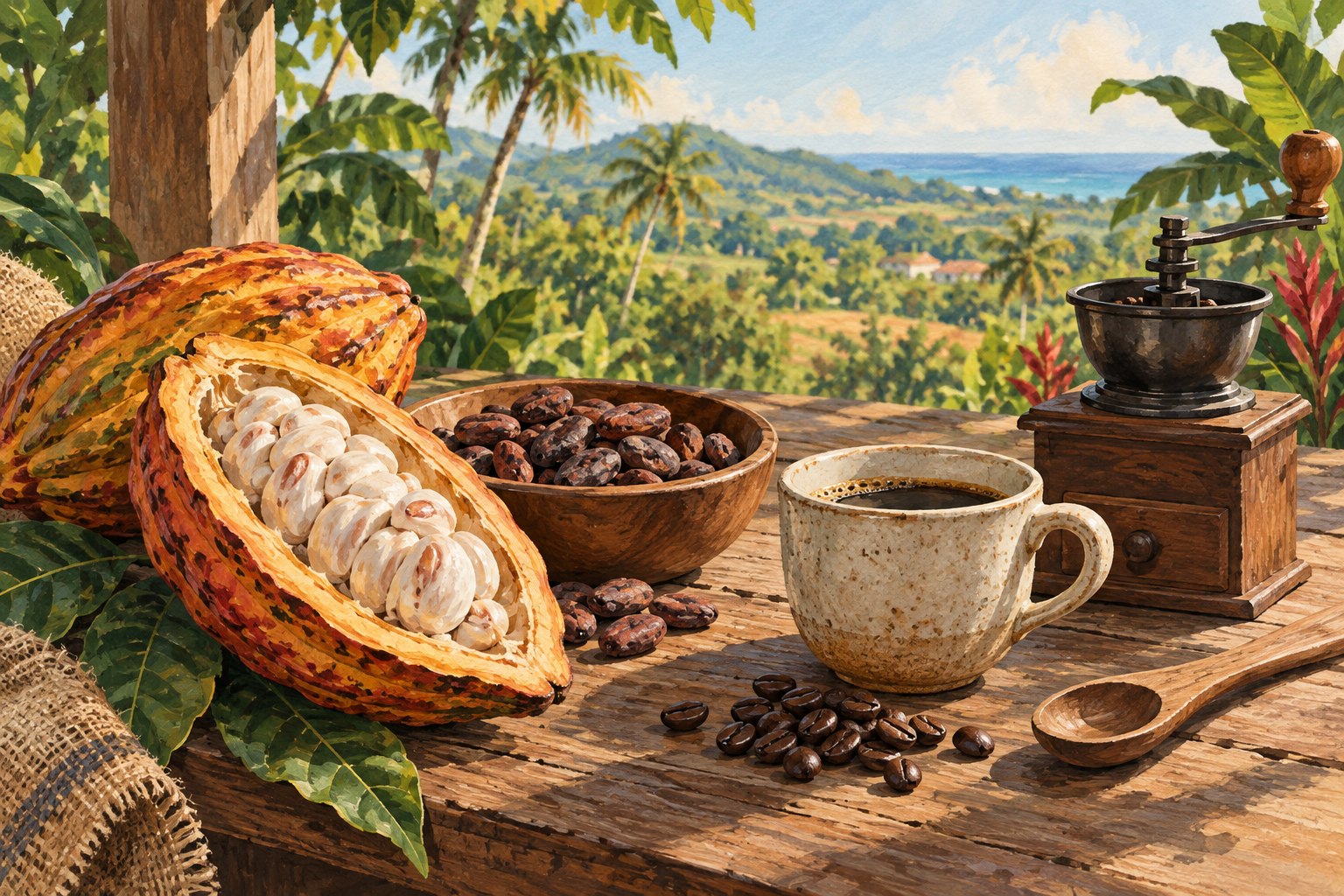
A cup of coffee in the countryside can be a lovely part of your holiday. Here is how to tell a farm visit from a tasting stop and choose the experience you actually want. Cover: editorial illustration.
Is a coffee or cacao excursion worth a day away from the beach?
If you enjoy finding out how everyday flavours reach your cup, yes: a well-explained tasting can add something a resort buffet cannot. You can smell the beans, ask about preparation and put a familiar drink into its Dominican setting. But the phrase coffee and cacao tour covers very different outings. Some are visits built around cultivation and processing; others are short demonstrations inside an adventure excursion.
Our advice as a local operator is to decide which experience you want before comparing prices. A curious food lover may want unhurried questions and a walk among crops. A family keen on buggies may be perfectly happy with a short tasting between activities. Neither needs to be dressed up as the other. For the broader food background, start with our guide to local dishes and drinks.
Farm visit, demonstration or tasting stop: know the difference
A working farm visit should identify the property and explain what actually grows there. A processing demonstration might show roasting, grinding or drink preparation using ingredients brought from somewhere else. A tasting stop may simply serve prepared products, followed by time in a shop. Each can be enjoyable when the description matches the day; a rustic building alone tells you little about where the ingredients came from.
Ask three direct questions: will we see plants being cultivated, which stages will the guide demonstrate, and how long is the educational part before shopping? A cacao pod on the counter does not prove you are visiting the farm that grew it. Nor does coffee served in the Punta Cana countryside establish that the beans were grown nearby. Ask the guide about the stated growing region and producer.
From cacao pod to chocolate: what is worth asking about?
Cacao grows in pods; the seeds inside are the starting material for cocoa and chocolate. Fermentation, drying, roasting and grinding are distinct stages, and a short excursion cannot show every stage happening from start to finish with the same batch. A good explanation makes that clear. Ask which stages happen on the property and which are represented by samples, equipment or a demonstration.
Before tasting, find out what is in the cup or sample. Unsweetened cacao, a sweetened chocolate drink and a finished chocolate bar are different products. Ask whether milk, sugar, spices or other ingredients have been added. Children often enjoy seeing the pod and comparing smells more than hearing a long technical explanation. Tasting should remain optional, especially when ingredients or preparation cannot be confirmed.
Coffee tasting: look beyond a strong little cup
A useful coffee demonstration connects the beans to what you drink: where they were grown, how they were roasted, how finely they were ground and how the cup was prepared. You do not need tasting vocabulary to ask whether the coffee is served sweetened or whether you can try it without sugar. The way a drink is prepared matters as much as the attractive packaging beside it.
If several products are offered, ask what you are comparing. Different amounts of sugar or milk can obscure differences between coffees. Avoid treating a quick tasting as proof of organic certification, a particular origin or a superior grade. Those claims need their own supporting information. You can enjoy the flavour without turning the visit into a purchase or accepting every sales claim.
Which Cana.Tours excursions currently include tastings?
The Macao buggy and cenote outing combines off-road driving, a freshwater cave stop, Dominican product tastings and village shopping time. Its published duration is four hours; ask how that relates to your accommodation pickup and return. Coffee and chocolate are part of the wider tasting selection. Choose it because you want the adventure too: it is not sold as a specialist coffee estate tour or a quiet farm-only visit.
The full-day Adventure Kingdom programme includes several adventure activities, cultural presentations, product tastings and a Dominican buffet lunch. Its published duration is eight hours. It suits guests who want a varied activity day, rather than hours devoted to cacao processing. For either option, confirm the current itinerary and guide language. Seven language versions of this article do not mean every excursion has guides in all seven languages.
What if you want the tasting without the buggy ride?
Say so before booking. Buying an adventure package and deciding at the starting point to skip its main activity can leave awkward gaps, and separate access to the tasting venue may not be available. Ask whether a visit focused on coffee and cacao can actually be arranged for your date, with its own confirmed location, transport and price. We do not list a standalone plantation excursion here because the two linked products are broader activity days.
Judge any alternative by the same practical details: educational time, group size, walking, shade, toilets, tasting ingredients and the amount of shopping time. If coffee is your main interest, a clearly explained preparation session may suit you better than a long drive to somewhere described vaguely as a plantation. Get the actual programme rather than relying on the word authentic.
Plan the whole day: pickup, children and physical demands
Allow for the journey from your own accommodation, not just the time printed beside the attraction. Shared collection can include other stops; hotel access and rental meeting points also differ. Confirm where to meet, the pickup time and the expected return window. Our hotel and rental pickup guide explains how to settle those details before the morning of the excursion.
For children, older guests or anyone with mobility needs, assess every included activity. A tasting seated in the shade does not make a rough buggy route suitable for everyone. The current Macao buggy product lists children from eight and drivers from eighteen; check the current participation requirements when booking. Ask separately about steps, uneven ground, seating and toilets at the tasting stop. Do not assume that skipping an activity changes the price or guarantees supervision.
What to wear, what to bring and what to taste
Match your clothes to the entire itinerary. Closed shoes and clothes you can get dusty or muddy make more sense for an off-road day than beach sandals and your best linen. Bring drinking water, sun protection and whatever swim kit the booked excursion requires. Ask about rain arrangements: a covered tasting area does not mean all outdoor activities continue in every condition.
Tell the organiser about allergies before paying and ask the person serving about ingredients and shared equipment on the day. Do not assume a chocolate drink is dairy-free or a sample is safe because it looks simple. Decline anything you cannot assess. Coffee contains caffeine, while mamajuana offered alongside it may contain alcohol; neither is a necessary part of a child's experience. There should be no pressure to sample everything.
Shopping is optional: keep the experience separate from the purchase
A welcome sample is not a commitment to buy. If you like a product, read the label, ask about the producer and compare package sizes and the final price in the quoted currency. Products purchased at the village shops are separate from the included tastings on the linked excursions. You should be able to enjoy the visit and return with photographs and memories alone.
For coffee, consider whether you need beans or ground coffee; for chocolate, think about heat during the return journey. Our souvenir buying guide covers labels, packing and choosing gifts in more detail. Check applicable travel and destination rules before purchasing food or plant materials. Leave buying advice to that guide and use this one to choose how you want to spend the day.
The questions we would send before booking
Send your travel date, accommodation, group ages and what matters most: coffee preparation, cacao processing, countryside scenery or an adventure with a tasting stop. Ask for the venue name, time spent there, guide language, full inclusions and pickup-to-return estimate. If your priority is a working farm, make that explicit and request confirmation of what is cultivated on-site.
We would rather match the outing to your interests than promise a plantation experience that a short stop cannot deliver. Compare the two current activity options only if their main activities appeal to you. If you want a slower food-focused visit, ask what is available before committing; availability, access and any tailored arrangements need a specific confirmation.
There are excursions with coffee and cacao demonstrations or tastings. Our linked Macao buggy and Adventure Kingdom products include tastings within broader activity programmes; they are not advertised here as dedicated working-plantation tours.