Dominican Food Guide: 35 Foods Every Tourist Should Try (2026)
Last updated:
Beyond the buffet: 35 traditional Dominican dishes — from Mangú and La Bandera to Sancocho, Chivo Guisado, Habichuelas con Dulce and Mamajuana — and where to try them like a local.
Why Dominican cuisine is one of the Caribbean's most underrated
Ask most first-time visitors what they know about Dominican Republic food before arriving and the honest answer is usually: not much. Jerk chicken, plantains, maybe rum. The all-inclusive buffet then reinforces a slightly muted picture — a plate of grilled meats, some rice, a slice of pineapple.
That's a shame, because Dominican cuisine is one of the most soulful, complex and satisfying food traditions in the entire Caribbean. It's the direct result of five hundred years of cultural collision: Taíno indigenous roots (cassava, corn, sweet potatoes, chili peppers), Spanish colonial techniques (stews, sofrito, olive oil, wheat, dairy), West African ingredients and cooking methods (plantains, yams, okra, one-pot stews), and later Middle Eastern and Chinese influences that arrived with 19th- and 20th-century immigration.
The result is food that feels familiar and completely new at the same time. Rice and beans, but perfumed with sofrito and topped with slow-braised chicken. Fried plantains, but transformed into puffy tostones or velvety mashed mangú. Stews that take a full day to build. Desserts that use beans as their base. Coffee grown at 1,200 meters in the mountains behind Jarabacoa. And tropical fruit — mango, papaya, guanábana, chinola — that tastes like sunlight after a lifetime of supermarket versions.
This guide is written by a local Punta Cana team that eats this food every day. Consider it the honest, opinionated 35-dish tour we'd give a friend arriving on a Tuesday afternoon, hungry.
The cultural and historical influences on Dominican food
Three lineages built modern Dominican cooking. The Taíno — the indigenous people who greeted Columbus in 1492 — cultivated yuca (cassava), batata (sweet potato), corn, chilies, cacao, tobacco and pineapple. Their most enduring gift is casabe, a flat bread of grated cassava that's still baked in the Cibao valley the exact way it was 700 years ago.
The Spanish arrived with pigs, cattle, chickens, rice, olive oil, garlic, onions, citrus, wine and the entire technique of the slow-simmered stew. Sofrito — the aromatic base of chopped onion, pepper, garlic, cilantro and a touch of tomato — comes straight from Andalusian and Canary Islands cooking. It's the flavor memory of nearly every Dominican savory dish.
The African contribution, brought by enslaved West Africans, is arguably the largest single influence on the everyday plate. Plantains, yams, pigeon peas, okra, one-pot rice dishes (locrio), moros y cristianos, and the deep, patient braises that define Sancocho — all trace back to West African kitchens.
Later waves added texture. Sephardic and Lebanese immigrants brought kibbeh (now quipes). Chinese railway workers left chofán. Italian, French and American influence shows up in the pastry cases of Santo Domingo. The country's history is on every plate.
Dominican breakfast dishes (1–5)
Breakfast in the Dominican Republic is not a light affair. It's a serious, savory meal designed to fuel a day of physical work — even if you're on holiday.
1. Mangú — the national breakfast
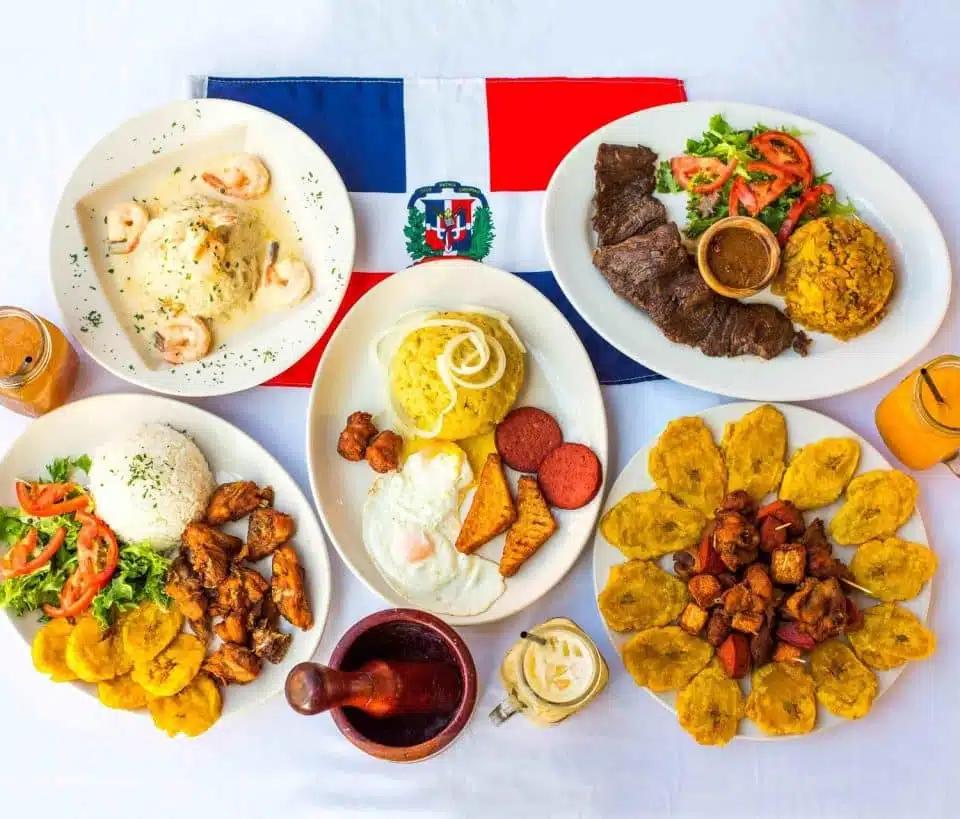
Mangú is the Dominican breakfast. Green (unripe) plantains are boiled until tender, then mashed with butter, a splash of the cooking water and cold water to keep them silky. On top: a mountain of red onions quickly pickled in vinegar and lightly sautéed.
The traditional pairing is Los Tres Golpes — 'the three hits' — of fried Dominican salami, fried cheese (queso frito) and a fried egg. Order it once and you'll understand why Dominicans consider a morning without mangú a slightly incomplete morning.
2. Los Tres Golpes — the classic mangú combo
Almost always sold as a set with mangú. The salami is bright pink, sliced thick and fried until the edges crisp. The cheese is a firm, salty white cheese (queso de freír) that squeaks in the pan and forms a golden crust. The egg is fried over-easy so the yolk runs into the mangú. Salty, rich, comforting — the reason nobody eats another meal until 2 p.m.
3. Yaniqueques — the beachside breakfast
Crispy, puffy fried flatbreads sold from wooden shacks on almost every Dominican beach, from Boca Chica to Cortecito. Descended from West Indian 'johnny cakes,' they're eaten plain, drizzled with lime, or split and stuffed with cheese, salami or fried fish. The sound of them frying is the soundtrack of a beach morning.
4. Domplines — Dominican dumplings
Simple boiled flour dumplings, usually served with sautéed onions, coconut milk and a piece of stewed fish or chicken. A staple breakfast on the north coast (Samaná, Puerto Plata) and a direct inheritance from British-Caribbean cooking traditions carried by the 19th-century American freedmen who settled in Samaná.
5. Chocolate de agua — Dominican hot chocolate
Dominican cacao is one of the world's most sought-after — organic, low-cadmium and beautifully floral. Traditional breakfast chocolate is made with water rather than milk, cinnamon, a whisper of nutmeg and often a bay leaf. Thick, dark, deeply aromatic. Try it at any traditional comedor.
Lunch specialties (6–12)
Lunch (almuerzo) is the main meal of the day. Most Dominicans stop everything between 12:30 and 2:00 p.m. to eat properly. This is where the national dishes live.
6. La Bandera Dominicana — the national dish
La Bandera — 'the Dominican flag' — is the daily lunch of the entire country. White rice, stewed red beans (habichuelas guisadas) and a piece of stewed meat, usually chicken (pollo guisado). A small green salad and a slice of fried plantain complete the plate.
Simple on paper. Transcendent when done right. The rice cooks with a hint of oil until the bottom forms concón — the crispy golden layer every Dominican fights over. The beans are simmered with sofrito, pumpkin, tomato paste and a splash of vinegar. The chicken is browned, then slow-cooked with onions, peppers and oregano until it falls apart. Eat this once at a local comedor and every buffet will feel a little sad afterward.
7. Sancocho de siete carnes — the celebration stew
The most iconic Dominican dish that isn't eaten every day. Sancocho is a slow, deep, ingredient-heavy stew of seven meats — usually chicken, beef, pork ribs, longaniza sausage, chicken feet, smoked pork and goat — simmered for hours with yuca, yautía, ñame, plantain, sweet potato, corn, pumpkin and sofrito.
It's the dish of Sundays, birthdays, weddings, hangovers and rainy days. Traditionally served with white rice and a slice of avocado. If a Dominican family invites you to eat sancocho — cancel your other plans.
8. Moro de guandules — rice with pigeon peas and coconut
The country's other great rice dish. Long-grain rice cooked in coconut milk with pigeon peas (guandules), sofrito, coriander and a touch of smoked meat. The Sunday version at any Dominican grandmother's house is unbeatable. Common all over the country but at its coconut-heavy best on the north coast.
9. Locrio — Dominican rice-with-everything
A whole family of one-pot rice dishes cooked together with a protein: locrio de pollo (chicken), locrio de longaniza (sausage), locrio de bacalao (salt cod), locrio de camarones (shrimp). Comparable to Spanish paella or Louisiana jambalaya, but with its own aromatic profile of sofrito, olives and capers. Deeply satisfying and often the cheapest way to eat like a local.
10. Asopao — Dominican rice soup
Somewhere between a soup and a risotto. Rice cooked long in a rich chicken or seafood broth, with vegetables and often shredded meat, finished with a squeeze of lime. The Dominican answer to a bad day, a cold night or a lingering fever.
11. Chicharrón — Dominican pork crackling
Pork belly and skin fried until deeply crisp on the outside and molten inside. Sold by weight from roadside stalls, especially at Villa Mella and along the Autopista Duarte. Squeeze lime, dip in a garlicky mojo and pair with tostones. Weekend national sport.
12. Mofongo — the plantain-and-pork masterpiece
Shared with Puerto Rico, but the Dominican version has its own soul. Green plantains are fried, then mashed in a wooden pilón with garlic, olive oil and chicharrón until they form a fragrant, sticky dome. Stuffed with shrimp, chicken or braised beef and drenched in broth or garlic sauce. A restaurant-only dish — order it whenever you see it.
Dominican seafood (13–18)
With over 1,500 km of coastline, the DR eats extraordinary seafood — much of it caught the same morning. The best seafood memories in Punta Cana are made not on buffet lines but on Saona Island, Catalina Island and in the fishing village of Mano Juan.
13. Fresh Caribbean lobster — on Saona and Catalina
Grilled spiny Caribbean lobster (langosta), split and dressed with garlic butter and lime, is the dish visitors talk about for years. Best eaten under a palm tree on Saona Island, at the beach lunch of the tour, with your feet in the sand.
The signature dish of the Samaná peninsula. Fresh red snapper simmered in a golden sauce of coconut milk, garlic, tomato and habanero. Served with tostones and white rice. Try it in Las Terrenas or on a Samaná day trip from Punta Cana.
15. Pescado frito — whole fried fish
The iconic beach lunch. A whole red snapper or dorado, seasoned with garlic, lime and oregano, fried until the skin is glass-crisp. Served with tostones, avocado and a small side of pickled onions. Order it at Playa Boca Chica, Bayahibe or any fishing village.
16. Camarones al ajillo — garlic shrimp
Enormous Caribbean shrimp sautéed in butter, garlic, white wine and parsley. A classic all over Cortecito, Los Corales and Bayahibe. Pair with a cold Presidente.
17. Ceviche Dominicano
Not Peruvian ceviche — the Dominican version leans on lime, red onion, cilantro, tomato and a touch of ketchup or orange juice for sweetness. Made with fresh fish, shrimp or a mix. Bright and coastal.
18. Filete al coco — coconut fish fillet
The restaurant version of coconut fish. A plump snapper or grouper fillet in coconut curry sauce, usually served over rice with sweet fried plantains (maduros). Rich and glossy — a great order at a resort restaurant that finally dares to cook local.
Dominican meats (19–22)
Meat cookery here is patient. Everything is browned first, then simmered slowly in sofrito until it surrenders.
19. Pollo guisado — the everyday miracle
Bone-in chicken browned with sugar (yes, sugar — for color) and slow-cooked with onions, peppers, garlic, tomato paste, oregano and a splash of orange juice or vinegar. The gravy is what makes it. Eaten with rice several times a week in most homes.
20. Chivo guisado — braised goat
The pride of the northwest, especially the semi-desert Monte Cristi region where goats browse on wild oregano and their meat carries the herb naturally. Slow-braised with sofrito, wine, tomato and rum. Deep, savory, unforgettable. Order it at a serious Dominican restaurant.
21. Puerco asado — spit-roasted pork (lechón)
The Christmas centerpiece. A whole pig marinated in sour orange, garlic and oregano and turned for hours over open coals until the skin shatters like glass. Look for it on Sundays in Higüey, along the Autopista San Isidro and at holiday roadside stalls in December.
22. Longaniza dominicana — the local sausage
A coarse, garlicky pork sausage seasoned with sour orange and oregano. Grilled at street fairs, tucked inside sandwiches, sliced into locrio. Villa Mella-style longaniza is the most famous.
Everyday sides and staples (23–26)
The supporting cast is as important as the mains.
23. Tostones — twice-fried green plantains
The universal Dominican side. Green plantain rounds are fried, smashed flat and fried again until golden and crunchy. Salt generously and dip in salsa rosada or garlicky mayo. A perfect companion to almost everything on this list.
24. Maduros — sweet fried plantains
The dark, ripe cousin of tostones. Very ripe (black-spotted) plantains sliced and gently fried in butter until they caramelize. Sweet, sticky, indispensable next to a rich stew.
25. Casabe — Taíno cassava flatbread
Possibly the oldest bread still eaten in the Americas. A flat, brittle round of grated cassava, still baked on flat clay griddles in the Cibao mountains exactly as the Taíno did 700 years ago. A living piece of history you can eat.
26. Quipes — Dominican-Arab kibbeh
Bulgur-and-beef torpedoes fried until crisp, brought by Lebanese immigrants in the early 20th century and completely absorbed into everyday Dominican street food. Every colmado freezer has them.
Dominican desserts (27–30)
Dominicans love sweetness — often expressed in surprising ways.
27. Habichuelas con dulce — sweet cream of beans
The country's most beloved and most unusual dessert. Red beans blended with coconut milk, evaporated milk, sugar, cinnamon, cloves, sweet potato and raisins, then simmered for hours. Served cold with small crunchy biscuits floating on top. Traditional at Easter — but sold year-round from styrofoam cups by roadside vendors.
28. Dulce de leche cortada
Curdled milk (deliberately, with lime) slow-simmered with sugar and cinnamon until it becomes a thick, ivory, spoon-tender dessert. Old-school and comforting.
29. Majarete — creamy corn pudding
Sweet young corn simmered with coconut milk, cinnamon and a touch of nutmeg into a soft chilled pudding. A quiet masterpiece.
30. Bizcocho dominicano — the wedding cake
A tall, cloud-light sponge cake filled with pineapple jam and covered in a distinctive Italian meringue frosting. Sold at every panadería and served at every Dominican birthday and wedding. Somehow, no other cake tastes quite like it.
Tropical fruits to try (31–33)
Roadside fruit stands are as much part of Dominican life as bakeries in France. Stop, point, taste.
31. Chinola (passion fruit)
Punch-you-in-the-face aromatic. Best consumed as fresh juice with a little sugar and ice. The chinola juice at any comedor is a required experience.
32. Guanábana (soursop)
Green, spiky and enormous, with soft white flesh that tastes like strawberry, banana and coconut had a smoothie. Blended with milk and sugar into batida de guanábana, one of the great tropical drinks on earth.
33. Mango, papaya, zapote, mamey, níspero
The Dominican Republic grows dozens of mango varieties — banilejo, mingolo, madame Francia — each with its own sugar and perfume. Add sun-ripe papaya, zapote (a soft brown fruit tasting of sweet potato and caramel), mamey (bright pink and dense) and níspero (small, sticky and honey-flavored). Ask a roadside vendor what's in season — and eat it.
Dominican drinks and coffee (34–35)
The drinks list deserves its own guide, but two entries capture the country.
34. Morir Soñando — 'to die dreaming'
The most beautifully named drink in the Americas. Cold fresh orange juice slowly stirred into cold sweetened milk with plenty of ice — the trick is temperature control so it doesn't curdle. Creamy, cold, citrusy, transcendent. The Dominican answer to a hot afternoon.
35. Mamajuana — the Dominican elixir
A bottle of tree bark, herbs and honey filled with red wine, dark rum and a touch of honey and left to steep. Poured as a small shot after a big meal. Every Dominican family has their own recipe. Try it once — twice if you like it.
Also try: Dominican coffee, Presidente and juice
Dominican coffee is grown at 1,000–1,400 m in the mountains of Jarabacoa, San José de las Matas, Barahona and Polo — small farms, arabica beans, bright acidity and cocoa notes. Ordered as café solo (an espresso) or the sweet, potent café con leche. Brands to remember: Santo Domingo, Monte Alto, Molinillo.
Presidente is the national beer — a crisp pale lager served ice-cold in a green bottle so cold it's called vestida de novia ('dressed as a bride'). The unofficial national symbol.
Fresh juices: chinola, guanábana, tamarindo, cereza (Barbados cherry), lechosa (papaya). Order en agua (with water) rather than en leche (with milk) for the purest flavor.
Rum: Brugal, Barceló, Bermúdez are the three great houses. Try Brugal 1888 or Barceló Imperial neat.
Regional specialties across the Dominican Republic
Cibao valley (Santiago, Moca, La Vega): the country's breadbasket — casabe, longaniza, chicharrón, and the best sancocho.
North coast (Puerto Plata, Sosúa, Cabarete): seafood, coconut curries, English-influenced Samaná cooking, domplines, fish with coconut.
Samaná peninsula: pescado con coco is the signature. Combine it with a day trip to Samaná to see whales (Jan–March) and El Limón waterfall.
East (Higüey, La Romana, Punta Cana, Bayahibe): lobster, snapper, roadside pork on Sundays, Iglesia de la Altagracia pilgrimage food. Where you'll spend your holiday — see our full Punta Cana travel guide.
Santo Domingo: the entire country in one city. Zona Colonial has the country's most serious restaurant scene — pair it with a Santo Domingo cultural day trip.
Where tourists can eat authentic Dominican food in Punta Cana
The honest truth: most all-inclusive buffets serve a smoothed-out international version of Dominican food. To taste the real thing, step outside the gates. Nothing about it is difficult.
Cortecito and Los Corales: walkable villages inside Bávaro with dozens of family-run comedores. Ask for a plate of La Bandera and expect to pay US$8–12.
Higüey (30 min inland): the real Dominican town every east-coast visitor should see once. Sunday lechón, morning mangú, and pilgrimage food around the Basilica of La Altagracia.
Bayahibe fishing village: the departure port for Saona and Catalina. Pescado frito on the beach after a snorkel morning is a top-three food memory.
Mano Juan (Saona Island): a car-free Dominican fishing village where every Saona tour stops for a beach lunch. Fresh lobster, whole snapper and rice with coconut.
Santo Domingo Zona Colonial: the country's most serious restaurant scene — from 400-year-old courtyards to modern Dominican bistros. Pair with our Santo Domingo cultural day trip.
Samaná / Las Terrenas: the coconut-fish coast. Best combined with a Samaná day trip.
A morning on a buggy adventure stops at a Dominican coffee and cacao finca for a real farm tasting — the fastest way to taste authentic Dominican flavors on a limited holiday.
Dominican food etiquette — small things that matter
Say hello. Walk into any comedor and greet the room with ¡Buen provecho! — 'enjoy your meal.' It's expected.
Lunch is the main event. Don't fill up at breakfast expecting a big dinner — most Dominicans eat lightly at night.
Rice comes with everything. Don't refuse it; the plate isn't complete without it.
Concón is a treasure. The crispy toasted rice at the bottom of the pot is offered to guests as a compliment. Accept it happily.
Ask about spice. Dominican food is not chili-hot by default. Habanero and ají picante are usually served on the side.
Tipping. 10% service charge is often added automatically. An extra 5–10% cash for great service is appreciated.
Food safety tips for tourists
Dominican food is broadly safe and the resort corridor is well-regulated. A few practical rules keep it uneventful.
Bottled or filtered water only for drinking and brushing teeth. All hotels, restaurants and tour operators use safe ice.
Fresh juice at established comedores and restaurants is generally fine. If you're cautious in your first days, order en agua embotellada (with bottled water).
Street food is safe when it's hot and cooked in front of you — chicharrón, fried fish, yaniqueques, longaniza. Skip anything sitting lukewarm.
Ceviche is safest at reputable restaurants that clearly turn over their fish daily.
Peel your own fruit or buy from busy stands that peel it in front of you.
Wash hands before eating — most comedores have a hand-wash sink at the entrance for exactly this reason.
Two days of adjustment is normal on any tropical trip. Bring an electrolyte sachet just in case.
The bigger picture: eat like a Dominican for a week
If you leave the Dominican Republic having eaten only at a resort buffet, you've missed one of the great food destinations of the Caribbean. Dominican cuisine is generous, complex, deeply seasoned and inseparable from the country's history and warmth.
A perfect week of Dominican eating looks like this. Morning one, mangú with the three hits and a strong Santo Domingo coffee. Lunch, La Bandera at a village comedor. One afternoon, a buggy day stopping at a coffee-and-cacao finca. A Saona Island day ending with grilled lobster on the sand at Mano Juan. A Samaná trip for pescado con coco. A cultural Santo Domingo day in a colonial courtyard restaurant. A sunset on a Macao Beach horseback ride. And every night, a cold Presidente, a Morir Soñando, or a small pour of Brugal 1888.
That's not a buffet week. That's a Dominican week.
The national dish is La Bandera Dominicana — 'the Dominican Flag' — a plate of white rice, stewed red beans (habichuelas guisadas) and stewed meat (usually chicken, pollo guisado), served with a small salad and fried plantain. It's the daily lunch of most Dominican households. The national breakfast is Mangú, and the great celebration dish is Sancocho de siete carnes.