Deep-Sea Fishing in Punta Cana: The Honest 2026 Guide
Last updated:
Marlin, mahi-mahi, wahoo and tuna are all within reach of Punta Cana — but only in the right months and only if you leave from the right marina. Here's the honest guide: the species calendar, half day vs full day, what a private boat includes, and when a catamaran day is the smarter call.
Quick answer: what a fishing day in Punta Cana really looks like
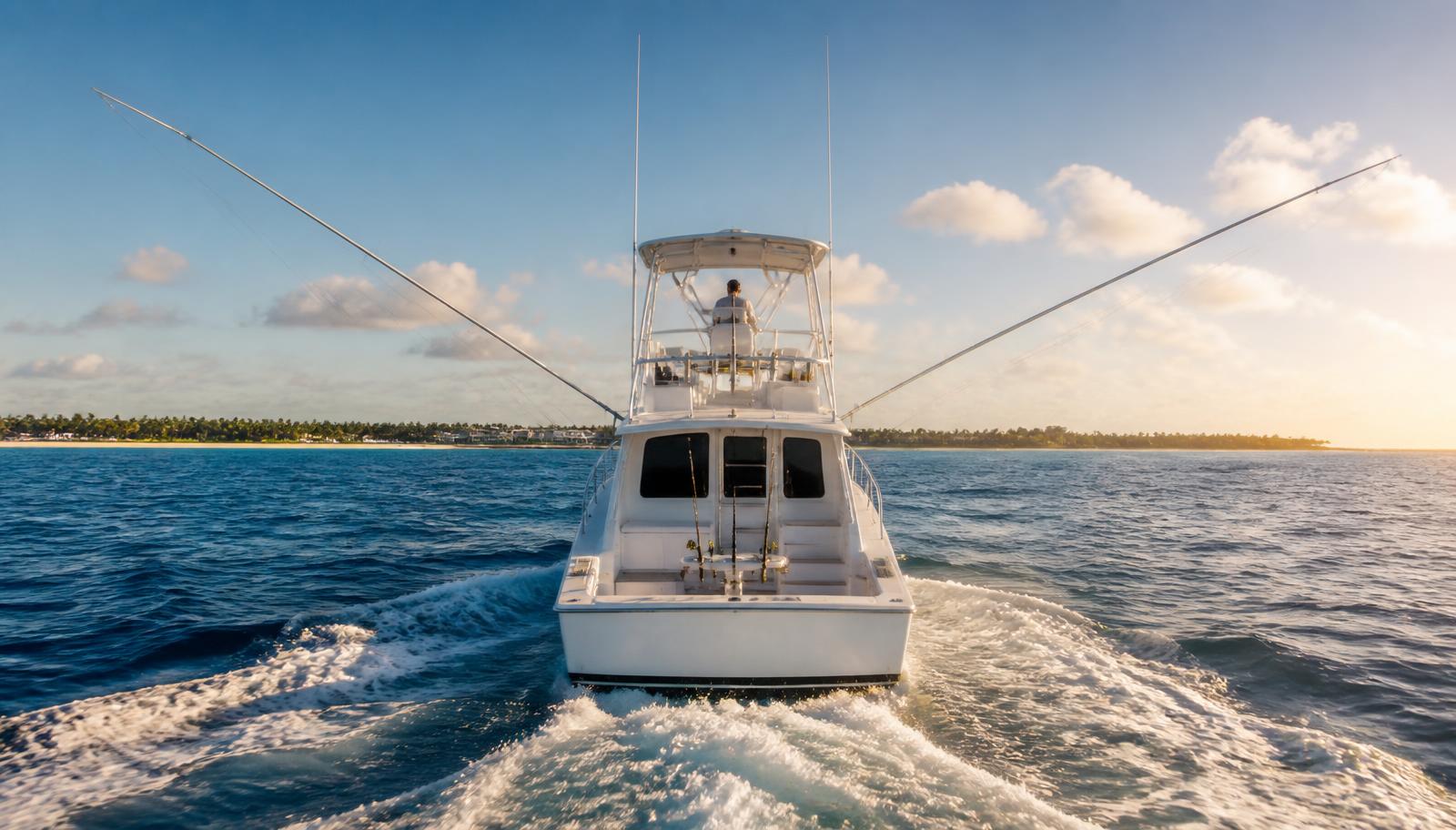
You leave early — usually between 6:30 and 8:00 am, because the sea is flattest and the bite is best in the first hours of light. A driver collects you at your hotel or Airbnb, you're at the marina 20 to 45 minutes later, and the captain and mate have already rigged the rods and iced the boat.
Then it's 20 to 40 minutes running offshore until the bottom drops away, and the rest of the trip is trolling: four to six lines out, lures skipping in the wake, and the wait. When a reel screams, the mate puts you in the chair and talks you through it. Nobody needs experience.
Two formats exist and that's it: a half day of about 4 hours and a full day of about 8 hours. We arrange private boats through our fishing charter service and quote them on WhatsApp for your exact date, group size and boat — we don't publish a fixed number, because boat availability in Punta Cana genuinely changes week to week.
This is the honest calendar, not a brochure. Blue marlin peak roughly June to September. White marlin run March to June. Sailfish are a winter fish here — January to April. Mahi-mahi (dorado) are the most reliable year-round target and are at their best in the cooler months. Wahoo show up in the shoulder seasons, autumn and spring. Yellowfin tuna and barracuda can appear almost any month.
What no honest captain will tell you is that a fish is guaranteed. Some mornings you come back with three mahi and a wahoo; some mornings you come back with a sunburn and a story. If a seller on the beach promises you a catch, that's a sales line, not a forecast.
If you're still choosing travel dates, our best time to visit Punta Cana guide lines up weather, sea state and prices — the calmest water is generally February to June.
Half day or full day?
Half day (4 hours): the right call for families, first-timers, anyone who gets seasick, and anyone who wants the afternoon free at the pool. You fish the nearer grounds — mahi-mahi, barracuda, sometimes tuna — and you're back by lunch.
Full day (8 hours): the serious option. You reach the deeper water and the current lines where billfish hunt, you can change tactics if the first spot is dead, and you get the full mid-day window rather than only the first two hours. If marlin is the goal, take the full day — a half day rarely gets far enough out.
Groups of six or more usually work out better on a private boat than split across shared seats. Our private group tour guide explains how we handle bigger parties and staggered hotel pickups.
Which marina you leave from — and why it matters
Cap Cana: the fastest access to deep water on this coast and the home of the big sportfishing fleet. Best for a serious billfish day, and closest if you're staying in Cap Cana or Punta Cana village.
Cabeza de Toro: the closest marina to most Bávaro hotels, so the least driving. This is also where our party boat leaves from, if the non-fishing half of the family wants a different kind of day on the water.
Bayahibe: further south, about 90 minutes away, and the base for our Saona and Catalina days. Worth it if you're combining a fishing morning with a few days down that coast.
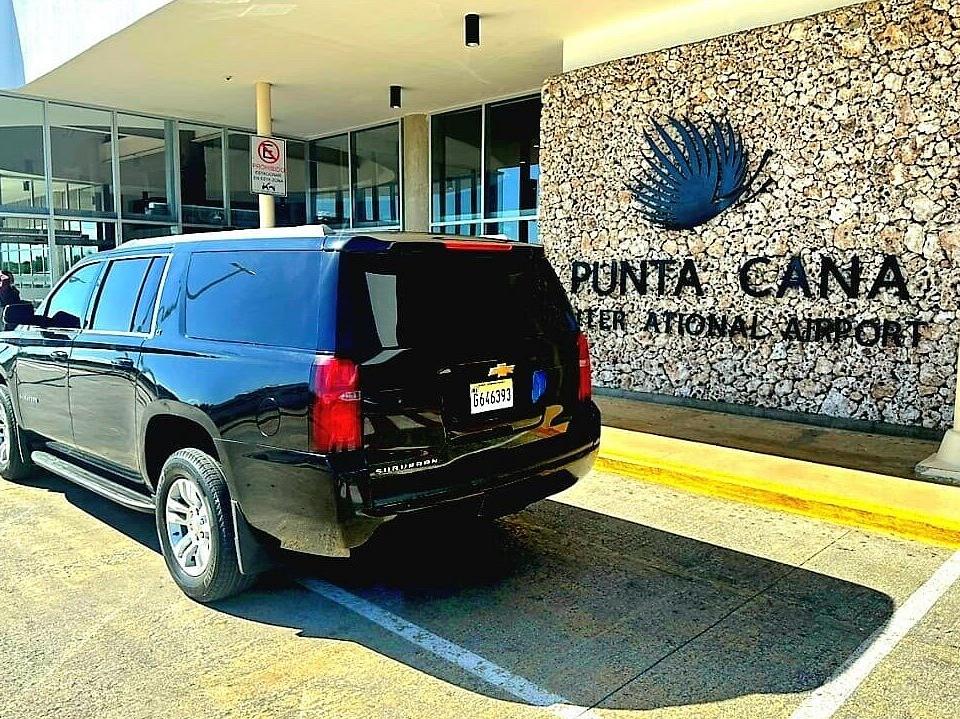
Whichever marina you use, pickup from your hotel or Airbnb is arranged with the booking — the same way our airport pickup service works. You never need a rental car for a fishing day.
What a private charter includes
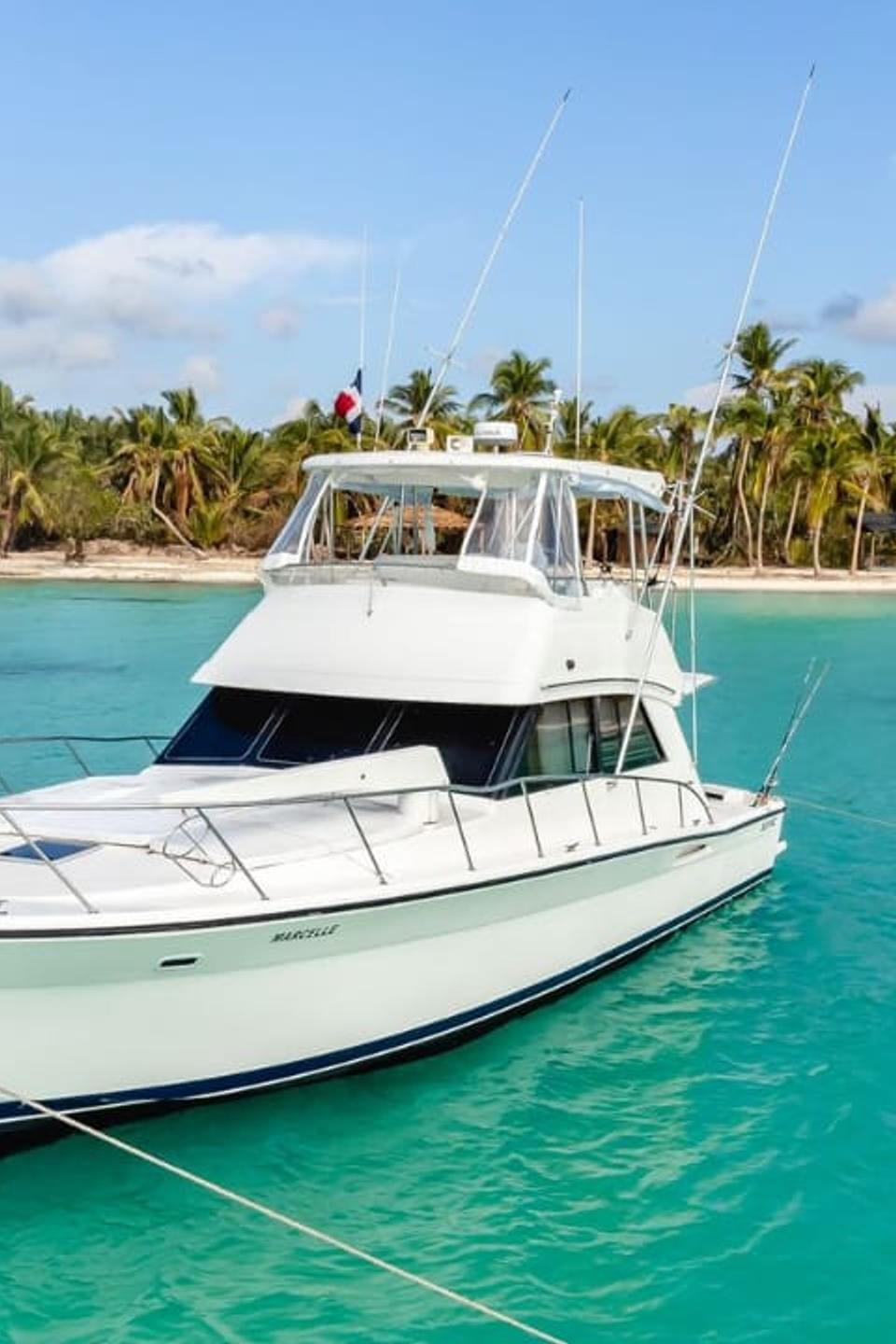
A proper private charter includes the boat with captain and mate, all rods, reels, lures and bait, ice, and drinks on board — water, soft drinks, local beer. Fighting chair or stand-up gear depending on the boat. Fuel is in the price. Fishing licences are the boat's responsibility, not yours.
What you bring: sunscreen (reef-safe, and put it on before you board), a hat that stays on in wind, polarised sunglasses, a light long-sleeve shirt, and motion-sickness tablets if you're prone — taken the night before and again at breakfast, not once you're already rolling. Our Punta Cana packing list covers the rest.
On tipping: the captain and mate work for tips like everyone in this industry, and the mate does the hard part. Our tipping guide gives the honest local numbers.
A shared boat splits the cost and the rods: you're one of six or eight anglers, you take turns in the chair, and the route is whatever suits the group. It's the cheapest way to try offshore fishing, and for a curious first-timer it's genuinely fine.
A private boat is your day: your departure time, your target species, how long you stay on a hot line, whether you break for a swim. For a group of friends, a father-and-son trip or anyone who wants to actually fish rather than wait their turn, private is the one worth paying for. Same logic we lay out in private yacht vs catamaran.
Not everyone in the group wants to fish. That's normal — the usual split is a fishing morning for some and a Catalina snorkel day or private catamaran for the rest, and everyone meets for dinner.
Seasickness, kids and non-fishers
Offshore means real swell. If you know you get seasick, take the half day, sit low and mid-boat, keep your eyes on the horizon, eat something light before you go, and stay out of the cabin. Medication only works if it's already in your system.
Kids: from around eight upwards a half day usually works, especially reef-edge trolling where there's more action and less running. Younger than that and a calm island day is the better memory — nobody enjoys a small child on a big swell.
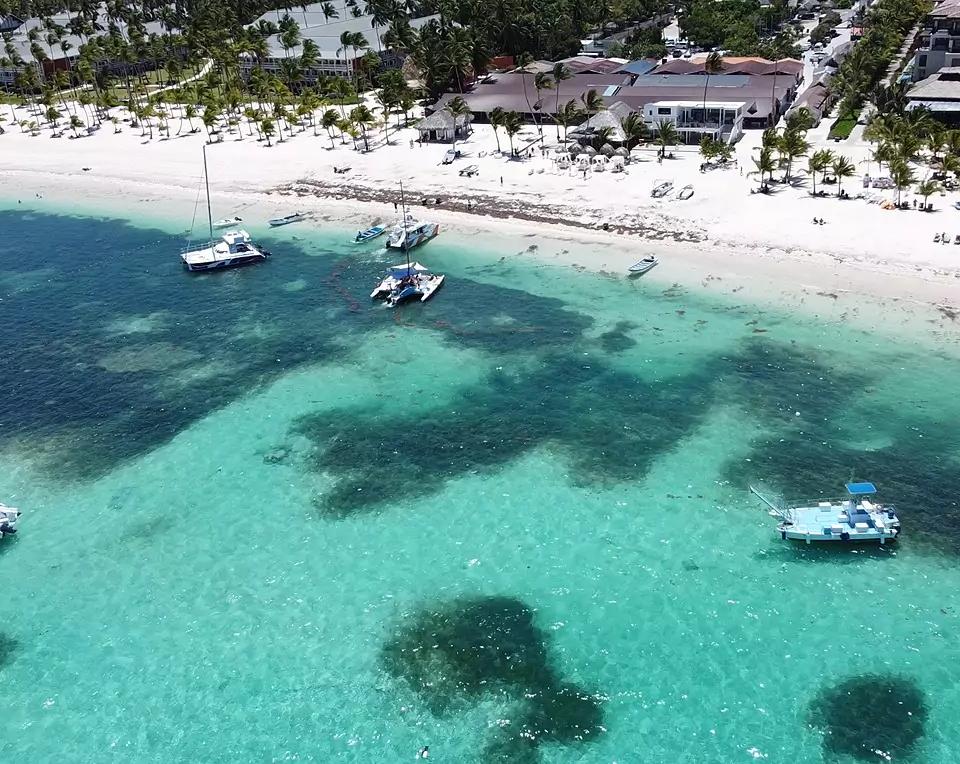
And if the water isn't the issue but the boat is: a helicopter flight over the coastline gives you the same Caribbean from above, with no swell and no early start. Useful for a mixed group where one person simply doesn't do boats.
Can you keep the catch?
Billfish — marlin and sailfish — are released. That's the standard on every serious boat here, and it's why the fishery still works. Photos, measurements, then the fish goes back.
Edible species are different: mahi-mahi, tuna, wahoo, barracuda. The mate will fillet them on the way in, and you can take a portion with you. Many hotels won't cook a guest's fish for kitchen-policy reasons, but plenty of local restaurants will, and a private chef at your villa absolutely will — grilled that evening, hours out of the water. That's the best meal of most trips.
Ask the captain what happens to the rest of the catch. On our boats it's shared with the crew, which is normal and fair everywhere in the Caribbean.
What else to do on the water that week
Saona Island — $120 all inclusive, the postcard day, catamaran and natural pool.
Catalina Island — $99 all inclusive, the best reef snorkeling near Punta Cana.
Party boat — $75, three hours of music, rum and a snorkel stop from Cabeza de Toro.
Private yacht — your own boat and route, quoted on WhatsApp.
Between mid-January and late March, add humpback whales in Samaná on our Samaná day trip. And if the forecast turns, our rainy day guide has the honest alternatives — sea days can be moved up to 24 hours before with a WhatsApp message.
For blue marlin, June to September. For sailfish and the calmest mahi-mahi fishing, January to April. Mahi-mahi and barracuda are catchable year-round, so there is no dead month — only different targets.