Samaná Bay is one of the best humpback whale spots on the planet — but only from mid-January to late March, and the day trip from Punta Cana is long. Here's the honest guide: real season weeks, what the day looks like, who should go and who should pick Saona instead.
Quick answer: is whale watching in Samaná worth it?
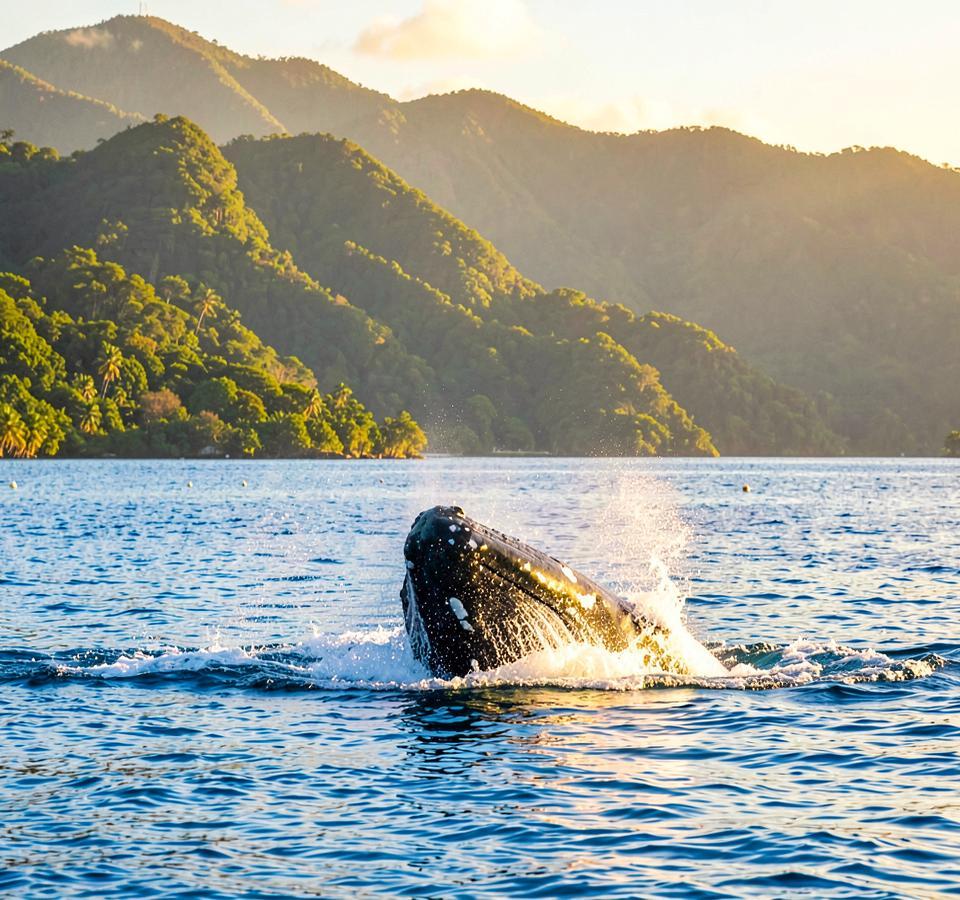
Yes — if you're here between mid-January and late March, it's one of the most spectacular things you can do in the Dominican Republic. Every winter, over 2,000 humpback whales migrate from the North Atlantic to Samaná Bay to mate and give birth. It's one of the largest humpback gatherings in the world.
The honest catch: it's a long day. From Punta Cana you're looking at about 15 hours door to door — roughly 3 hours of driving each way plus 2.5 hours on the boat. And outside the season window there are simply no whales, no matter what a beach seller promises.
Our Samaná tour ($120 per person) runs all year with Cayo Levantado and the El Limón waterfall — and in season we can swap in the whale-watching boat in Samaná Bay for +$25 per person. Message us on WhatsApp with your dates and we'll tell you honestly whether the whales are in.
Samaná Bay is a huge, sheltered natural harbor on the north-east coast. Warm, calm, shallow water makes it the Caribbean's most important humpback breeding ground. The whales don't come to feed — they come to mate and calve, which is exactly why you see the spectacular surface behavior: breaching, tail slapping, and the famous male songs.
The season is tightly defined by the migration: first whales arrive around mid-January, density peaks in February, and by late March the last mothers and calves leave for the North Atlantic. Outside that window, the bay is empty of whales — any 'whale tour' sold in summer is a scam.
The bay is protected and regulated by CEBSE (the national whale sanctuary authority): only around 12 boats hold legal permits, with strict distance rules to keep the animals safe.
The season week by week (2026)
Jan 15–31: first arrivals, mostly males competing — lots of breaching, ~95% sighting chance.
Feb 1–14: peak male activity, the most dramatic surface shows — ~98%.
Feb 15–28: peak family pods — mothers with newborn calves, calm water behavior, our personal favorite — ~99%.
Mar 1–15: still excellent, warmer and calmer, courtship songs — ~97%.
Mar 16–25: last calves departing — ~90%. After March 25, honestly, don't book a whale tour.
Morning departures are non-negotiable: the wind picks up after about 2 pm, so every serious operator goes out early. More on seasonal conditions in our weather by month guide and the best time to visit Punta Cana.
The day trip from Punta Cana — the honest schedule
5:00 am — hotel or Airbnb pickup. Yes, it's early. The drive to Samaná takes about 3 hours; we include a breakfast box so you're not traveling hungry.
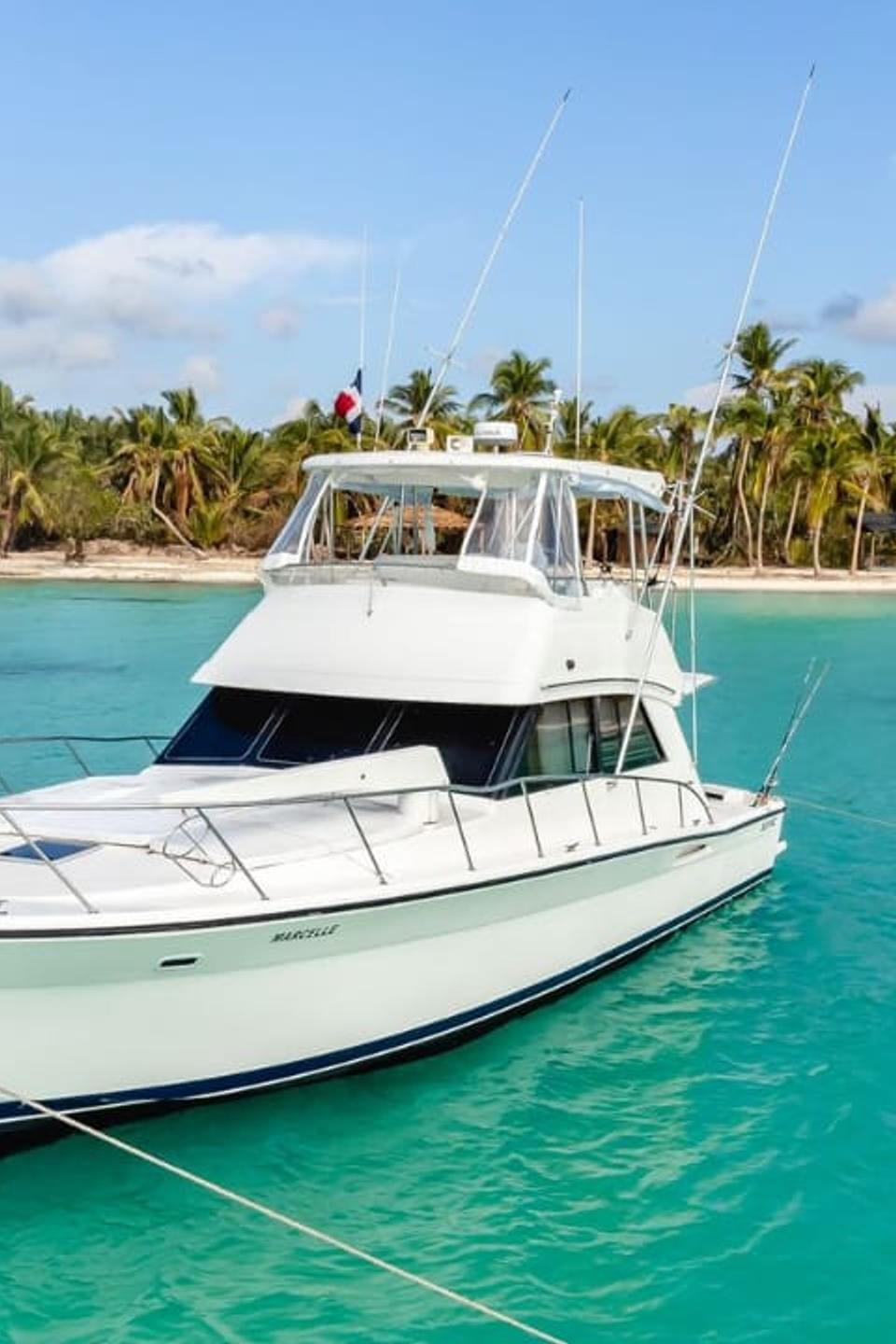
9:30 am — board at Samaná pier. An ocean-rated boat with a bilingual marine-biologist guide. Engines are cut when whales approach — the silence when a 40-ton animal surfaces next to the boat is something people remember for years.
10:00–13:00 — on the water. About 2.5 hours in the bay, with hydrophone audio of the male songs played on deck.
Midday — Cayo Levantado. Lunch and beach time on the famous 'Bacardi Island' — this part is included in our Samaná tour.
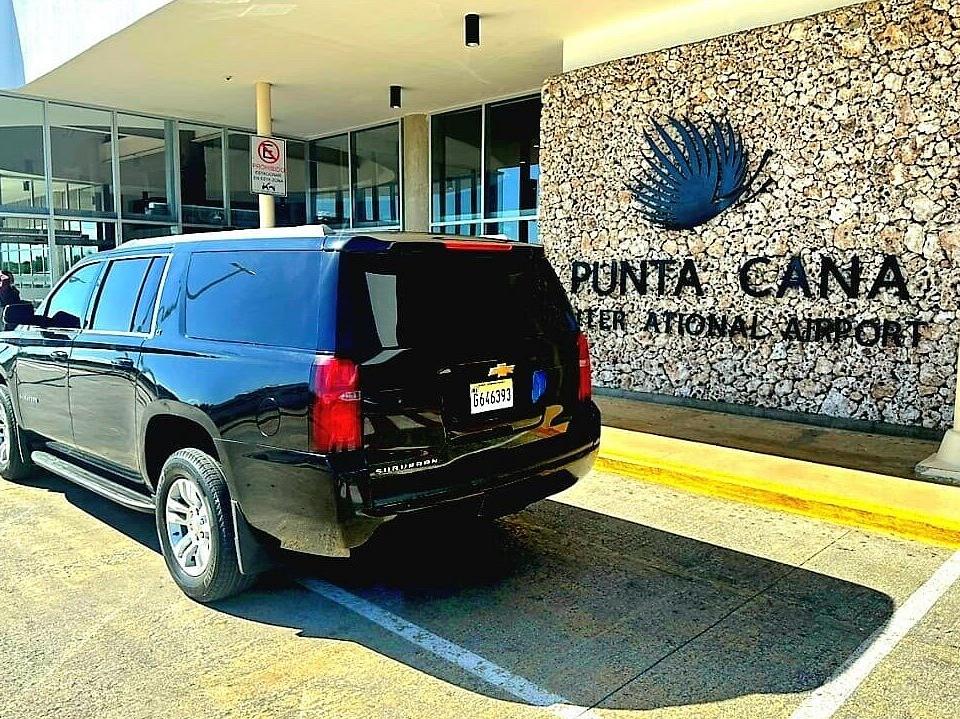
Afternoon — drive back, arriving at your resort around 8 pm. Total: about 15 hours. A private vehicle option cuts the shared-bus stops and saves around 2 hours round-trip — ask us on WhatsApp for a quote.
Perfect for: anyone visiting between mid-January and late March who wants a genuine once-in-a-lifetime wildlife experience — couples, photographers, families with kids 8+.
Think twice if: you're traveling with toddlers or anyone who struggles with very long days — 15 hours is brutal for little ones. If you get seasick easily, take your medication before boarding; the bay is calm but it's still the ocean.
If you only have one free day for a big excursion, our honest ranking lives in the best day trips from Punta Cana guide.
How to spot a real licensed boat (and avoid the fakes)
Samaná's whale sanctuary is strictly regulated: only about 12 boats hold the CEBSE permit, with trained captains, distance rules and passenger limits. The fakes are unlicensed boats sold on beaches and street corners — cheaper, no distance rules, no insurance, and they harass the animals.
Three quick checks: the boat should display its CEBSE permit number; a marine-biologist or certified guide should be on board; and the departure should be from the official Samaná pier in the morning.
We only book the licensed boats — it's better for the whales, and honestly it's the difference between a magical morning and a stressful one. General safety questions are covered in our Is Punta Cana safe? guide.
cana.tours
Ready to book your Punta Cana experience?
Curated tours, no crowds, real local guides. Reach us on WhatsApp for an instant quote.
Roughly January 15 to March 25, with peak density from February 1 to March 10. Outside this window the humpbacks have migrated north and there are no whale tours worth booking.