Animal Encounters in Punta Cana: How to Choose Responsibly
Last updated:
A wildlife sighting, a feeding session and a staged animal photograph are different experiences. Here is how to understand what you are booking and choose with care.
First, find out what kind of encounter you are booking
In Punta Cana, the words animal encounter can describe very different days: watching marine life while snorkeling, visiting an island with a guide, a seasonal whale-watching trip, or entering a venue where animals are kept. Before comparing prices, ask which one is actually offered. A photograph of a monkey on someone’s shoulder does not describe the same experience as observing a free-living animal from a distance.
Get the activity in writing: the location, species if relevant, whether contact or feeding is included, and who operates that part of the day. Distinguish the company selling the excursion from the venue receiving you. This guide provides a way to choose and behave thoughtfully; it does not certify a particular operator or diagnose the welfare of animals from a promotional image.
Saona: starfish and turtles are not photo props
Our complete island visitor guide explains the Natural Pool and the different stops around Saona. For marine wildlife, make observation the objective. Leave starfish where they are, without lifting, turning, passing them around or repositioning them for a picture. Keeping an animal underwater while holding it is not the same as leaving it undisturbed. Do not collect a creature to show someone else what they missed.
If turtles or a conservation visit are mentioned, ask what the stop involves and whether it is confirmed for your departure. Seeing a turtle, visiting a conservation project and witnessing a hatching are different events. Do not expect one because the other appears in an itinerary. Never pick up turtles, hatchlings or eggs, and follow the instructions of authorised personnel rather than improvising help or arranging a release photograph.
Snorkeling: make room for wildlife and protect the reef
Read our snorkeling and diving overview to compare the settings before choosing a trip. Once in the water, leave animals an unobstructed route and do not chase them for a close-up. Do not feed fish to bring them towards the camera, touch a turtle or try to ride an animal. Use distance and patience rather than contact to get a photograph. If an animal moves away, let it leave.
Ask for a briefing covering the reef, equipment and what to do if you are uncomfortable. Keep fins and equipment clear of coral and do not stand or hold onto the reef. If you cannot keep clear of the bottom, tell the guide and ask for an appropriate alternative; do not use living coral as a handrail. A life jacket is not permission to enter any conditions, and photographs of clear water are not a guarantee of visibility on your date.
Whale watching: a seasonal outing, not a contact experience
A whale-watching day from Punta Cana involves a different destination and schedule from a short coastal cruise. Our guide to the seasonal whale-watching day trip explains the planning. Confirm the current authorised season, departure arrangements and boat operator for your date. Ask how the crew applies the local viewing rules, manages other vessels and responds if animals move away. Do not import a distance figure from another country and assume it is the applicable local rule.
Choose a trip designed around observation rather than promises to chase, touch or manufacture an encounter. A whale approaching a boat is not an invitation for passengers to reach towards it or enter the water. Weather, animal movement and operating restrictions can affect the day. Ask what happens if the departure is cancelled or no whales are seen, keeping cancellation arrangements separate from wildlife promises.
For animals kept at a venue, ask more than whether they look friendly
If an attraction involves feeding, holding, swimming alongside or posing with animals kept by the venue, ask what visitors are expected to do. Can you choose observation without contact? Do animals have places away from visitors, and can they withdraw from the interaction? Ask about the source of the animals, daily care and the purpose of the activity. A brief photograph or a relaxed-looking moment cannot establish the standard of long-term care.
Words such as rescue, sanctuary, ecological or educational are not, by themselves, evidence of independent assessment. If an accreditation is advertised, check who issued it, which exact facility it covers and whether it is current. Do not assume a general tourism licence is a welfare certification. We favour an observation-first choice; if the answers remain vague or the activity depends on repeated handling, choose an outing that does not require that interaction. This is a selection approach, not a claim about a named venue.
With children, prepare the expectation before the excursion
Before booking, explain that seeing an animal does not mean touching or feeding it. Choose an experience your child can enjoy even if a particular species does not appear. Our family trip-planning guide helps with the wider questions of age, time away from the hotel and energy levels. Ask who supervises any animal-related activity and what the alternative is if a child becomes frightened or does not want to participate.
Practise a simple agreement: watch, give space and ask the guide before doing anything. Do not promise a turtle release or a close-up animal photograph as the reward for a long journey. It is easier to respect a boundary when the family has not been sold a guaranteed moment. Choose transport, shade and breaks that suit the children as well as the attraction; a shorter observation session can fit a family better than a full day built around one hoped-for sighting.
Questions to send before you pay
Ask the seller: where does the animal activity happen; are the animals free-living or kept; is handling or feeding part of the programme; can we opt out; what does the guide brief; and what exactly is promised if conditions change? If a conservation visit is named, ask who runs it and what guests actually do there. Keep the reply with the booking details. A clear description is more useful than an adjective such as ethical without an explanation.
For the four-stop island excursion or the reef-and-beach outing, read the actual route and discuss your priorities before reserving. A beach stop, a snorkeling stop and a dedicated wildlife-observation excursion are not interchangeable. Check meeting times, equipment and physical requirements too. Do not book one kind of day on the assumption that a salesperson can add an unlisted animal encounter once you arrive.
On the day: keep the choice simple
Follow the briefing, keep your hands and food to yourself around wildlife, and do not ask the guide to bend the rules for a photograph. If an advertised interaction differs from what you agreed, pause and ask for the observation-only alternative. If you see an animal that appears injured or stranded, keep a safe distance and alert the guide or competent local authority. Do not attempt a capture, treatment or release on your own.
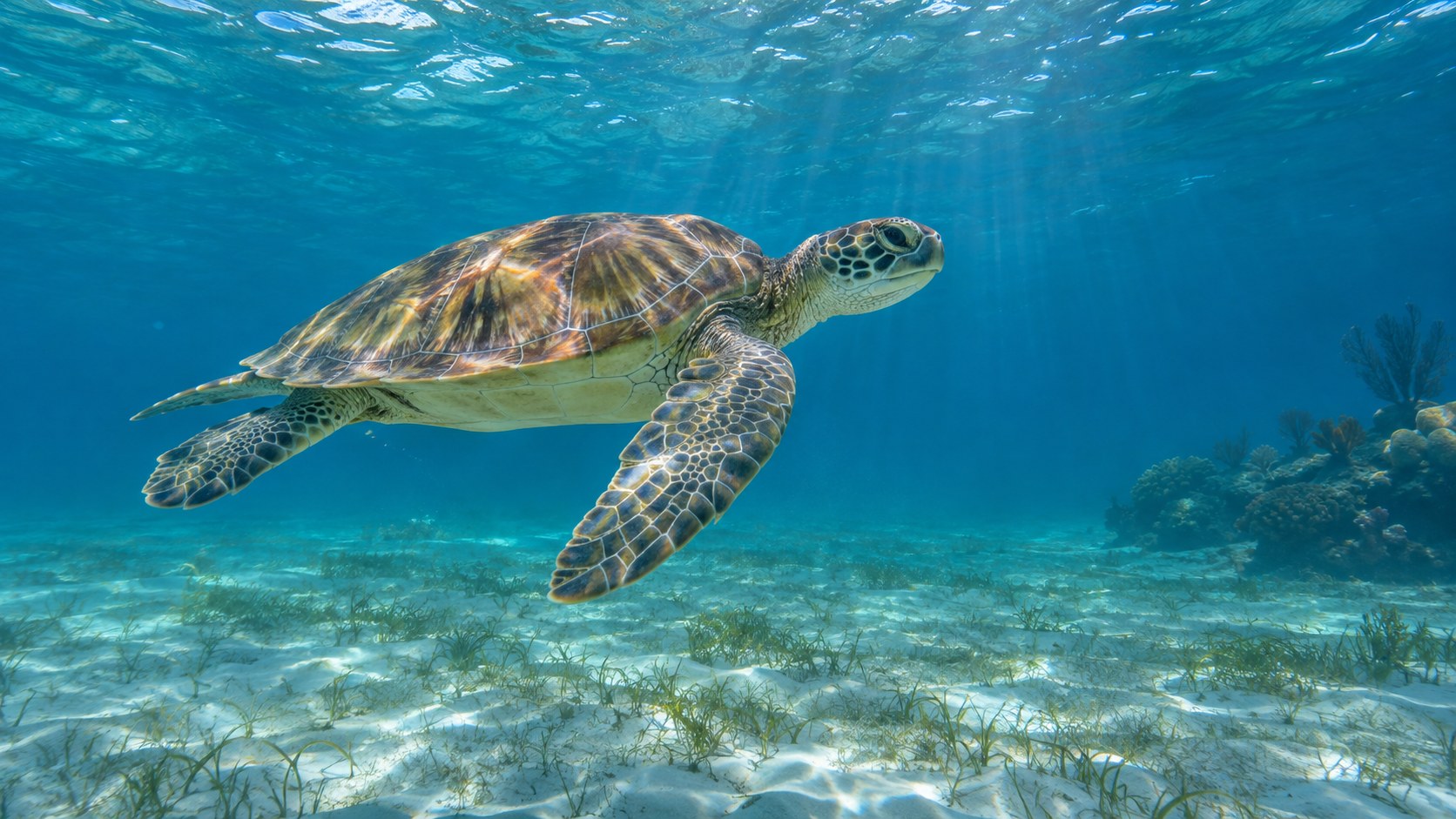
The aim is to enjoy the place without making contact the measure of a successful trip. A reef, an island beach or time on the water can still be worthwhile without a close encounter. Cana.Tours can explain the listed itinerary and help clarify booking questions; we do not promise wildlife sightings or provide independent welfare accreditation. Cover image: AI-generated editorial illustration of a freely swimming sea turtle in generic Caribbean-style water, not a documented sighting or a guaranteed stop on a tour.
Choose observation without handling. Leaving it submerged while holding, turning or moving it does not leave the animal undisturbed. Keep it where it is and take photographs without contact.