Money in Punta Cana (2026): Cash, Cards, Tipping & ATMs
Last updated:
Do you need pesos? Is tipping expected? Which ATM should you use? Here is how money really works in Punta Cana in 2026, from the team that handles cash on the ground every day.
Quick answer: what money should you bring to Punta Cana?
Bring US dollars in small denominations as your main travel cash, one debit card and one credit card, and plan to withdraw a modest amount of Dominican pesos once you arrive for taxis, colmados (corner shops), local restaurants and tips. You do not need to exchange money before flying, and you do not need a big pile of pesos.
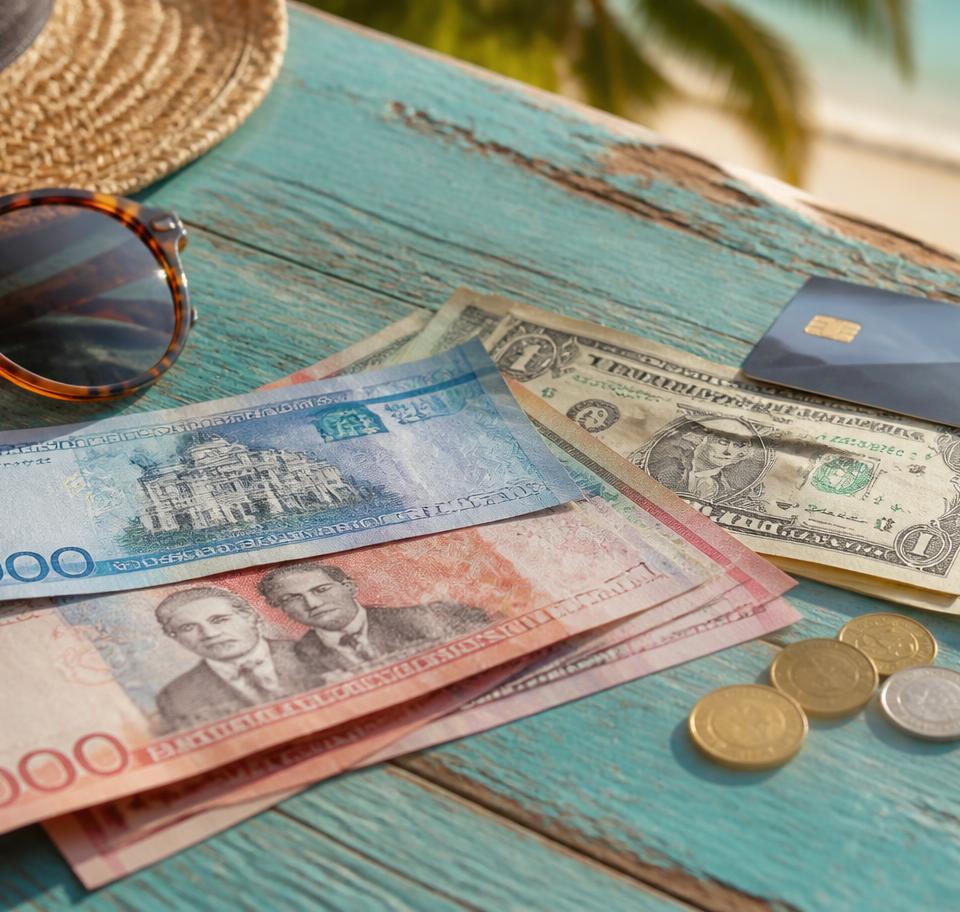
The local currency is the Dominican peso (DOP), written RD$. The US dollar is accepted at virtually every tourist-facing business in Bávaro, Punta Cana, Cap Cana and Uvero Alto. Euros are accepted at most excursions and resort desks, usually at a slightly worse rate than dollars.
We are Cana Tours, a local operator based in Bávaro. We collect payment in three currencies every single day, and we watch travelers lose money to the same four things: airport exchange counters, ATM conversion tricks, "no change" taxis, and resort tour desks quoting inflated prices. This guide covers all of it.
Resorts and all-inclusives: cards and USD everywhere. Spa, gift shop, premium drinks and excursion desks all take cards. Room-charge systems settle at checkout.
Excursions and tours: USD is standard. Serious operators (including us) also accept EUR and DOP, and most accept card. Beach-side sellers pushing "cheap tours" are cash-only for a reason — read our guide to tourist scams in Punta Cana.
Restaurants outside the resort: almost all take cards, and most in tourist areas list prices in both DOP and USD. Paying in pesos is usually a few percent cheaper because the restaurant's own USD rate is rounded in its favour. See our restaurant guide for where locals actually eat.
Taxis, motoconchos, colmados, street food, beach chairs, small tips: pesos, cash. This is where having RD$2,000–4,000 in small notes makes your week easier.
Supermarkets (Jumbo, Sirena, Nacional): cards fine, prices in pesos only.
Should you exchange money? Where the real rates are
Ranked from best to worst in 2026:
1. ATM withdrawal in pesos — closest to the interbank rate, minus the machine fee and your bank's fee. Best option for most travelers.
2. Bank branch (Banreservas, Popular, BHD) — fair rates, passport required, weekday hours, some queueing.
3. Paying directly in US dollars — convenient and only slightly lossy, because businesses round their internal rate.
4. Resort front desk / cambio — easy, noticeably worse rate. Fine for RD$1,000–2,000 of walking-around money.
5. Airport exchange counters — worst rate you will see all trip. Change USD 20 for taxi money if you must, nothing more.
Never exchange with someone who approaches you on the street or beach. Short-changing and counterfeit notes are the whole business model.
Practical note: you cannot usefully spend leftover pesos outside the country and airport counters will convert them back at a punishing rate. Spend down to small change before your departure day, or keep them for tips.
Expect a machine fee of roughly RD$250–400 per withdrawal (about USD 4–7), plus whatever your home bank charges. Because the fee is fixed per transaction, one larger withdrawal beats three small ones.
Typical per-transaction limits are RD$10,000–20,000 depending on the bank. Some machines let you choose USD; the peso option is almost always better value.
The single most important rule: when the screen offers to charge your card "in your home currency", decline it. That is dynamic currency conversion and it typically costs 3–8%. Always choose to be billed in DOP and let your own bank convert.
Safety: use machines inside a resort lobby, a bank branch or a supermarket — not a standalone box on a dark street. Cover the keypad, take your receipt, and don't count cash in the open. More context in our Punta Cana safety guide.
Tell your bank you are travelling. Dominican withdrawals trigger fraud blocks on a lot of European and North American cards, and unblocking one from a beach is a bad afternoon.
Cards: where they work and the traps to avoid
Visa and Mastercard are accepted broadly. American Express is patchy outside big resorts — never make it your only card. Contactless works in most modern terminals; Apple Pay and Google Pay work in malls and chains, less reliably elsewhere.
Trap 1 — currency choice at the terminal. Same rule as the ATM: pay in pesos, refuse "charge in USD/EUR".
Trap 2 — foreign transaction fees. A card with no FX fee saves 1.5–3% on every purchase. This is the easiest money you will save on the whole trip.
Trap 3 — the card leaving your sight. Ask for the terminal to come to your table. It is normal here and no one is offended.
Trap 4 — legal 16% tax rebate confusion. The Dominican Republic does not run a tourist VAT-refund scheme at the airport. If someone offers one, it's not real.
Bring two cards from different networks, stored in different bags. Card problems are the most common money emergency we see, ahead of theft.
Reading a Dominican bill: 18% ITBIS + 10% service
Restaurant and bar bills in the Dominican Republic are legally subject to 18% ITBIS (the local VAT) and a 10% legal service charge. Both are usually already printed on the bill, so a RD$1,000 menu total lands closer to RD$1,280.
Menu prices in tourist restaurants sometimes already include both — the giveaway is a line at the bottom saying impuestos incluidos. If you don't see that line, assume 28% is being added.
Does the 10% service charge mean you don't tip? Not quite. That charge is distributed by the business and is not the same as a personal tip. Locals and expats typically add another 5–10% in cash for good service. For genuinely great service, 10% cash on top is generous and very normal.
Inside an all-inclusive resort, nothing is billed to you at all — which is exactly why cash tips matter more there, not less.
Tipping in Punta Cana 2026: what is actually expected
Tips here are a real part of income, and cash beats card tips because it reaches the person directly. USD or DOP both fine.
Tour guide, full day: USD 10–20 per person. Half day: USD 5–10 per person.
Boat crew (catamaran, speedboat, party boat): USD 5–10 per person, often collected as one group tip.
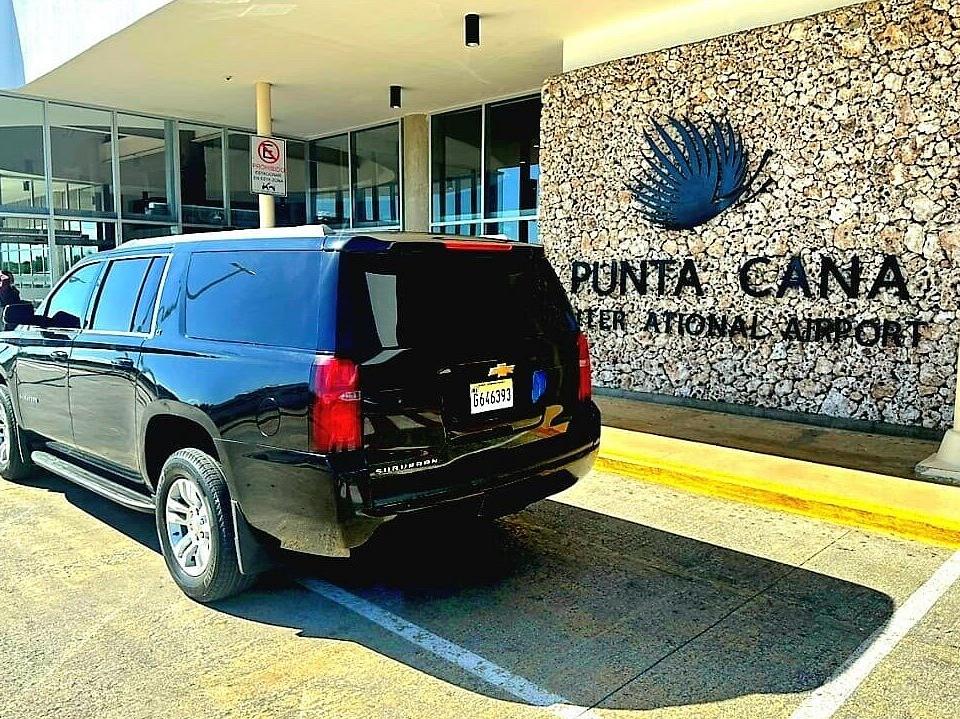
Private driver / airport transfer: USD 5–10 per ride, more if they handle a lot of luggage.
Housekeeping: USD 2–3 per day, left daily rather than at the end so it reaches the person who actually cleaned your room.
Bartender: USD 1–2 per round in an all-inclusive. This is the single highest-return tip of your vacation.
Restaurant: 5–10% cash on top of the printed service charge.
Spa treatment: 10–15%. Porter / bellhop: USD 1–2 per bag.
Nothing is mandatory and no one will chase you. But the difference in how your week goes when the bar staff know you is not subtle.
All-inclusive resort, one or two excursions: USD 20–30 per day in small bills for tips, plus the tour cost on the days you have one. Most of our resort guests carry USD 200–300 in cash for a week.
Airbnb or villa, cooking and eating out: USD 40–70 per day equivalent, mostly in pesos, because supermarkets, colmados and neighbourhood restaurants are peso-first. Our Airbnb vs resorts comparison breaks down the wider budget difference.
Excursion-heavy week: budget the tours separately from daily cash — see what excursions actually cost in Punta Cana — and keep tips as a separate envelope so you don't accidentally spend them.
Use the room safe. Carry the day's money, not the week's. Keep an emergency USD 100 note somewhere separate from your wallet — that habit has saved more than one guest's last day.
Where travelers lose money (and how to not)
The "no change" taxi. Driver has no change for your RD$2,000, so the ride costs RD$2,000. Agree the price before you get in and carry small notes. A pre-booked private transfer with a fixed price removes the negotiation entirely — see the airport transfer guide.
Resort tour desks. Commission stacking puts 30–60% on top of the same excursion, sometimes the same boat. Compare before you sign.
Beach sellers with an unbeatable price. Cash upfront, no company name, no insurance, no pickup. This is the most common single loss we hear about.
Prepayment to unverified operators online. If the only contact is a form and a payment link, you have no recourse. We take no prepayment at all — see should you book before you arrive.
Currency conversion at the terminal. The 3–8% invisible tax, repeated all week.
How paying for excursions works with Cana Tours
No deposit, no prepayment. You book on WhatsApp, we confirm the date, driver and pickup time, and you pay on the tour day.
Cash in USD, EUR or DOP, or by card. Whatever you have is fine — tell us in advance if you're paying by card so the driver brings the terminal.
Fixed, transparent prices. The price we quote on WhatsApp is the price on the day. No fuel surcharge, no port fee surprise, no "the boat upgraded" story.
Free cancellation up to 24 hours before. Weather turns, kids get sunburnt, plans change — you owe nothing.
Not for resorts or excursions — US dollars and cards cover those. You do want pesos for taxis, colmados, local restaurants, beach vendors and small tips. RD$2,000–4,000 in small notes is plenty for a week for most travelers.