The E-Ticket is free, mandatory and takes ten minutes — but the official form trips up thousands of travelers every week. Here is the complete 2026 walkthrough from a local Punta Cana team.
Quick answer: what the Dominican Republic E-Ticket is
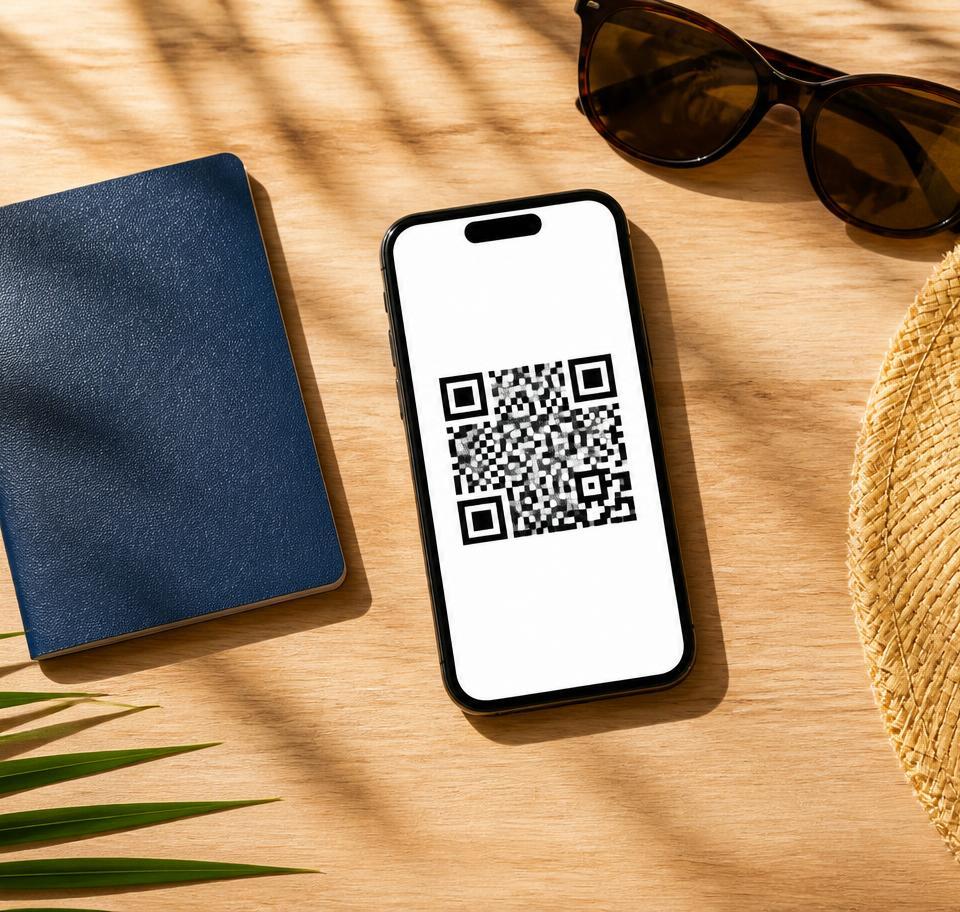
The Dominican Republic E-Ticket is a free electronic form that every passenger must complete before entering and before leaving the country. It is issued by the Dirección General de Migración and consolidates what used to be three separate paper cards: the immigration form, the customs declaration and the public-health form. When you submit it, the portal generates a PDF with a QR code that airline staff and immigration officers scan.
The only official place to complete it is the government portal at eticket.migracion.gob.do. It costs nothing, it takes about ten minutes, and it applies to tourists, residents, Dominican nationals, children and infants alike.
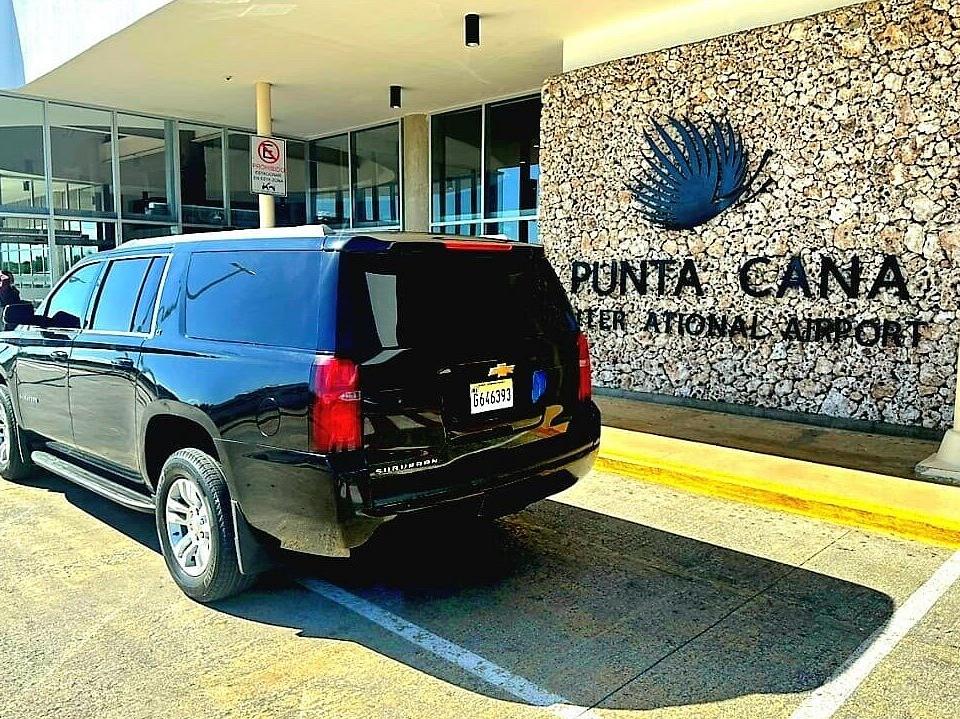
We are Cana Tours, a Dominican-owned team based in Bávaro. We meet travelers at Punta Cana airport every single day, and the E-Ticket is by far the most common thing people get wrong or forget entirely. This guide is the complete 2026 walkthrough — entry form, exit form, customs section, family submissions, real entry requirements, and what actually happens when you land at Punta Cana International Airport (PUJ).
Mandatory: yes. It is required by Dominican law for entry to and exit from the national territory. Airlines increasingly check it at check-in, and immigration officers scan the QR code on arrival. Without it you can be delayed at the airport while you complete it on your phone in the queue — which is exactly the start to a vacation nobody wants.
Free: yes, completely. The government charges nothing for the E-Ticket. If a website asks you for USD 20–60 to "process" or "expedite" it, you are on a third-party site, not the official one. Those services simply retype your data into the free government form. Always check that the address in your browser bar ends in .gob.do.
Who needs one: every passenger, regardless of nationality, age or type of travel. Babies and children need their own entry in the form (they can be included in a family submission). Cruise passengers arriving by sea and travelers crossing the land border from Haiti are also covered.
Is it the same as a visa? No. The E-Ticket is an arrival/departure declaration, not permission to enter. Most tourists do not need a visa at all — more on that below.
When should you fill in the E-Ticket?
The practical answer: within 72 hours of your flight, and ideally the day before you travel. The form asks for flight details, so you need your final itinerary in front of you.
You can start earlier and come back later. When you begin an application, the portal gives you an application code — save it. You can re-enter the same form at any time with that code, which is useful if your flight number changes or you are waiting for a hotel confirmation.
Do not leave it until you are at the airport. The portal occasionally goes down for maintenance, airport Wi-Fi is slow, and you will be filling in passport numbers with one thumb while holding a suitcase. Ten calm minutes at home beats ten stressful minutes in a check-in line.
Timing tip for the return flight: most travelers complete the exit E-Ticket on their last full day in the country, from the hotel Wi-Fi. Put a phone reminder in on the day you arrive — it is the single most forgotten step of the whole trip.
What you need before you start: the 5-minute prep checklist
Gather these first and the form takes ten minutes instead of forty:
1. Passport. Number, issue date, expiry date, country of issue, exactly as printed. Do not guess — photograph the data page and read from the photo.
2. Flight details. Airline, flight number and date for both the inbound and (for the exit form) outbound flight. The flight number is on your booking confirmation, e.g. "DL 1234".
3. Your accommodation address in the Dominican Republic. The hotel or Airbnb name plus its address. "Hotel name, Bávaro, Punta Cana" is accepted by the form; copy the exact address from your booking email if you have it.
4. Length of stay. Number of nights and your departure date.
5. Travel companions' passports. If you are submitting for a family or group, you need the same data for each person.
6. An email address you can access on your phone. Your confirmation and PDF land there.
Travelling with children: each child needs their own passport data entered. The customs declaration section is only required for adults 18 and over, so for minors you skip it.
Step by step: filling in the entry E-Ticket
Step 1 — Open the official portal. Go to eticket.migracion.gob.do and choose "E-Ticket application". Select the language (the portal is available in Spanish, English and French).
Step 2 — Choose entry or exit. You are filling in the entry form now. The exit form is a separate submission you will complete before your return flight.
Step 3 — Save your application code. The system generates a code as soon as you start. Screenshot it. If you close the browser or lose signal, this is how you get back in without starting over.
Step 4 — General information. Purpose of travel (tourism, for almost everyone), arrival date, and whether you are travelling alone or in a group. If you tick "group", you will be prompted to add each additional traveler after your own details.
Step 5 — Personal and passport data. Names exactly as they appear on the passport — including middle names and both surnames if your passport shows them. A mismatch here is the number-one reason people get pulled aside.
Step 6 — Travel and accommodation. Flight number, airline, port of embarkation (the airport you fly from), and your address in the Dominican Republic. If you are staying at more than one hotel, enter the first one.
Step 7 — Health section. A short set of yes/no questions about your health and recent travel. Answer honestly; for the vast majority of travelers every answer is "no".
Step 8 — Customs declaration (adults 18+). This is where you declare cash over the legal threshold, commercial goods, animals, plants and restricted items. Ordinary tourists with normal luggage answer "no" to everything. Do not tick "no" carelessly if you are genuinely carrying large amounts of cash — undeclared money can be seized.
Step 9 — Submit and download. The portal generates your E-Ticket with a QR code. Click "Generate PDF" and save it. Then do all three of these: keep the PDF on your phone, screenshot the QR code, and print one paper copy. Redundancy costs nothing and solves everything.
The E-Ticket is required for departure as well as arrival, and it is a separate submission — completing the entry form does not cover you for the flight home.
This is the single most common problem we see. Guests get to the airport for their return flight, the airline asks for the departure E-Ticket, and they are standing in a check-in queue trying to fill in a government form on a weak signal with 40 minutes until boarding.
Do this instead: on your second-to-last day, sit down with the hotel Wi-Fi and complete the exit form. Same portal, same process, this time choosing "exit". Save the PDF next to your entry one. It takes five minutes and removes the only genuinely stressful moment of the trip.
Some travelers complete both the entry and exit forms before leaving home, since the return flight details are already known. That works perfectly and is what we recommend to our own guests.
One form for a whole family or group
The portal supports group submissions. During the general-information step you indicate that you are travelling with others, then add each companion's passport and personal data inside the same application.
The result is one E-Ticket with a QR code covering everyone on that submission. At immigration you can present the single QR code for the family, though we still recommend each adult carries a copy on their own phone in case you get separated in different queues.
Practical rules: everyone in the group must be on the same flight and the same itinerary. Children under 18 are included but skip the customs declaration. If one person in the party flies separately, they need their own submission.
If you make a mistake: use your application code to re-enter the form and correct the data before your flight, then download the updated PDF. Always travel with the newest version.
Dominican Republic entry requirements in 2026 (beyond the E-Ticket)
Passport. A valid passport is required. The Dominican Republic does not impose a blanket six-month validity rule for most tourist nationalities, but airlines frequently apply their own stricter policy — if your passport expires within six months of travel, check with your airline before you fly.
Visa. Citizens of the United States, Canada, the United Kingdom, all EU/Schengen countries, Switzerland, Norway, Australia, New Zealand, Japan, South Korea, Brazil, Argentina, Chile and many others do not need a visa for tourism stays of up to 30 days. Nationalities outside the visa-free list must apply at a Dominican consulate before travelling. Rules change — verify your own nationality on the official government site.
Tourist card. The old separate USD 10 tourist card no longer exists as a standalone purchase for most travelers: it is bundled into the price of your airline ticket. You do not buy anything at the airport.
Return or onward ticket. Officers can ask for proof that you are leaving. Have your return booking accessible on your phone.
Proof of accommodation. Rarely requested, but keep your hotel confirmation handy.
Overstaying. If you stay longer than your permitted period you pay a surcharge on departure, calculated at the airport. It is a routine administrative fee, not a criminal matter, but budget for it if you are extending.
Vaccinations. No vaccination is required for entry from Europe or North America. Standard travel vaccinations are a personal-health decision — talk to your doctor.
What arrival at Punta Cana Airport (PUJ) actually looks like
Punta Cana International is the busiest airport in the Caribbean and, charmingly, still has open-air thatched-roof terminals. Here is the real sequence:
1. Disembark and walk to immigration. Two to five minutes on foot, usually outdoors. It will be warm — this is where the light layer you packed comes off.
2. Immigration. Present your passport and the E-Ticket QR code. The officer scans it, takes a photo, and stamps you in. Typical queue: 15–40 minutes, longer when several wide-body flights land together (peak arrival windows are early afternoon and early evening in high season).
3. Baggage claim. 10–25 minutes. Trolleys are handled by porters who work for tips; USD 1–2 per bag is the norm if you use one.
4. Customs. Bags go through a scanner. With a clean customs declaration this is usually a walk-through.
5. Arrivals hall. This is the intense part: a corridor of tour-desk representatives and taxi touts. If you have a pre-booked transfer, your driver is holding a sign with your name and you walk straight past all of it.
Total time from wheels-down to car: 45–75 minutes on a normal day, up to 90 in peak season.
The VIP shortcut. Fast-track services escort you through immigration in a separate lane and cut the whole process to roughly 15–20 minutes. Worth it for families with small children, tight connections or anyone landing at peak time. See our luxury airport pickup and fast-track service.
"I never got the confirmation email." Check spam first. If it is genuinely missing, return to the portal, choose "consult E-Ticket", and retrieve your submission with your application code. This is why saving the code matters.
"I typed my passport number wrong." Re-enter the form with your application code, correct it and regenerate the PDF. A wrong passport number is the most common cause of a scanning failure at immigration.
"My flight changed." Update the flight number in the existing application and download the new PDF. A changed flight with an un-updated form usually still scans, but correcting it removes any argument at the desk.
"The QR code won't scan." Increase your screen brightness to maximum, or hand over the printed copy. Cracked screens and low brightness cause more scan failures than bad codes.
"I have no internet at the airport." This is precisely why you save the PDF offline and screenshot the QR. Never rely on opening an email at PUJ.
"The portal is down." It happens. Try a different browser, disable a VPN if you are using one, and try again a few hours later. If you truly cannot submit before departure, you can complete it on arrival — but expect a delay in the immigration hall.
"I already filled it in for my last trip." E-Tickets are per trip, not per person per year. Every journey needs a fresh entry form and a fresh exit form.
Scams and paid 'E-Ticket services' to avoid
Search engines are full of lookalike sites that charge USD 20 to USD 60 for a form that is free. They are not illegal, and they generally do submit your data, but you are paying for nothing and handing your passport details to an unnecessary third party.
How to tell you are in the right place: the official portal address ends in .gob.do. The word "gob" (gobierno) is the giveaway. Anything ending in .com, .net or .org is not the government.
There is no such thing as express processing. The form is instant. Nobody can expedite something that already takes ten seconds to generate.
Never pay by bank transfer or crypto for travel documents. That is not how any government works.
At the airport, nobody official will approach you offering to complete your E-Ticket for a fee. If someone does, they are a tout. The same applies to unofficial "taxi coordinators" in the arrivals hall — read the honest breakdown in our Punta Cana safety guide.
Your first hour after immigration
Money. You do not need to change money at the airport. US dollars are accepted everywhere in the tourist corridor, and the exchange rate at airport counters is the worst you will see all week. Withdraw Dominican pesos from a bank ATM in Bávaro if you need them, and carry small USD bills for tips.
Connectivity. An eSIM bought before you fly is the simplest option and works the moment you land. Local Claro and Altice SIMs are cheap but require a passport and a counter visit.
Water. Do not drink tap water. Bottled water is everywhere and inexpensive.
Transfer to your hotel. Airport taxis charge a fixed, published rate that is typically well above a pre-booked private transfer, and there is no negotiating at the curb. A pre-arranged car with a named driver removes the entire arrivals-hall gauntlet. Full pricing and journey times by resort zone are in our Punta Cana airport transfer guide.
Now for the fun part: what to book before you land
The E-Ticket is the boring half of arrival planning. The interesting half is deciding what you are actually doing with the week — and that is worth sorting out before you fly, for the same reason the E-Ticket is: the best options sell out and the airport is a bad place to make decisions.
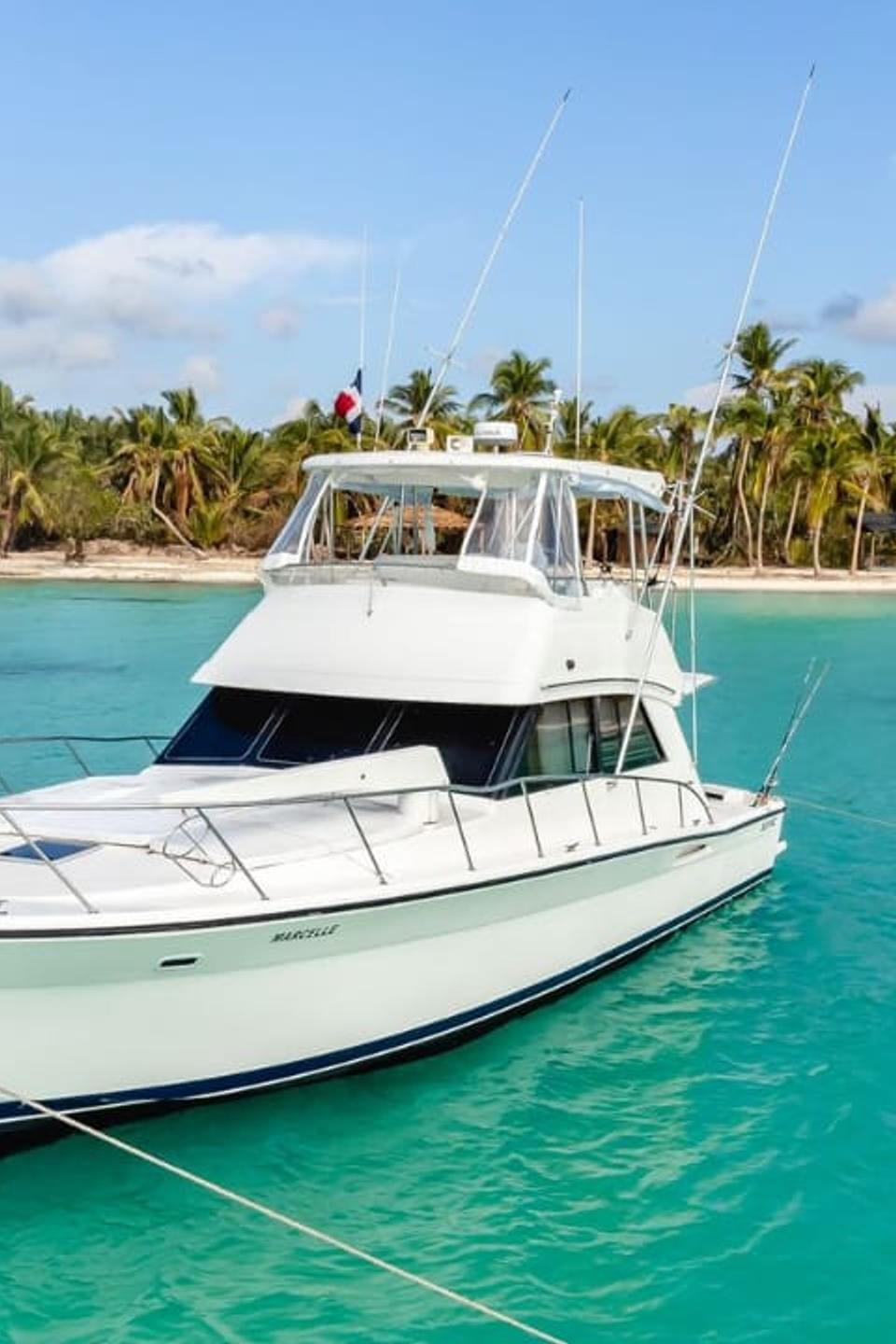
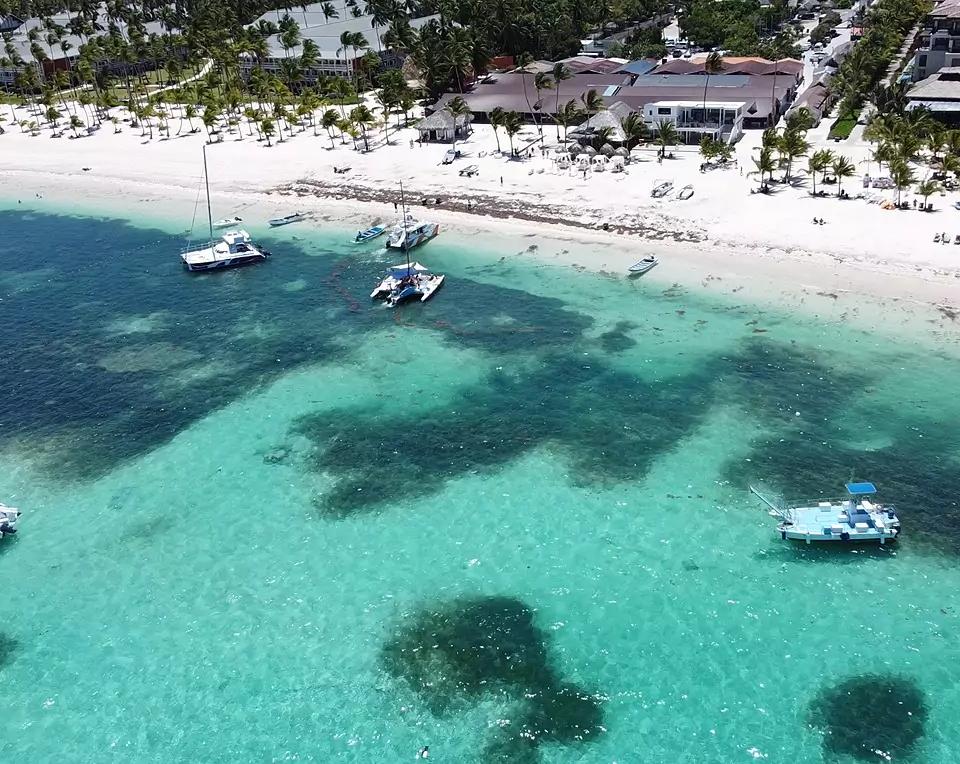
Saona Island — the postcard day. Protected national-park island, natural starfish pool, four beaches on the small-group speedboat version. Book it early in your stay so you have a weather buffer.
Buggy adventure in Macao — mud, cenote, cigar and chocolate stops, and the best half-day for anyone who wants to see the countryside behind the resorts.
Why book ahead? We wrote a whole honest piece on it: should you book Punta Cana excursions before you arrive? The short version is yes — better operators, better prices, better availability.
This guide is based on the official Dominican Republic E-Ticket portal operated by the Dirección General de Migración (eticket.migracion.gob.do), the Ministry of Tourism's digital traveler page, and the daily experience of our own team meeting guests at Punta Cana airport.
Immigration rules can change. Always confirm current requirements for your nationality on the official government portal before you travel. If something in this guide no longer matches what you see on the official site, the official site wins — and we would appreciate a message so we can update it.
Last reviewed: August 2026 by the Cana Tours team, Bávaro, Punta Cana.
cana.tours
Ready to book your Punta Cana experience?
Curated tours, no crowds, real local guides. Reach us on WhatsApp for an instant quote.
It is a free, mandatory digital form that every passenger must complete before entering and before leaving the Dominican Republic. It combines the old immigration, customs and public-health paper cards into one online submission that generates a QR code, and it is filed at the official government portal eticket.migracion.gob.do.