Working Remotely from Punta Cana (2026): An Honest Local Guide
Last updated:
Punta Cana works for remote work — if you pick the right area and carry a data backup. An honest local guide: internet reality, where to base yourself for a month, coworking, time zones, visa basics, what a month really costs, and the tours that fit a work schedule.
Quick answer: can you work remotely from Punta Cana?
Yes — and every year more people do it. Punta Cana is not Bali or Lisbon: there is no big nomad scene, no visa program marketed at remote workers, and no café strip where every table has a laptop. But the fundamentals are genuinely good: fiber internet in the residential areas, an international airport 15–40 minutes away, US-compatible time zones, and a safe, walkable tourist corridor.
The people it works best for: remote employees on US hours, freelancers who can structure their own day, and anyone who wants beach life on evenings and weekends without giving up a real work setup. The people it frustrates: anyone who needs enterprise-grade redundancy, or expects a coworking scene like Mexico City. This guide is the honest version, from a local team that answers these questions on WhatsApp every week.
Internet reality: fiber, resort wifi and power cuts
The good news first: the residential areas where long-stay visitors actually live — Los Corales, El Cortecito, Punta Cana Village, Cap Cana and Cocotal — have fiber-to-the-home from the national providers. In apartments and condos there, video calls, screen sharing and cloud work are normal daily reality. Speeds of 100+ Mbps are common in fiber buildings.
The honest catches, in order of how much they matter. First: resort wifi is not work-grade. All-inclusive wifi is fine for email and streaming, but it is shared by thousands of guests and often throttles video calls at peak hours — don't plan to work from a resort room. Second: power cuts happen. Usually minutes, occasionally longer, and when power drops, home wifi drops with it. Third: upload speeds are usually a fraction of download — fine for calls, worth testing before a big upload.
The standard local solution, and what we recommend to every remote-working guest: an apartment on fiber plus a local SIM or eSIM with a data package as hotspot backup. When the power blinks, you tether and keep your call. The full comparison of eSIM, local SIM and wifi options is in our internet and eSIM guide.
Where to base yourself for a month or more
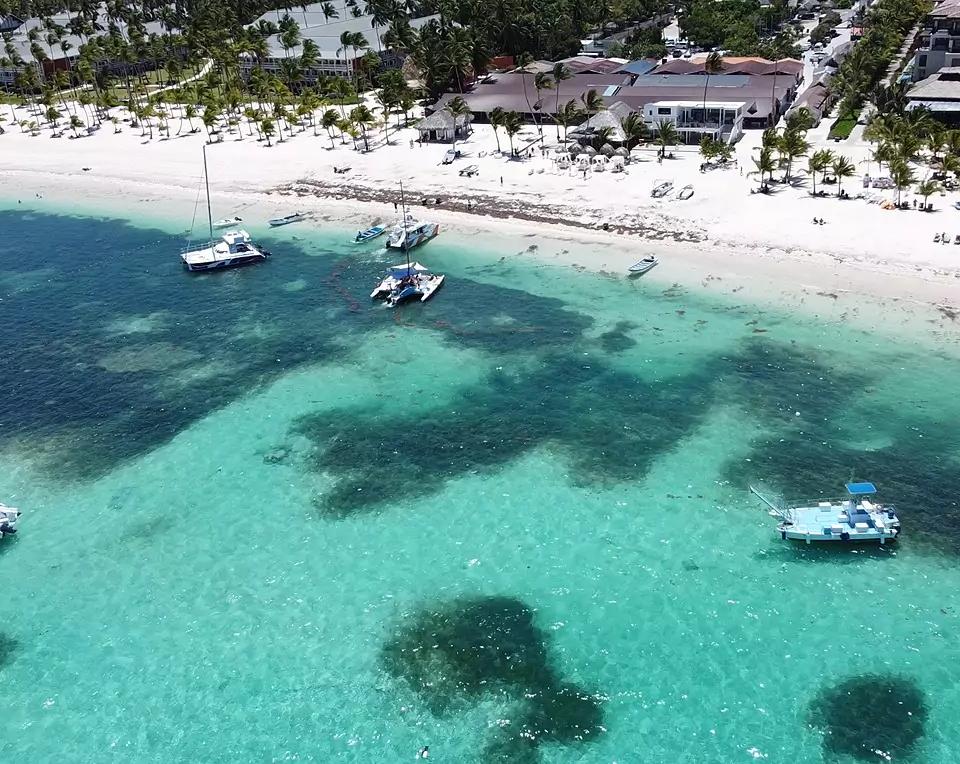
Los Corales / El Cortecito (Bávaro) — the remote-work favorite. A walkable beach village: apartments, cafés, restaurants, small supermarkets and the beach within a few minutes on foot. You can live here without a car, meet other long-stay travelers, and never feel exiled inside a resort fence. Most month-long rentals with fiber are here.
Punta Cana Village — the quiet, practical option near the airport: a planned residential area with a small shopping center, international supermarket and restaurants. Less beach-village charm, more order; popular with remote workers who want calm mornings and a 10-minute drive to PUJ when the workation ends.
Cocotal and Cap Cana — the polished end: golf-community condos and marina living, very safe, very quiet, higher rents. Uvero Alto and Macao are beautiful but impractical as a work base — fewer services, longer drives. The full zone-by-zone breakdown, including hotel vs. apartment trade-offs, is in our where to stay guide and the honest Airbnb vs. resorts comparison.
Coworking and laptop-friendly cafés
Be honest with yourself about what Punta Cana is: a resort town, not a coworking capital. There are a handful of small coworking spaces and business centers in the Bávaro/Punta Cana area, and they come and go — check current listings before you arrive rather than trusting any blog list, including ours.
What works reliably instead: your apartment as the office (the real reason to rent a place with fiber and a table, not just a bed), plus cafés in Los Corales, Cortecito and Punta Cana Village for the afternoons when you want people around you. A practical note from experience: for important calls, work from home — café background noise and shared wifi are fine for email, not for your quarterly review.
Time zones: the underrated advantage
The Dominican Republic runs on Atlantic Standard Time (UTC-4) all year — no daylight saving changes. That means: same time as New York in winter, one hour ahead in summer. If your team is on the US East Coast, you simply keep your normal calendar, except your lunch break is on the beach.
For Europe it's a shift, not a dealbreaker: Central Europe is 5–6 hours ahead, so a 9:00 standup in Berlin is your 3–4am — the other way around, European afternoons are your mornings. Most Europe-based remote workers here shift their day: work late morning to evening, keep mornings for the beach. West Coast US (3–4 hours behind you) works fine if you're a morning person.
Visa basics in plain words
Most nationalities — including US, Canadian, EU and UK citizens — enter the Dominican Republic on a tourist card covering 30 days, arranged with the mandatory e-ticket before arrival. Staying longer is common: extensions past 30 days are handled through the migration office and involve an overstay fee paid on departure — the amounts change, so read the current rules on the official migration site before you plan around them.
Honest framing, because this matters: we are a tour operator, not an immigration lawyer. Working remotely for a foreign employer while physically in the DR sits in the same grey zone it does in most of the Caribbean, and this guide is not legal advice. If you plan months rather than weeks, talk to a local immigration professional — we can point you to ones our long-stay guests actually use, via WhatsApp.
What a month of remote work here actually costs
Ranges from local experience, marked as such — your taste sets the number. A furnished one-bedroom apartment with fiber in Los Corales or Cortecito typically runs $700–1,200 per month on a monthly rental; Punta Cana Village similar, Cap Cana and Cocotal higher. Groceries from local supermarkets and colmados plus regular local restaurants: roughly $400–600 per person per month if you cook some meals. Add a scooter or occasional Uber/taxi, a local SIM with data, and the beach is free.
A realistic all-in month for one person living well but not lavishly: $1,400–2,200. For the full trip-budget framework — accommodation tiers, food, transport, tips — our Punta Cana budget guide breaks down a week; multiply and adjust for monthly rental discounts. Day-to-day payment questions (cards vs. cash, tipping) are in the money guide.
Getting there and getting around without a car
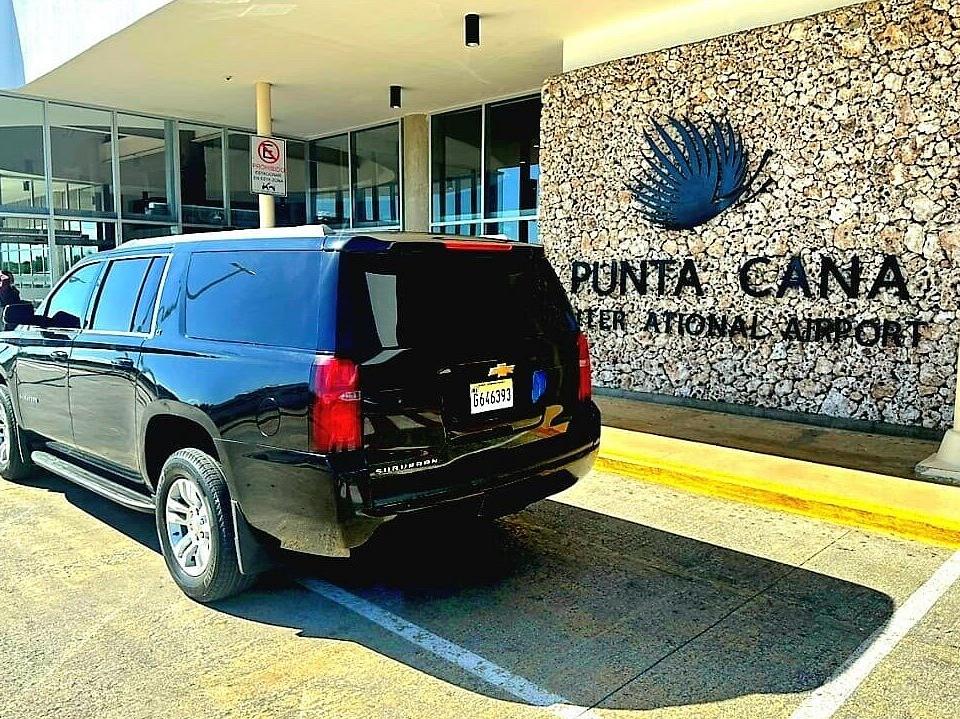
You'll land at PUJ, 10–40 minutes from every work base mentioned here. The arrival is the one moment worth pre-arranging: a pre-booked airport transfer with a fixed price beats negotiating after a long flight — zones, times and prices are in our airport transfer guide.
Day to day, most remote workers in Bávaro live car-free: walking, the occasional Uber, and motoconchos for short hops. For weekend exploring beyond the corridor, tours with hotel pickup solve the transport question entirely. The honest comparison of Uber, taxis, rental cars and transfers is in getting around Punta Cana.
Weekends as a remote worker: tours that fit a work schedule
This is the part that makes the whole thing worth it — and where a work schedule matters. Full-day tours run 8–10 hours door to door, so they belong on weekends or a day off. Half-day tours fit a long morning or a flexed afternoon.
Full-day weekend picks:Saona Island ($120) — the postcard island day with speedboat, catamaran and the starfish sandbank — and Catalina Island ($99), the best snorkeling day in the region with 25-meter visibility. Both include hotel pickup and lunch; you're back for dinner.
Half-day picks that flex around work: the Party Boat / Catamaran ($75) — four hours, open bar, the social event of the week; Buggy Adventure ($55) — mud, a cenote swim and a coffee farm in half a day; and Horseback Beach Riding ($65) — two hours along Macao beach at golden hour, easy to slot after an early finish. All options are on our tours page with real prices and hotel pickup included.
We promised honesty, so: the heat and humidity are real from May to October and your laptop will not love the beach — sand and salt destroy keyboards, work in the shade. Power cuts and the occasional internet wobble will cost you a call eventually; the eSIM backup is not optional, it's the system. Hurricane season (August–October) rarely disrupts daily life but deserves a weather eye — our best time to visit guide has the month-by-month picture.
And the quiet truth: Punta Cana's nomad community is small. If you need a big scene, events and networking, you'll be happier in Santo Domingo or another hub. If you want sun, sea, safety, solid internet and a simple life between calls — this is one of the easiest places in the Caribbean to do it. Practical safety questions are covered in our safety guide and, if you're coming alone, the solo travel guide.
cana.tours
Ready to book your Punta Cana experience?
Curated tours, no crowds, real local guides. Reach us on WhatsApp for an instant quote.
Yes — in the residential areas with fiber (Los Corales, El Cortecito, Punta Cana Village, Cap Cana, Cocotal), video calls and cloud work are daily reality. Resort wifi is shared and unreliable for calls. Always carry an eSIM or local SIM as hotspot backup for power cuts.