Buying Property in Punta Cana as a Foreigner (2026): The Honest Starter Guide
Last updated:
Yes, foreigners can buy property in the Dominican Republic with the same rights as citizens — no residency required. Here is how the process actually works in 2026, what it really costs, and where to start looking.
Quick answer: can foreigners buy property in Punta Cana?
Yes. The Dominican Republic is one of the most open property markets in the Caribbean. Since 1998, foreign buyers have exactly the same ownership rights as Dominican citizens: you can buy in your own name, own the land outright (fee simple, not leasehold), sell whenever you want, and pass the property to your heirs. You do not need residency, a visa, a local partner or a corporation.
This surprises people. Mexico restricts beachfront purchases through bank trusts, Thailand bans foreigners from owning land, and most of Central America adds layers of permits. The Dominican Republic has none of that — your name goes directly on the title at the Registro de Títulos, the same as any Dominican buyer.
We're Cana Tours, a local operator based in Bávaro. Every week we drive guests to excursions who ask the same question on the way back from Saona: "So… could we actually buy something here?" This guide is the honest answer we give them, written down — and it's also why we built CanaKeys.com, our sister site where you can browse vetted listings instead of guessing from a beach chair.
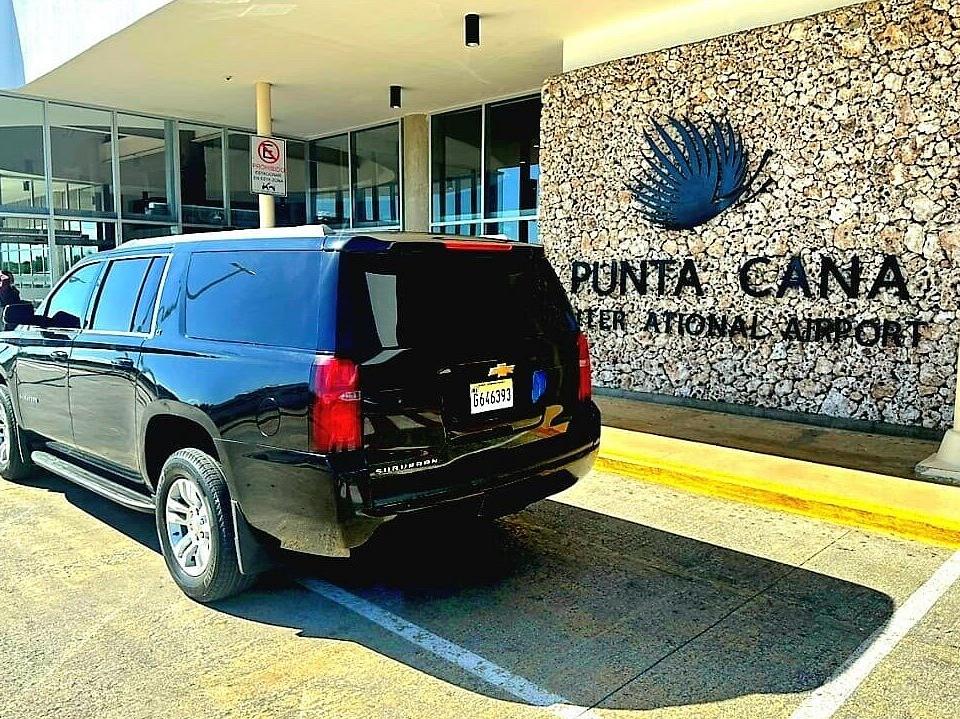
Punta Cana International is the busiest airport in the Caribbean, and tourist arrivals keep breaking records. For a property buyer that translates into one thing: rental demand is structural, not seasonal hype. The tourist corridor runs 12 months a year.
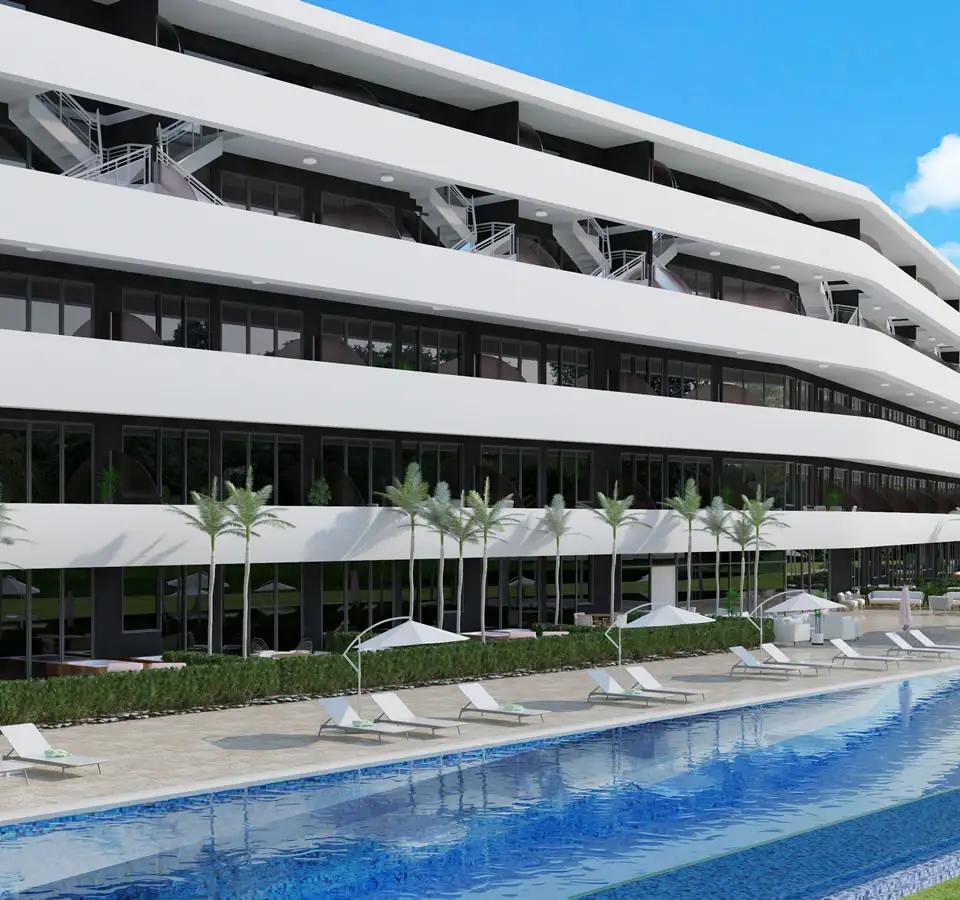
Compared to other Caribbean markets, entry prices are still low. A modern one-bedroom apartment walking distance from the beach in Bávaro starts around US$130,000. In Barbados, the Caymans or the Bahamas you'd multiply that by three or four — and still earn similar nightly rental rates.
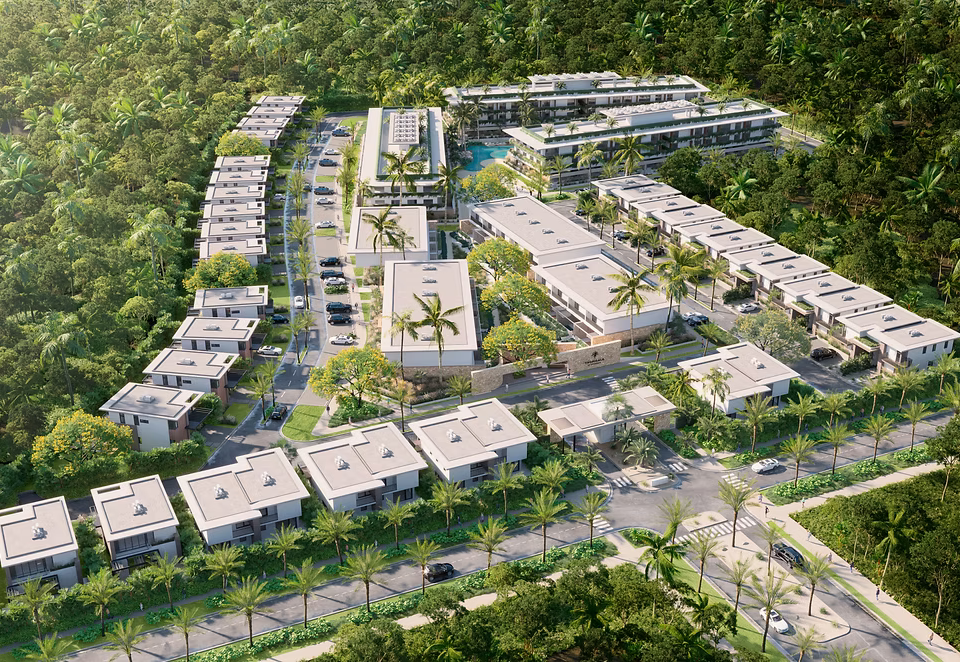
The third driver is the CONFOTUR tax incentive (more below): new developments certified by the government skip the 3% transfer tax and the annual property tax for up to 15 years. Almost every new project in Bávaro and Cap Cana is certified.
And honestly? A big share of buyers start as guests. Industry estimates say roughly 9 out of 10 property investors in Punta Cana first came here as tourists — they did a property tour on a later trip, ran the numbers, and bought.
The buying process, step by step
1. Find the property and negotiate. Prices are almost always quoted in US dollars. New developments have fixed price lists; resales usually have 3–8% negotiating room.
2. Reservation. You sign a reservation agreement and pay a small deposit — typically US$1,000–5,000 for resales, or a fixed reservation fee at new developments. This takes the unit off the market while due diligence runs.
3. Due diligence (2–4 weeks). Your lawyer — your lawyer, not the seller's — verifies the title at the Registro de Títulos: ownership chain, liens, mortgages, and that the deslinde (the official surveyed boundaries) is clean. This step is not optional. It's the single most important part of the entire purchase.
4. Promesa de Venta (Promise of Sale). A binding contract, notarized, that fixes price, payment schedule and closing date. For resales you typically pay 10–30% here. For pre-construction, this is where the payment plan starts (commonly 20% during construction, installments, remainder at delivery).
5. Closing. Final payment, signing the deed of sale (Contrato de Venta Definitivo) before a notary, then filing at the Title Registry. The registry issues the new Certificate of Title in your name. Total timeline: 30–90 days for a resale, longer for pre-construction (you buy during the build).
Remote buying is normal: a notarized power of attorney lets your lawyer sign for you. Roughly a third of foreign purchases we see close without the buyer flying in.
What it actually costs: taxes and fees in 2026
Budget 3–6% of the purchase price on top, broken down like this:
Transfer tax — 3%. Calculated on the government-appraised value (often below the sale price). Paid once, at title transfer. Zero if the property is CONFOTUR-certified.
Legal fees — 1–1.5%. Your independent lawyer for due diligence, contracts and closing. Do not save money here.
Notary and registry fees — roughly 0.5–1% combined.
Annual property tax (IPI) — 1% of the cadastral value above approximately US$170,000 (the exemption threshold is adjusted periodically). Below the threshold: nothing. CONFOTUR properties: exempt for up to 15 years.
Ongoing costs: condo/HOA fees typically US$1.50–3 per m² per month in managed communities; property management for rentals usually 20–30% of rental income.
There is no capital-gains exemption for non-residents, no wealth tax, and no restrictions on taking rental income or sale proceeds out of the country. For currency and payment practicalities, see our guide to money in Punta Cana.
CONFOTUR explained in two minutes
CONFOTUR (Law 158-01) is the government's tourism-development incentive. When a new development is certified, buyers receive two big benefits: no 3% transfer tax at closing, and no 1% annual property tax for up to 15 years from delivery.
On a US$250,000 apartment that's roughly US$7,500 saved at closing plus US$2,500 per year — real money that meaningfully changes the investment math.
What CONFOTUR does not do: it doesn't guarantee the developer will finish on time, it doesn't insure your payments, and it doesn't make a bad location good. The certificate attaches to the project, not to your unit specifically — always confirm the project's CONFOTUR resolution number during due diligence.
Almost all new developments in the tourist zones carry it. Resales and older buildings generally don't — which is one reason pre-construction dominates foreign purchases here.
Where to look: the zones in one paragraph each
Bávaro / El Cortecito / Los Corales — the rental-yield engine. Walk-to-beach condos from around US$130,000, gross yields of 9–11%, high occupancy. Best for cashflow-focused buyers. Full numbers in our Bávaro investment guide.
Cap Cana — the luxury gated reserve: Punta Espada golf, the marina, Juanillo beach. Entry around US$350,000 for branded residences, villas from US$1.2M. Lower yield (6–8%), strongest capital preservation. See the Cap Cana guide.
Cocotal / Downtown Punta Cana — golf community mid-way between the two, popular with long-term renters and digital nomads; entry from around US$110,000.
Uvero Alto & Macao — the emerging north: newer stock, lower density, longer airport transfer (45 min), stronger growth runway. Condos from around US$180,000.
Cabeza de Toro — small peninsula between Bávaro and Cap Cana with the marina; low inventory keeps prices firm, popular with boating families.
The full zone-by-zone breakdown with appreciation data lives on our real estate hub.
The honest range for gross rental yield in 2026: 6–11%, depending almost entirely on zone and management quality. Bávaro walk-to-beach units sit at the top, Cap Cana at the bottom but with better appreciation.
Occupancy in the prime tourist zones runs 65–78% on an annual average — January to April is effectively sold out, September and October are the soft months.
Net is not gross. Deduct property management (20–30% of rent), utilities, HOA, cleaning and platform fees, and most owners land at 55–65% of gross. We published the full math in average Airbnb ROI in Punta Cana.
Short-term rental (Airbnb) beats long-term rental in the beach zones; long-term beats it in Verón and Downtown. If you're comparing vacation-rental living to resort life first, read our Airbnb vs resorts comparison — it's the same trade-off at ownership scale.
The 7 mistakes foreign buyers make (and how to skip them)
1. Using the seller's lawyer. Always hire your own, independent, bilingual attorney. Cost: ~1%. Value: everything.
2. Skipping the deslinde check. A title without a clean, registered survey of boundaries can be unsellable. Your lawyer confirms this at the Registro de Títulos.
3. Buying "pre-sale" from an unknown developer. Check delivered projects, visit one in person, and confirm CONFOTUR and construction licenses before a single payment.
4. Believing guaranteed-rental promises. "10% guaranteed for 5 years" is a marketing price baked into the unit price. Underwrite the deal on market rent, not on the promise.
5. Ignoring HOA rules. Some communities restrict short-term rentals entirely. If Airbnb income is your plan, this is the first document to read.
6. Underestimating furnishing costs. Pre-construction units deliver without furniture — budget US$15,000–40,000 depending on size and rental standard.
7. Rushing. The same unit will exist next month. Pressure to "pay today or lose it" is a sales technique, not a market fact. Punta Cana is safe to buy in — see our safety guide — but it's not safe to buy carelessly anywhere.
Where to actually start looking
You have three realistic routes. First, browse online: we built CanaKeys.com — our sister site focused entirely on Punta Cana real estate — because general portals mix outdated listings with unverified ones. Every listing there is checked by people who physically work in this market.
Second, see properties in person. Our Punta Cana Property Tour is a private half-day with a local expert: you visit 4–6 developments matched to your budget, see finished vs under-construction projects, and get honest answers about each zone — in English, German, Spanish or Russian. It's the fastest way to go from "beach-chair dreaming" to a real shortlist. Message us on WhatsApp and we'll build the route around you.
Third, run the legal side early. Even before you pick a unit, a one-hour consultation with an independent Dominican real-estate attorney costs little and tells you exactly what your purchase would look like on paper.
And if this trip is still about beaches, not deeds — that's what we do best. All our excursions come with hotel pickup, no prepayment and free cancellation. The property market will still be here after the catamaran.
Yes. Foreign buyers have the same ownership rights as Dominican citizens. You can buy in your own name, own land outright, and you don't need residency, a visa or a local partner. Your passport is sufficient to sign all documents.