Dominican Culture & Useful Spanish for Punta Cana (2026): Etiquette, Phrases & What Locals Really Say
Last updated:
You can holiday in Punta Cana without a word of Spanish. You will have a better one with twenty. Here is how Dominicans greet, talk, joke and expect to be treated — and the phrase kit that opens doors.
Quick answer: how much Spanish do you actually need?
Almost none, if your week stays inside a resort, an airport transfer and organised excursions. Hotel staff in Bávaro and Cap Cana work in English every day, our drivers and guides work in English and Spanish, and nobody will ever be annoyed that you don't speak Spanish.
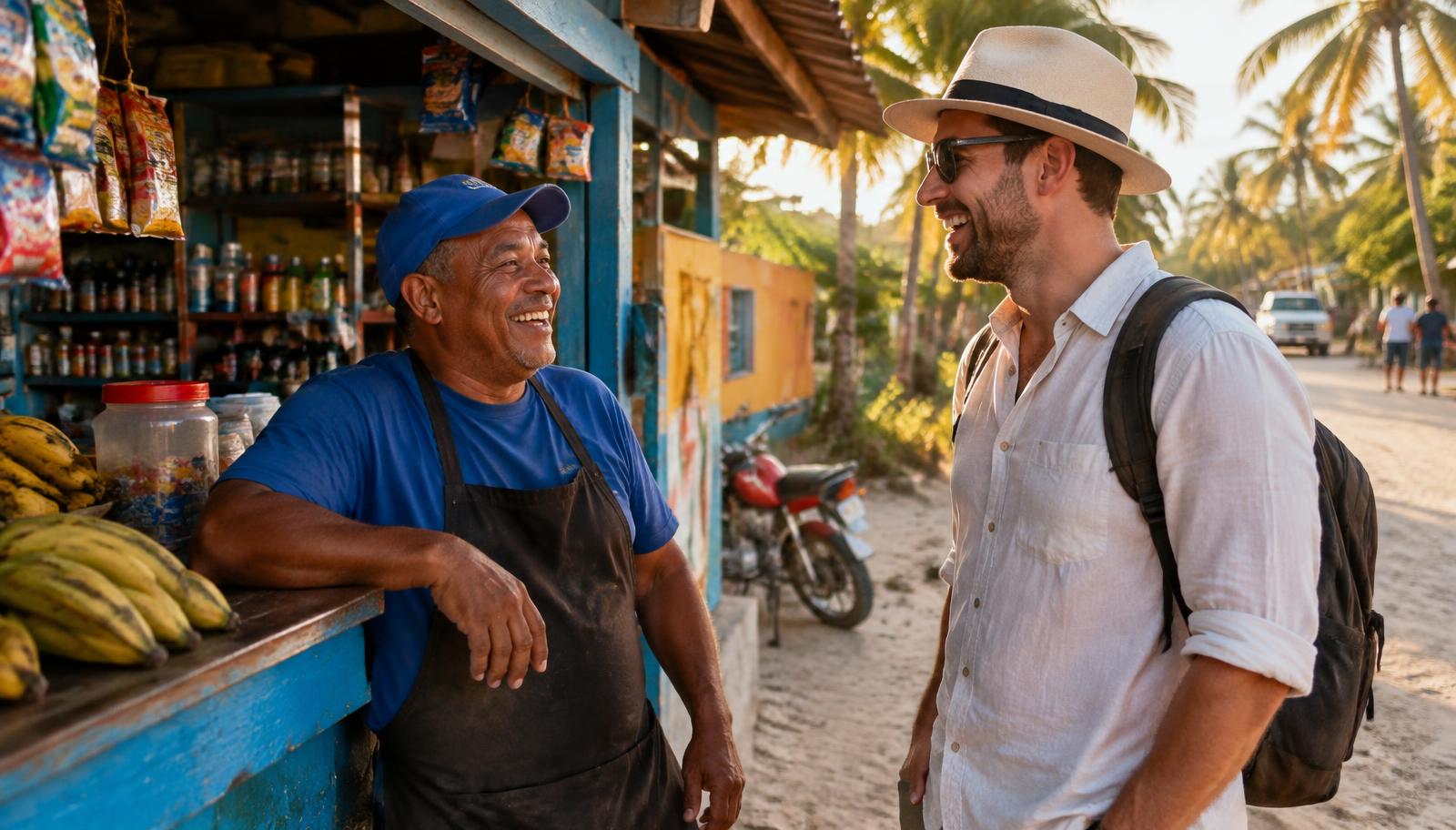
Twenty words change everything else. The taxi driver, the colmado owner, the fruit seller, the man cutting coconuts on Macao Beach — they will switch from transaction mode to conversation mode the moment you try. Dominicans are famously forgiving about pronunciation and famously unforgiving about someone who never says hello.
Where English is spoken — and where it stops
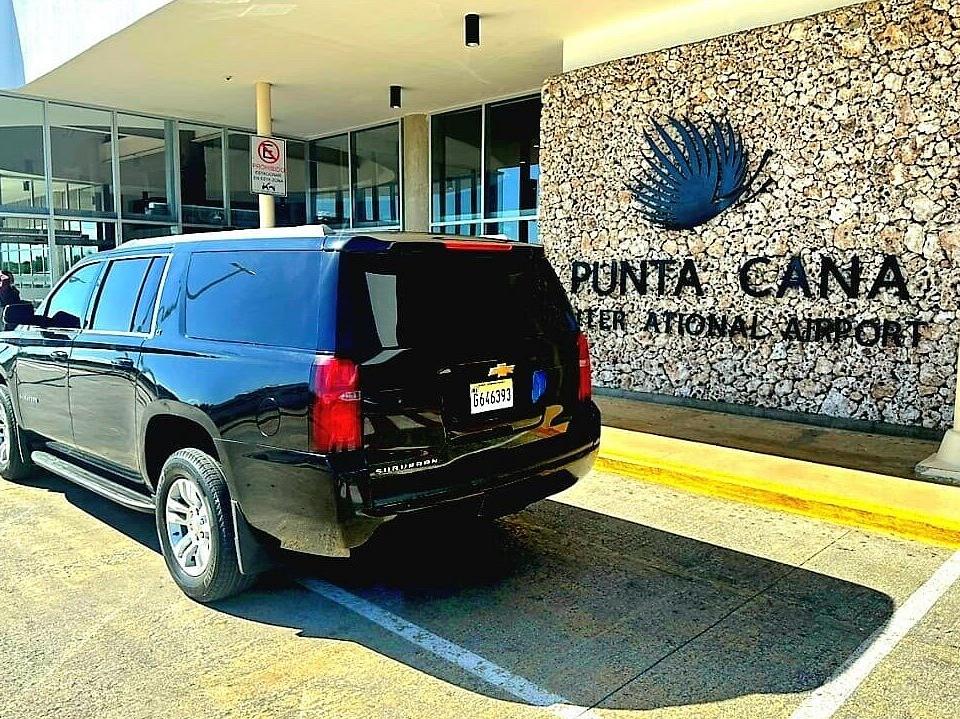
Punta Cana Airport, resort reception, tour desks, big restaurants in Los Corales and Punta Cana Village: English, and often German, French and Russian too. Our own guides work in English and Spanish, and we arrange other languages on request when we know in advance.
English thins out fast beyond that. Local supermarkets, colmados, public transport, pharmacies in Verón, small comedores, Bayahibe village and most of Santo Domingo outside the Zona Colonial run in Spanish. A translation app that works offline is worth more than a phrasebook here.
You greet everyone. Entering a shop, a pharmacy, a waiting room, a minibus — you say buenos días (until noon), buenas tardes (afternoon) or simply buenas, which works all day. Walking in silently and pointing at what you want reads as rude here in a way it does not in northern Europe or the US.
Men shake hands, often with a light shoulder touch. Women greet women and men they know with one kiss on the cheek. Use usted for older people, officials and anyone serving you until they relax into tú, which happens fast. Titles are used warmly rather than formally: doña and don with a first name are signs of respect, not distance.
Etiquette that actually matters
Ask before you photograph a person — a vendor, a fisherman, a child, a colmado owner. A smile and ¿puedo tomar una foto? turns a stolen shot into a shared moment. Photographing people's homes as poverty scenery is the one thing that genuinely offends.
Cover up off the beach. Swimwear belongs on sand and at the pool; a t-shirt and shorts are the minimum in a supermarket, a church or Santo Domingo's Colonial Zone, where shoulders and knees are the norm in the cathedral. Volume is not rudeness here: music is loud, conversation is loud, laughter is louder. Punctuality is relaxed socially — ahorita can mean anything from ten minutes to tomorrow — but tours and transfers run on real time, so be at your lobby when we say.
Tips are normal, expected and not automatic. Restaurants add 10% by law plus 18% tax, and a further 5–10% in cash for the waiter is the local habit when service was good. Guides, boat crews, drivers and housekeeping all live partly on tips, and small US dollars or pesos both work.
We keep the real numbers in one place instead of repeating them everywhere.
If you learned Spanish in school or in Spain, the Dominican version will surprise you. Final s disappears (má o meno for más o menos), d between vowels softens (pesao for pesado), r and l swap in some regions, and whole sentences arrive as one fast word. You are not bad at Spanish; this is simply one of the quickest, most musical accents in the Caribbean.
The vocabulary is local too: a guagua is a bus, a colmado is the corner shop that sells everything and delivers on a motorbike, un chin means a little bit, una vaina is that thing (or that problem), qué lo que is what's up, dique means supposedly, jevi means cool and un motoconcho is a motorbike taxi. Learn six of those and people will ask where you learned your Dominican.
The phrase kit, by situation
Arrival and transfer: buenos días, soy [name], ¿está aquí el transfer? — ¿cuánto tiempo al hotel? — muchas gracias, muy amable. In a taxi always agree first: ¿cuánto cuesta hasta [hotel]? and then sí o no, never let the meter conversation happen at the end.
Beach, colmado and restaurant: ¿cuánto vale? (how much), solo estoy mirando, gracias (just looking), una Presidente bien fría por favor, la cuenta por favor, sin hielo, no muy picante, ¿aceptan tarjeta? and para llevar (to take away). If a vendor is persistent, no gracias, ya compré (no thanks, I already bought) ends it politely.
On tours and in emergencies: ¿a qué hora salimos?, tengo mareo (I feel seasick), ¿hay chaleco para niños? (a kids' life vest), necesito una farmacia, me siento mal, ayuda por favor. Pronunciation shortcut: every vowel is short and pure, h is silent, j sounds like a soft English h, and ll sounds like y.
Culture in daily life: music, baseball and Sundays
Two things explain the country faster than any museum. Merengue and bachata are not folklore for tourists — they are what plays in the colmado at 8am, and most Dominicans genuinely dance better than you. If someone invites you to dance, saying yes badly is far better received than saying no politely.
Baseball is the national religion with a small r. Winter league games (roughly October to January) are loud, cheap and wonderful, and every taxi driver has an opinion about the Licey–Águilas rivalry. Sundays belong to family, the beach and a very large speaker; religion is present and respected, so don't joke about it.
Say good morning to the driver and the crew, not just to your group. Learn the guide's name and use it. On a boat, gracias, capitán after mooring costs nothing and means a lot. Crews on our Saona and Catalina boats work long days; they remember guests who treat them like people, and it visibly changes the day you get.
Two practical notes. Guides will happily teach you words if you ask — most of them love it. And when you cannot understand something, saying más despacio, por favor (slower, please) is far better than nodding; it prevents the small misunderstandings that make a pickup or a meeting point go wrong.
Not greeting anyone. Haggling in a supermarket, restaurant or pharmacy, where prices are fixed — street markets and beach vendors are the only places where a price is a conversation. Calling locals amigo in a commercial tone; use señor, señora or their name. Comparing the country to Haiti in casual conversation. Photographing people without asking. Assuming that a friendly chat obliges you to buy something.
The fix for all of them is the same and it is very Dominican: slow down, say hello, smile, ask. Warmth is the currency here, and it buys more than dollars do.
Our guides work in English and Spanish, and we organise other languages when you tell us in advance. If you would rather plan your week in your own language before you land, write to us — same team, same prices, no call centre.
In resorts, at the airport, on tours and in tourist restaurants, yes. In colmados, local supermarkets, public transport and small villages, expect Spanish only.